

Getting quality sleep is essential for overall health, mood regulation, cognitive function, and metabolic balance. Nutrition for better sleep can enhance rest naturally, especially when focusing on magnesium and melatonin-rich foods.
While lifestyle factors such as limiting screen time, managing stress, and maintaining a consistent sleep schedule are important, diet plays a crucial role in regulating the sleep-wake cycle. Moreover, certain nutrients calm the nervous system, promote relaxation, and support the body’s natural production of sleep hormones. Consequently, they make it easier to fall asleep and stay asleep.

The Importance of Sleep:
Quality sleep is necessary for:
- Memory consolidation and learning
- Hormonal balance, including insulin and cortisol regulation
- Cardiovascular health and blood pressure maintenance
- Immune system function and repair processes
However, chronic sleep deprivation can increase the risk of anxiety, depression, weight gain, type 2 diabetes, and cardiovascular issues. Therefore, pairing good sleep habits with a nutrient-focused diet enhances the chances of restorative sleep.
Magnesium: The Relaxation Mineral:
Magnesium is a key mineral that supports the nervous system and promotes muscle relaxation. In fact, it regulates neurotransmitters and helps the brain produce GABA, a calming chemical that prepares the body for sleep.
Magnesium-Rich Foods:
Several foods are excellent sources of magnesium:
- Leafy greens such as spinach, kale, and swiss chard
- Nuts and seeds, including almonds, cashews, and pumpkin seeds
- Whole grains like oats, quinoa, and brown rice
- Legumes such as black beans, lentils, and chickpeas
For example, including a magnesium-rich snack in the evening, like a small handful of almonds or a spinach salad with pumpkin seeds, can help support relaxation.

Melatonin: The Sleep Hormone in Foods:
Melatonin signals the body when it is time to sleep. While naturally produced in the brain, some foods contain melatonin or compounds that stimulate its production.
Melatonin-Rich Foods:
- Tart cherries and cherry juice
- Walnuts
- Oats
- Bananas
- Tomatoes
Additionally, consuming these foods 1–2 hours before bedtime can promote natural melatonin production and improve sleep onset.
Combining Magnesium and Melatonin Foods:
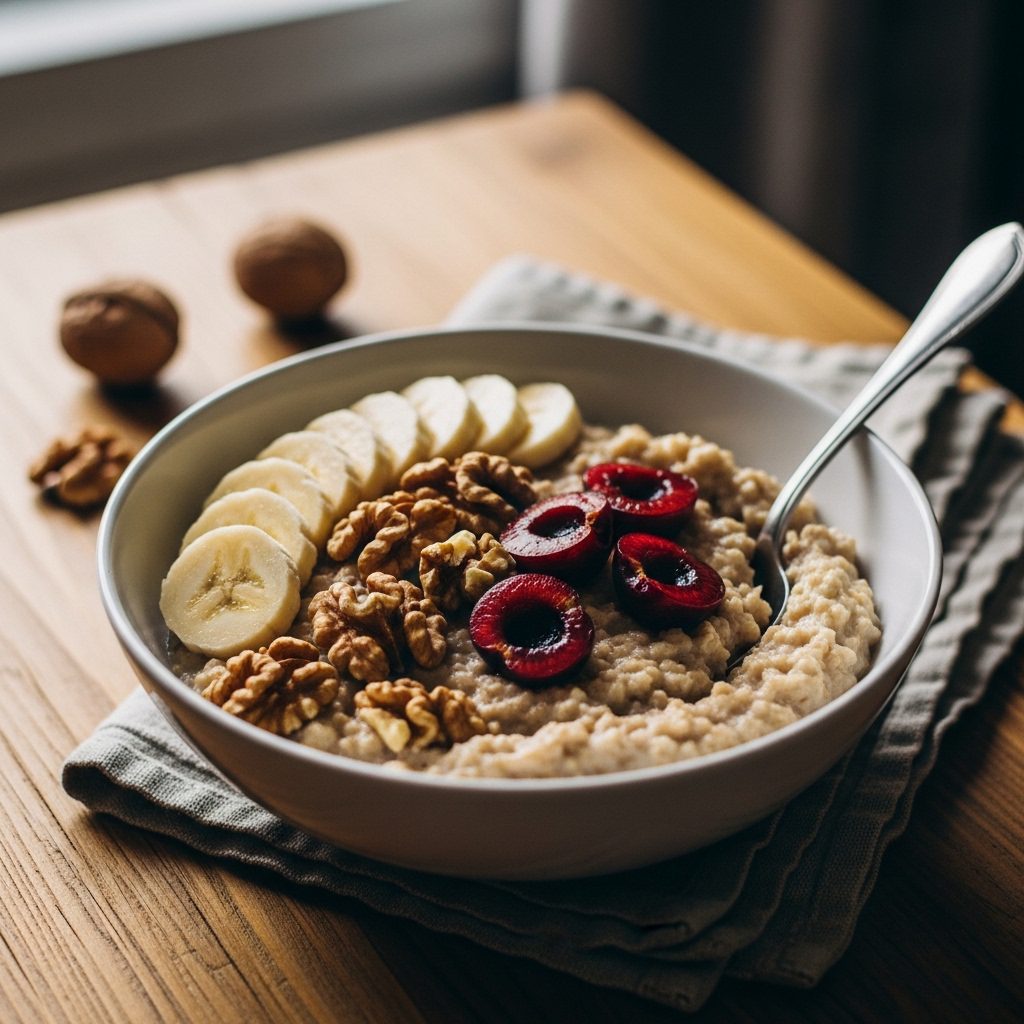
Integrating magnesium and melatonin-rich foods into the same meal or snack can enhance sleep-promoting effects. For instance, oatmeal topped with walnuts and banana provides both magnesium and melatonin precursors.
Furthermore, preparing a light evening snack with these foods instead of a heavy meal may prevent digestive discomfort and improve sleep quality.
Additional Nutrients in Nutrition for Better Sleep:
Moreover, several additional nutrients contribute to better sleep:
1- Vitamin B6 – Helps convert tryptophan into serotonin, which is a precursor to melatonin. Sources: bananas, chickpeas, fortified cereals.
2- Tryptophan – Found in pumpkin seeds, soy products, and oats; supports melatonin production.
3- Calcium – Works with magnesium to support muscle and nerve function; sources include fortified plant milks, broccoli, and almonds.
4- Zinc – Supports neurotransmitter function and may improve sleep quality; sources include legumes, nuts, seeds, and whole grains.
Actionable tip: Include a variety of these nutrients throughout the day for consistent sleep support.
Lifestyle Practices That Complement Nutrition:
Dietary strategies work best when combined with supportive sleep habits:
- Consistent Sleep Schedule: Going to bed and waking up at the same time daily strengthens circadian rhythms.
- Limit Caffeine and Alcohol: Both can disrupt sleep if consumed too close to bedtime.
- Screen-Free Wind-Down: Reduce blue light exposure 1–2 hours before sleep.
- Relaxation Techniques: Meditation, deep breathing, and gentle yoga calm the nervous system.
- Sleep Environment: Keep the bedroom dark, cool, and quiet to support restorative sleep.
In addition, pairing magnesium and melatonin-rich foods with these habits maximizes their effectiveness.

Sample Nutrition for Better Sleep Meal Plan:
Snack/Dinner Option:
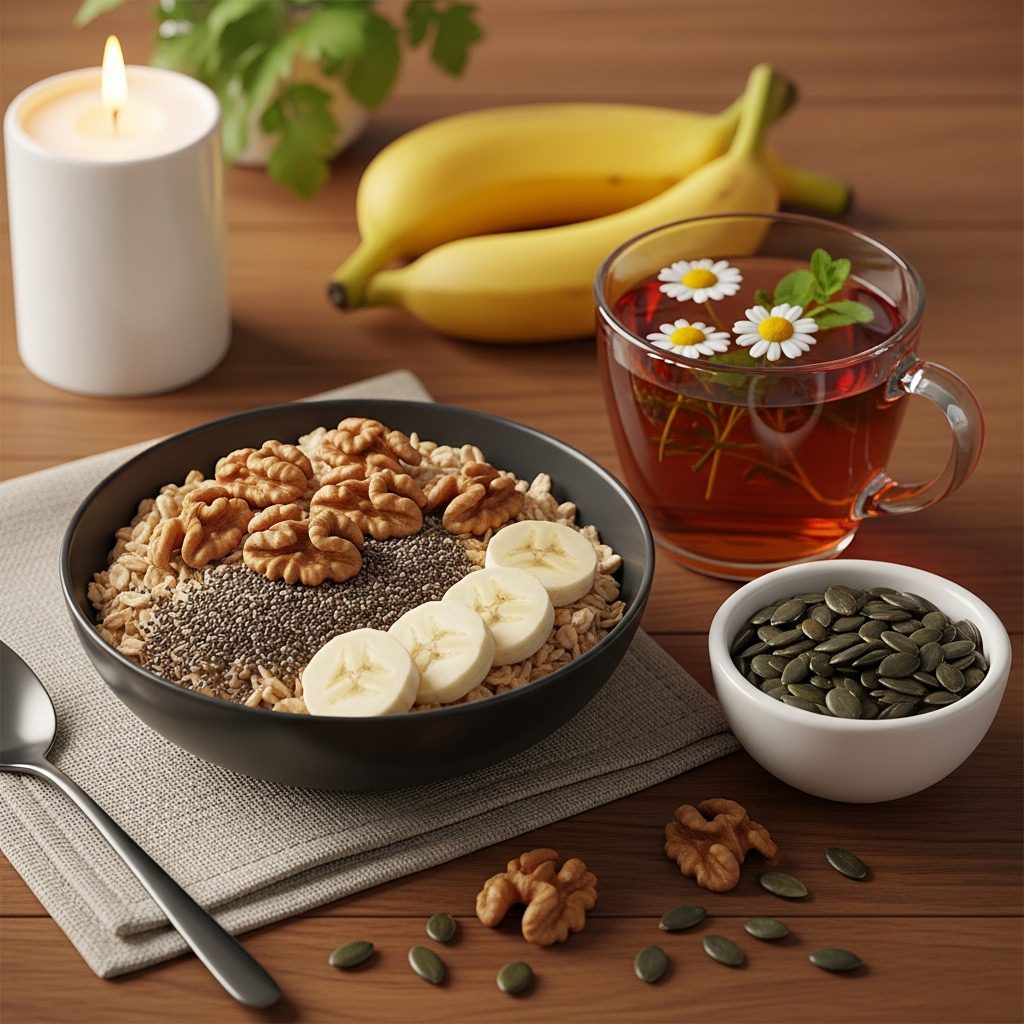
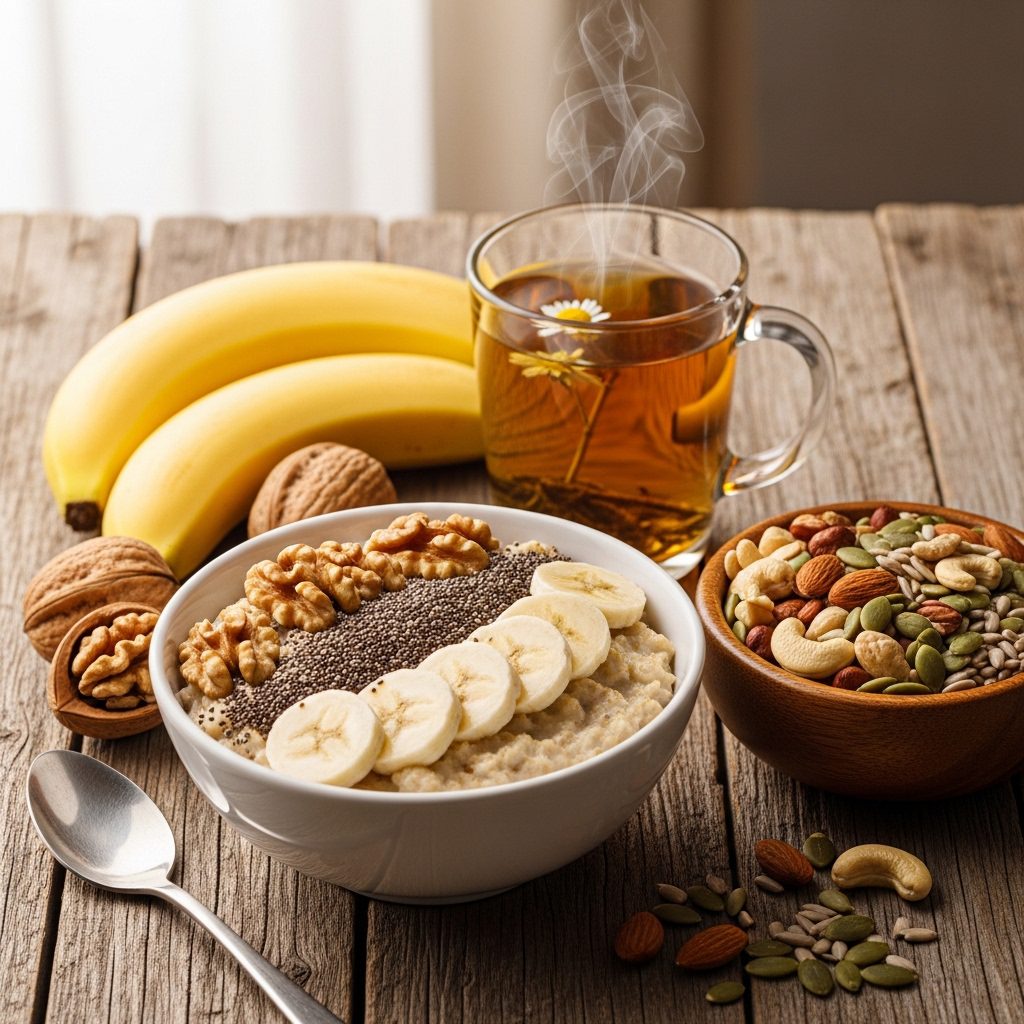
- Oatmeal topped with walnuts, chia seeds, and banana slices
- Herbal chamomile or peppermint tea
- Optional: small handful of pumpkin seeds
As a result, this combination provides magnesium, melatonin precursors, tryptophan, and calming nutrients that prepare the body for restful sleep.
Hydration and Nutrition for Better Sleep:
Proper hydration supports overall body function and sleep quality. However, avoid excessive fluids right before bedtime to prevent nighttime awakenings. Herbal teas with calming properties are ideal for hydration without disturbing sleep.
Monitoring and Adjusting Your Diet:
Individual responses to sleep-promoting foods may vary. Therefore, tracking dietary intake alongside sleep patterns for a few weeks helps identify which foods and meal timing improve sleep most effectively.
Persistent sleep difficulties may indicate underlying conditions like insomnia, sleep apnea, or nutrient deficiencies, so consult a healthcare provider if needed.
Long-Term Benefits of Nutrition for Better Sleep:
Furthermore, regularly supporting sleep through nutrition and lifestyle practices offers lasting benefits:
- Enhanced cognitive performance and mental clarity.
- Improved mood and emotional regulation.
- Healthy weight management.
- Stronger immune resilience.
- Reduced risk of chronic diseases.
Consistent nutrient intake reinforces circadian rhythms and overall wellness, providing a solid foundation for both mental and physical health.
Nutrition for better sleep provides a practical, natural approach to enhancing rest and supporting overall health. By including magnesium and melatonin-rich foods, alongside tryptophan, calcium, and zinc, sleep quality can improve significantly.
Additionally, combining nutrient-rich foods with healthy lifestyle habits—such as maintaining a sleep schedule, managing stress, and optimizing the sleep environment—ensures consistent, restorative rest.
Take proactive steps today to enhance your sleep naturally. For more evidence-based nutrition guidance and practical wellness strategies, explore Nutrition Travels and build a foundation for restorative nights and healthier days.