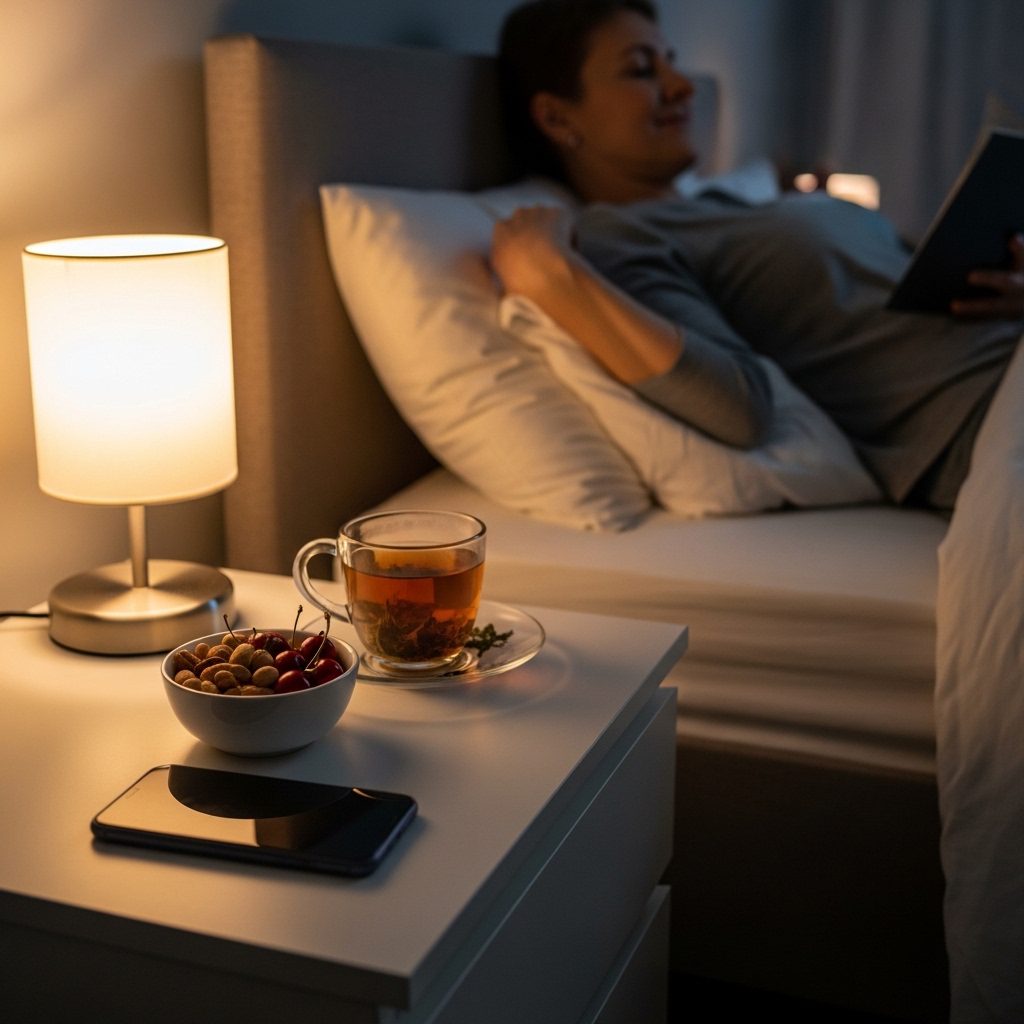

Improving sleep quality isn’t just about the number of hours you spend in bed, but also about the foods you eat. Do you find it hard to fall into deep sleep or wake up feeling tired despite spending long hours in bed? Many people face the same struggle, and often the solution is simpler than expected: adjusting your diet. The foods and drinks you consume daily play a major role in sleep quality, either by preparing your body to relax or supporting the production of sleep-regulating hormones.
In this article, we’ll explore the best dietary tips to improve sleep quality, highlighting the foods that help you relax and the ones you should avoid, so you can enjoy restful and healthy sleep.

The Connection Between Diet and Sleep
Sleep is not just a passive biological process—it’s the result of a delicate balance between your nervous system, hormones, and lifestyle. Diet is one of the main factors that affect this balance. For example, drinking caffeine in the evening or eating heavy meals before bed can disrupt deep sleep. On the other hand, foods rich in magnesium or tryptophan can calm the nervous system and improve sleep quality.
It’s not only about what you eat, but also when you eat it. A heavy meal right before bed keeps your digestive system active instead of letting your body rest, disrupting your natural sleep cycles. Meanwhile, a light, balanced snack one or two hours before bedtime can provide the nutrients needed to trigger the release of relaxation hormones.
Your diet also affects your internal body clock (the circadian rhythm that regulates sleep and wake cycles). For instance, sugary foods or caffeine at night may delay melatonin production, while warm milk or nuts can naturally boost it.
In short, what’s on your plate directly impacts how well you sleep. If your goal is better sleep, think of every meal as a step toward a calmer, more restful night.

Foods Rich in Tryptophan to Calm the Body
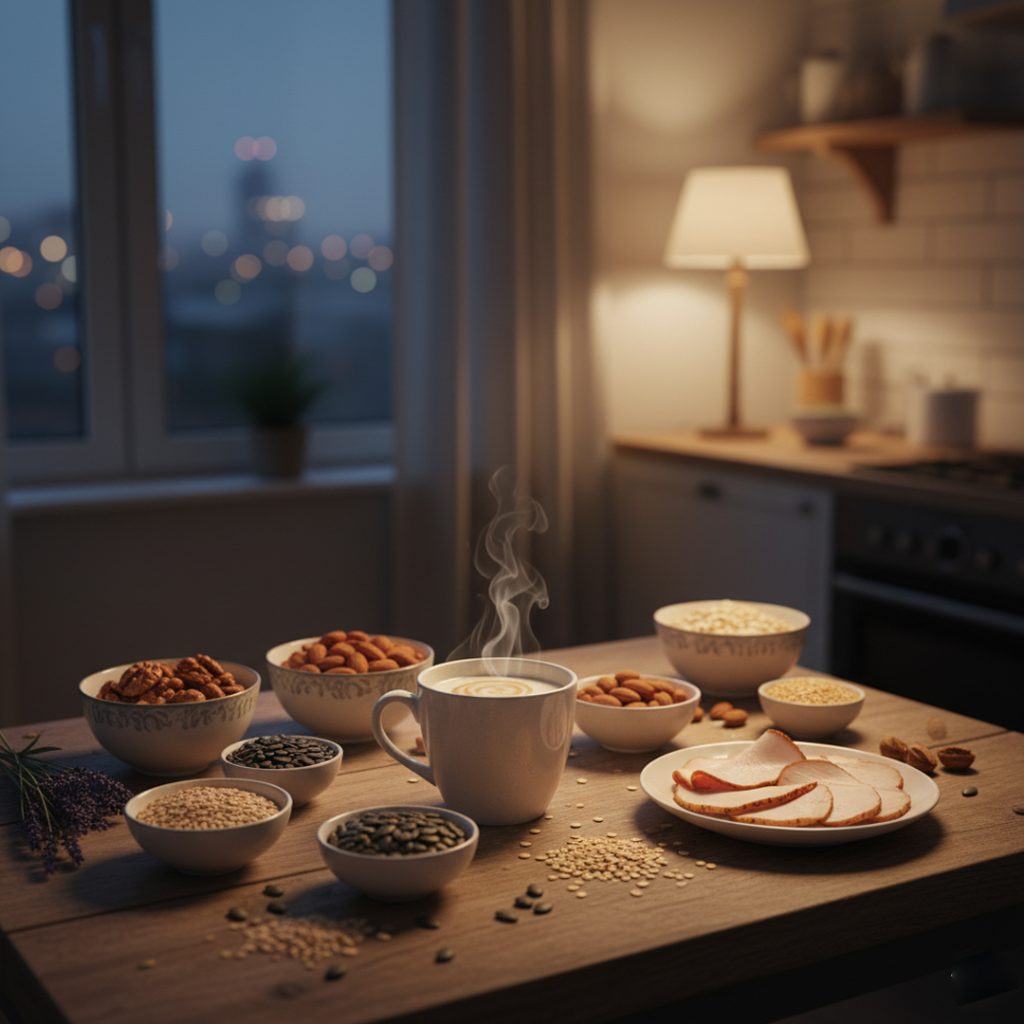
Tryptophan is an essential amino acid that helps produce serotonin and melatonin, two key hormones that regulate sleep and mood. Foods rich in tryptophan include:
- Turkey and chicken.
- Dairy products like yogurt and warm milk.
- Nuts such as almonds and walnuts.
- Seeds like pumpkin and flaxseeds.
Adding these to your evening meals can naturally improve sleep quality.
The Role of Magnesium in Relaxation
Magnesium, known as the “calming mineral,” helps relax muscles and soothe the nerves. Major sources include:
- Spinach and dark leafy greens.
- Nuts and seeds.
- Dark chocolate.
- Legumes like lentils and beans.
Ensuring enough magnesium daily supports relaxation and contributes to more restorative sleep.
Avoid Caffeine in the Evening
That cup of coffee or tea may boost your energy during the day, but caffeine lingers in the body for 6 hours or more. Drinking it in the evening can make it harder to fall asleep. If you want better sleep, try to limit or avoid caffeine after midday.

The Importance of Vitamin B6
Vitamin B6 plays a vital role in naturally producing serotonin and melatonin. Key sources include:
- Bananas.
- Potatoes.
- Chickpeas.
- Fish such as salmon and tuna.
Including these foods in your diet can support nervous system balance and sleep quality.
Hydration and Better sleep quality
Dehydration can lead to sleep disturbances. However, drinking too much water before bed may cause frequent awakenings during the night. The solution is to stay well-hydrated throughout the day and reduce heavy fluid intake close to bedtime for uninterrupted sleep.

A Light Snack Before Bed: Yes or No?
A light snack rich in protein and complex carbs can help some people before bedtime. For example:
- A slice of toast with peanut butter.
- A cup of warm milk with a bit of oatmeal.
These snacks stabilize blood sugar levels, preventing sudden nighttime awakenings and promoting better sleep.
The key is to choose the right type and portion. The goal is not to fill the stomach but to give the body gentle fuel to calm the nervous system. Light proteins like yogurt or boiled eggs promote satiety without heaviness, while complex carbs such as oats or whole grains keep energy steady overnight.
For some, eating before bed can disturb sleep, so it’s worth experimenting to see what works best. If you wake up hungry at night or struggle to fall back asleep, a light snack may help. Otherwise, stick to a balanced dinner and avoid late-night eating.
This way, a nighttime snack can become a smart tool for relaxation—if it’s light, healthy, and well-timed.
Foods to Avoid for Better sleep quality
Certain foods may taste great but can interfere with sleep, including:
- Heavy or fatty meals.
- Spicy foods that trigger heartburn.
- Sugary desserts.
Avoiding these, especially in the evening, significantly improves sleep quality. Heavy meals force digestion to continue while you try to rest, spicy dishes may cause discomfort or heartburn, and sugary foods spike blood sugar followed by crashes that disrupt sleep cycles.
The good news is you don’t have to give them up entirely—just enjoy them earlier in the day instead of at night. Simply changing the timing can make a big difference in your sleep quality.

Herbal and Natural Drinks for Relaxation and Better sleep quality
Herbal teas and warm drinks make excellent alternatives to caffeinated beverages at night. Some top choices are:
- Chamomile tea to calm the nerves.
- Peppermint tea to reduce tension.
- Warm turmeric milk to encourage relaxation.
Making these drinks part of your evening routine can naturally prepare your body for restful sleep.
Linking Diet with Other Sleep Habits
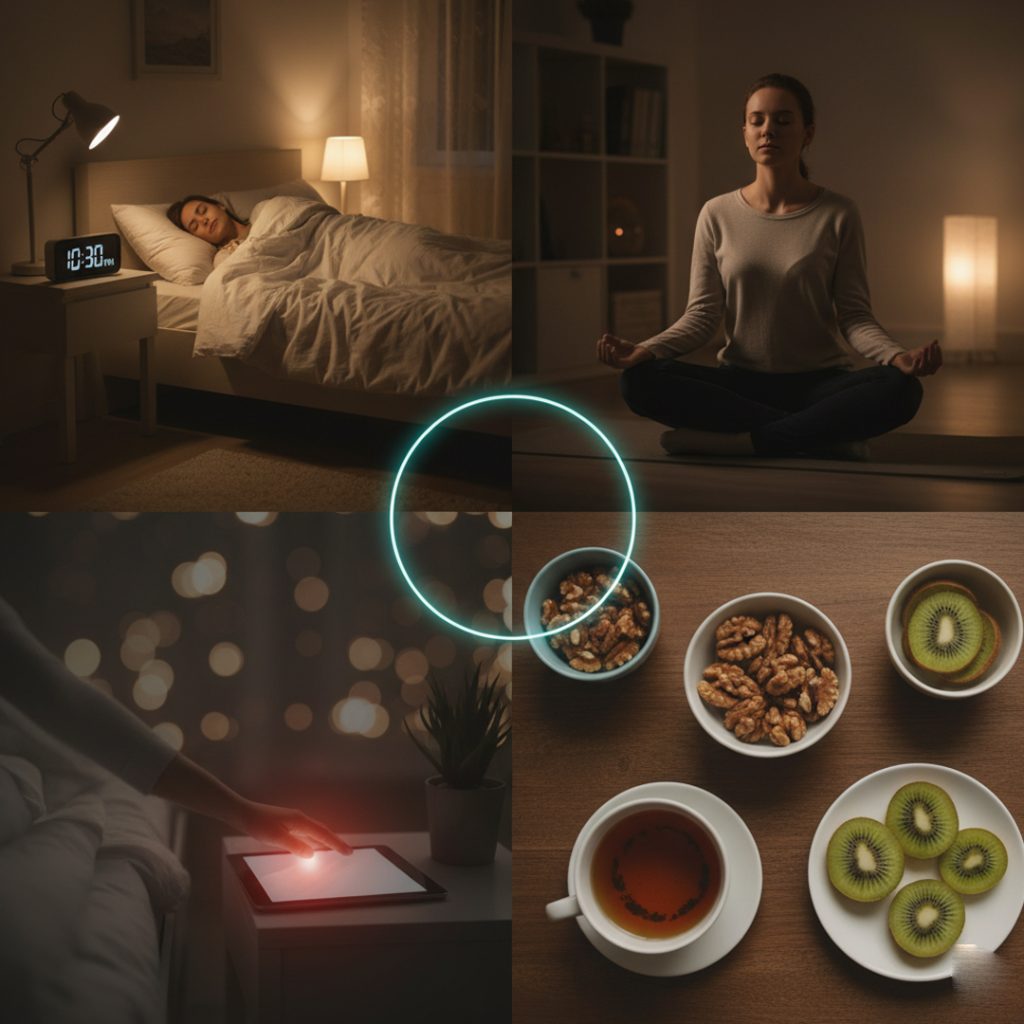
Diet alone is not enough—healthy sleep habits are also essential:
- Stick to a consistent sleep and wake schedule.
- Avoid electronic devices before bed.
- Create a dark, quiet, and comfortable sleep environment.
When combined with a sleep-friendly diet, these habits can lead to deeper, more restorative rest.
Diet is a vital part of improving sleep. Choosing the right foods and avoiding sleep disruptors can make a powerful difference in your daily energy and mood. If you struggle with sleep, try these simple dietary tips and watch how your nights transform.
Did you find these tips helpful?
At NutritionTravels, you’ll find more in-depth articles on nutrition, healthy sleep, and balanced lifestyle travel.
If you’re serious about improving your physical and mental health, explore our other articles today—and let us guide you toward a better way of living.