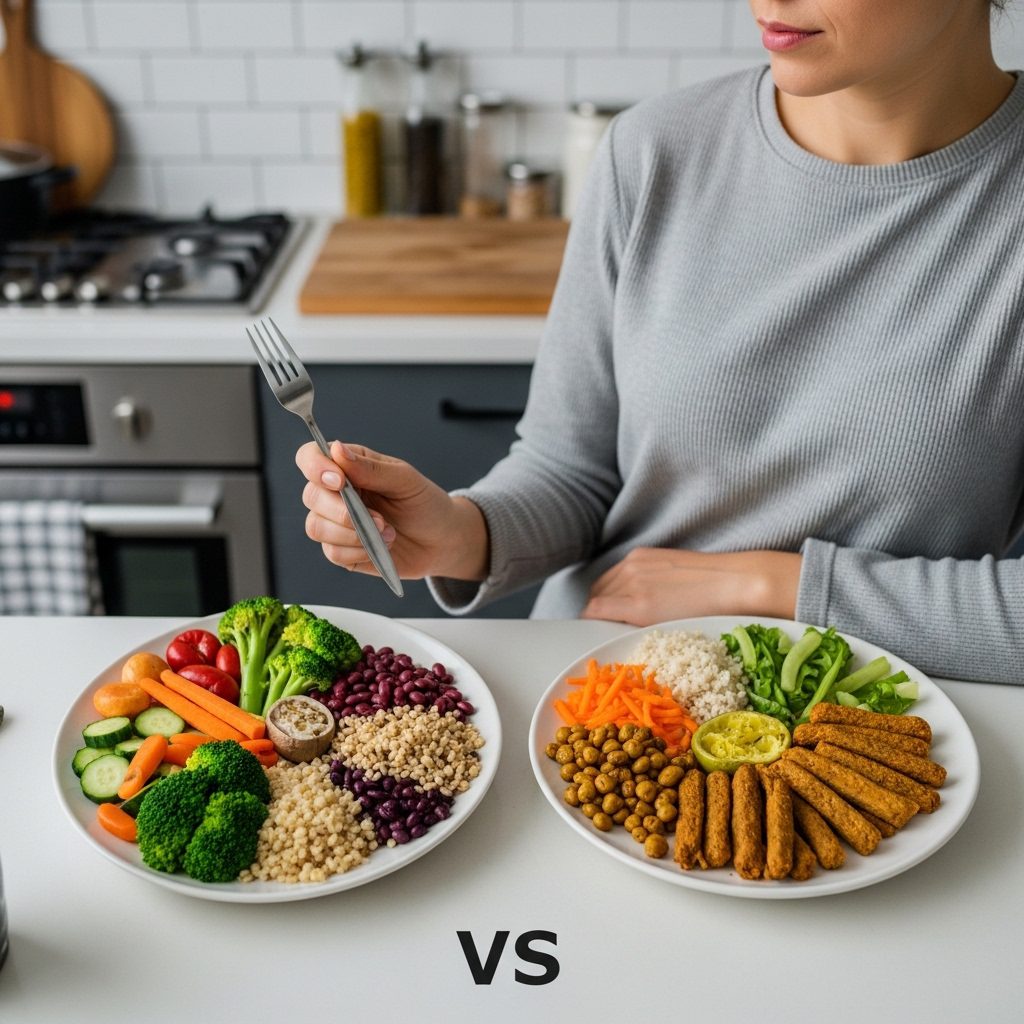

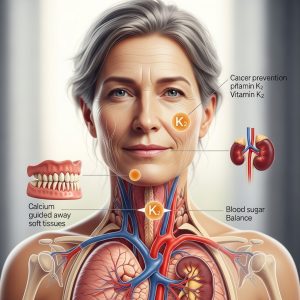
When it comes to nutrients that support your overall health, vitamin K2 is often overlooked—but it might just be one of the most important for your bones, heart, and even your teeth. Known as the “hidden hero,” vitamin K2 plays a critical role in directing calcium to the right places in the body: your bones and teeth, instead of soft tissues and arteries where it can cause harm.
In today’s health-conscious world, understanding vitamin K2 can be the key to stronger bones, a healthier heart, and long-term wellness.
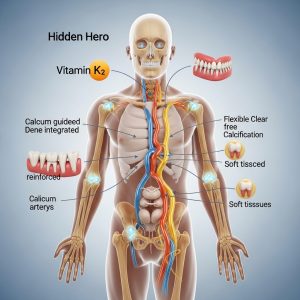
What Is Vitamin K2 and Why It Matters
Vitamin K2 is part of the vitamin K family, which is essential for blood clotting, bone metabolism, and heart health. Unlike vitamin K1, which is primarily found in leafy greens and supports blood clotting, K2 focuses on calcium regulation. It activates special proteins—like osteocalcin and Matrix Gla Protein (MGP)—to ensure calcium is deposited in bones and teeth while preventing its accumulation in arteries and soft tissues.
This balancing act makes K2 crucial for two of the most common health concerns today: osteoporosis and cardiovascular disease.
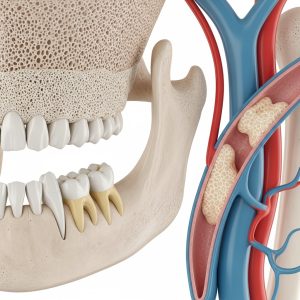
Key Benefits of Vitamin K2
1- Stronger Bones and Reduced Fracture Risk
One of the most impressive benefits of vitamin K2 is its ability to support bone health. K2 activates osteocalcin, a protein that binds calcium to the bone matrix. This process not only strengthens bones but also reduces the risk of fractures, particularly in postmenopausal women and older adults.
Studies suggest that consistent intake of K2 can significantly improve bone density and even reduce the risk of hip and vertebral fractures. When combined with vitamin D3, which improves calcium absorption, K2 ensures that calcium ends up where it belongs—in your bones.
2- Heart Health and Prevention of Arterial Calcification
Calcium in the wrong places, like your arteries, can lead to hardening and narrowing, increasing the risk of heart disease and stroke. Vitamin K2 helps prevent this by activating MGP (Matrix Gla Protein), which inhibits calcium from depositing in your arteries.
Research shows that higher K2 intake is linked to a lower risk of cardiovascular disease. Some studies even suggest that adequate K2 consumption can reduce heart-related mortality by up to 50%. By keeping your arteries flexible and preventing calcification, K2 supports long-term cardiovascular health.
3- Oral Health
Vitamin K2 also plays a role in dental health. It helps direct calcium to teeth, supporting enamel strength and reducing the risk of cavities and gum disease. Strong teeth, combined with strong bones, can dramatically improve overall health, especially as we age.
4- Works Synergistically with Vitamin D3
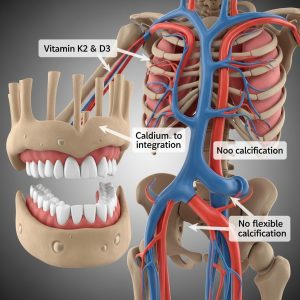
Vitamin D3 is essential for calcium absorption, but without K2, calcium may end up in soft tissues instead of bones. Together, these vitamins create a powerful duo: D3 absorbs calcium efficiently, and K2 directs it safely to bones and teeth. This synergy is especially important for those taking high doses of vitamin D3.
Other Potential Benefits
- Cancer Prevention: Early research suggests that K2 may help reduce the growth of certain cancer cells, including liver and prostate cancer.
- Blood Sugar Regulation: K2 may improve insulin sensitivity and help manage blood glucose levels.
- Kidney Health: By directing calcium away from soft tissues, K2 can help prevent kidney stones.
- Anti-Aging Effects: It may support skin elasticity and reduce premature wrinkles due to its role in calcium metabolism.
Natural Food Sources of Vitamin K2
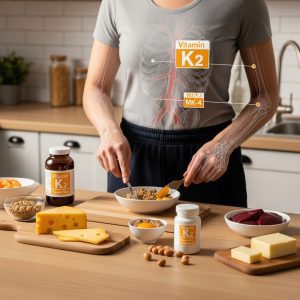
Unlike K1, which is abundant in leafy greens, vitamin K2 is primarily found in fermented foods and animal products:
- Fermented Foods:
- Natto (fermented soybeans) – the richest source
- Fermented cheeses such as Swiss, Gouda, and Brie
- Animal Products:
- Liver (chicken, beef, or other animals)
- Egg yolks (especially from pasture-raised eggs)
- Butter and full-fat dairy
- Meat, particularly poultry thighs
Incorporating these foods into your diet can ensure you get enough K2 naturally. For those who struggle to consume enough, supplements (especially MK-7 form) may be necessary.
Recommended Dosage
The recommended daily intake for adults varies slightly:
- Women: ~90 micrograms per day
- Men: ~120 micrograms per day
Note: Always consult your healthcare provider before taking K2 supplements, especially if you are on blood-thinning medications such as warfarin, as K2 can affect clotting.

MK-7 vs. MK-4: Understanding the Forms of K2
Vitamin K2 comes in several forms, with MK-4 and MK-7 being the most studied:
- MK-4: Found in animal products, shorter half-life, needs daily intake
- MK-7: Found in fermented foods, better absorbed, longer half-life, and may be more effective for long-term supplementation
For optimal bone and heart benefits, MK-7 is often recommended, especially when combined with vitamin D3.
Tips for Maximizing Vitamin K2 Benefits
- Combine with Vitamin D3: Ensures calcium is absorbed and directed correctly.
- Eat a Balanced Diet: Include both fermented foods and animal products.
- Stay Active: Weight-bearing exercises complement K2’s effects on bone density.
- Consult Your Doctor: Especially important if taking blood thinners or managing heart conditions.
The Difference Between K1 and K2
- Vitamin K1: Found mainly in leafy greens; important for blood clotting.
- Vitamin K2: Found in fermented and animal foods; supports bone strength, heart health, and proper calcium distribution.
While K1 keeps your blood clotting properly, K2 ensures calcium strengthens your skeleton and protects your arteries—a hidden but vital function.
Vitamin K2 is a nutrient that often flies under the radar but plays a critical role in protecting your bones, heart, and overall health. By activating proteins like osteocalcin and MGP, it directs calcium to the right places and prevents it from causing harm.
Including K2-rich foods like natto, cheeses, egg yolks, and liver—or supplementing with MK-7—can help reduce the risk of osteoporosis, fractures, and heart disease. Combined with vitamin D3, it becomes a powerful duo for long-term wellness.
Start prioritizing vitamin K2 today to strengthen your bones, protect your heart, and enhance your overall health. For more health insights and supplement tips, visit Nutrition Travels!