

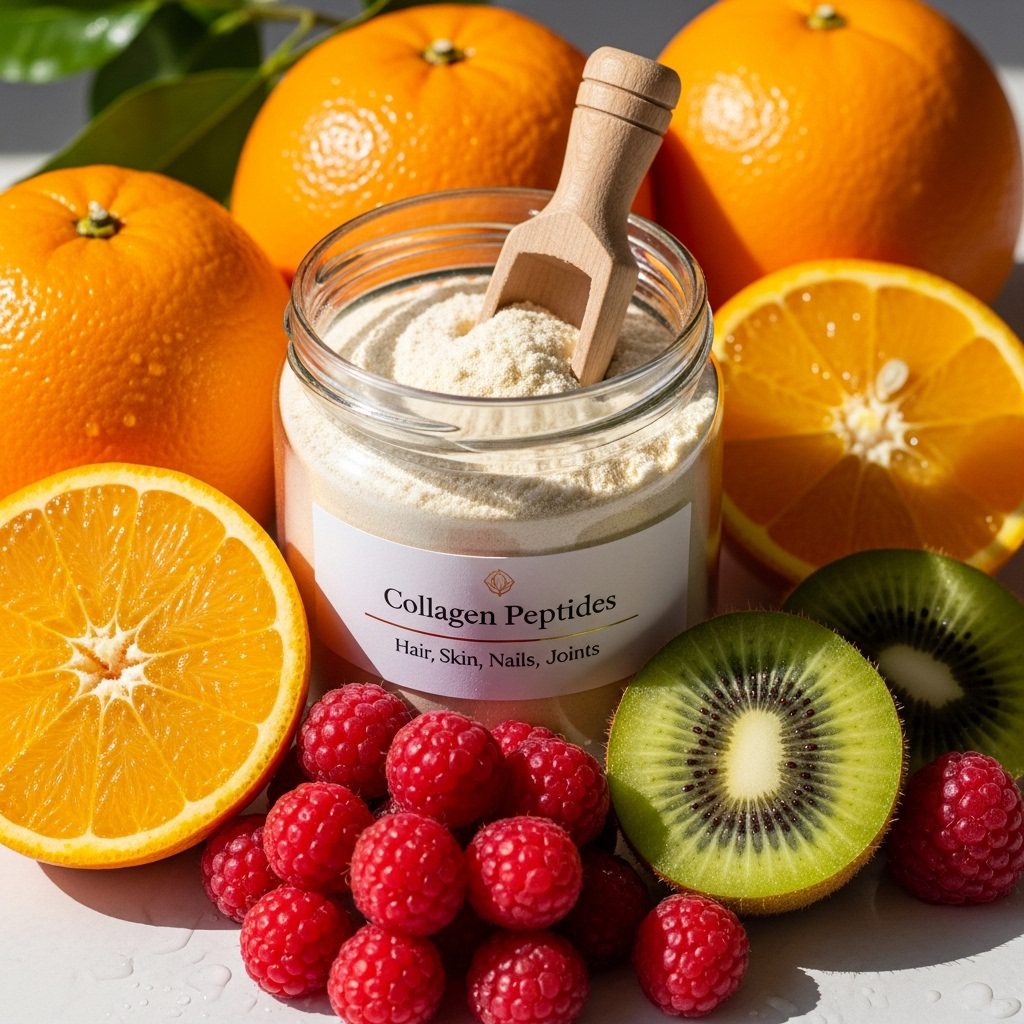
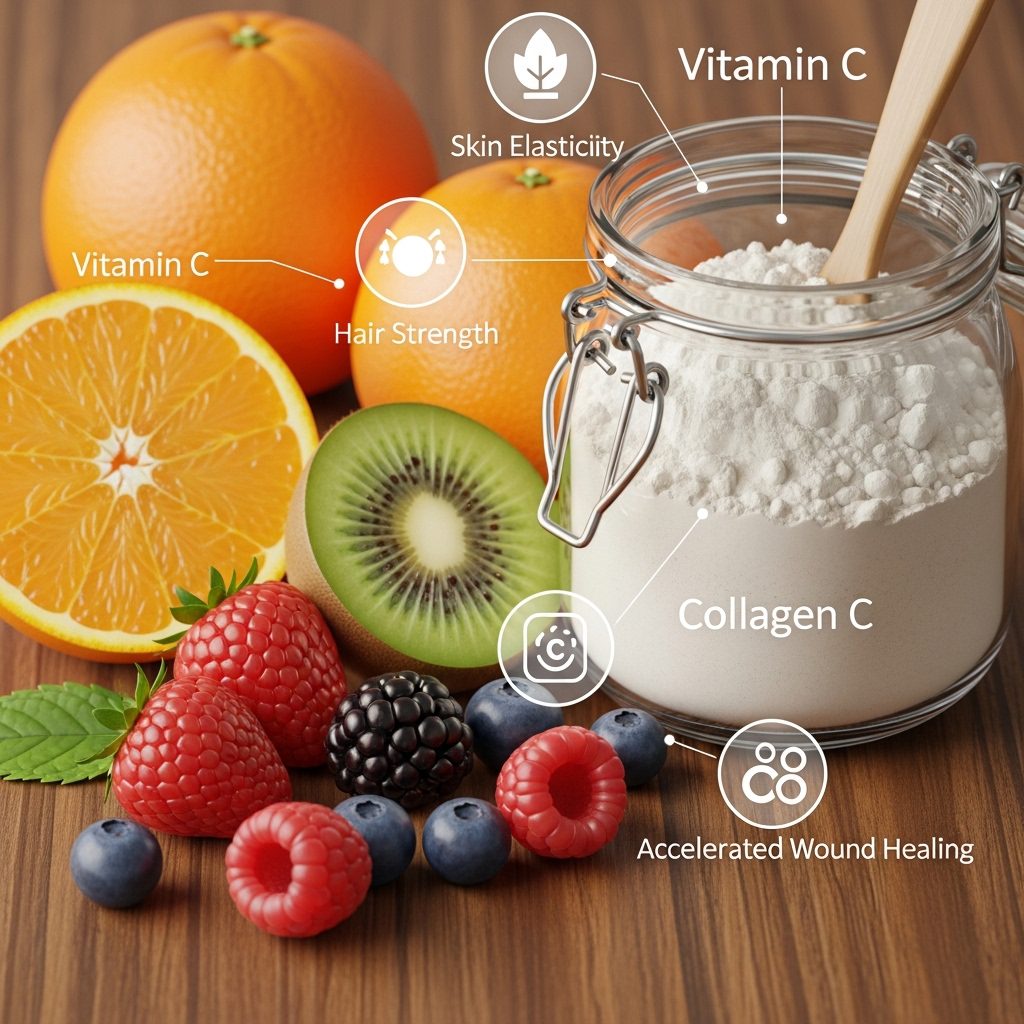
Vitamin C is widely known for its immune-boosting properties, but its most remarkable role lies in collagen synthesis—the process that gives structure and resilience to your skin, joints, and connective tissues. Collagen is essential for skin elasticity, hair and nail strength, joint mobility, and wound healing. Without sufficient vitamin C, collagen fibers weaken, leading to sagging skin, slower recovery, and joint discomfort.
Combining vitamin C with collagen, whether through diet or supplements, can amplify these benefits, making it a key duo for anyone seeking healthier skin, stronger joints, and overall vitality.
How Vitamin C Supports Collagen Production:
Vitamin C acts as a cofactor for collagen-synthesizing enzymes, primarily prolyl hydroxylase and lysyl hydroxylase. These enzymes stabilize collagen fibers by linking amino acids into strong, resilient structures. Without vitamin C, newly formed collagen is weak and prone to breakdown, impacting not just skin but also cartilage, ligaments, and blood vessels.
Additionally, vitamin C protects existing collagen from oxidative damage caused by free radicals, environmental stressors, and UV exposure. This dual role—building and protecting collagen—makes vitamin C indispensable for tissue health.
Key Mechanisms:
- Activates collagen-producing fibroblasts: Stimulates cells responsible for generating new collagen, improving skin firmness and reducing wrinkles.
- Prevents collagen degradation: Maintains the stability of collagen fibers against environmental damage.
- Antioxidant protection: Shields both new and existing collagen from free radical damage.
- Supports tissue repair: Enhances wound healing by promoting new collagen formation and strengthening blood vessels.

Benefits of Vitamin C and Collagen for Skin, Hair, and Nails:
Radiant, Youthful Skin:
- Elasticity and firmness: Collagen provides structural support, while vitamin C ensures its stability, reducing fine lines and sagging.
- Reduced pigmentation: Vitamin C helps regulate melanin, brightening skin and minimizing sun-induced discoloration.
- Protection from aging: Its antioxidant properties combat UV-induced free radicals, slowing skin aging and preventing damage.
Stronger Hair and Nails:
Vitamin C combined with collagen enhances keratin production, supporting thicker hair and firmer nails. This helps reduce hair breakage and nail splitting.
Accelerated Wound Healing:
By promoting collagen synthesis, vitamin C speeds up tissue repair, making it essential for faster recovery from cuts, scrapes, or surgical wounds.
How this combination supports joint and bone health:
Supporting Cartilage and Ligaments:
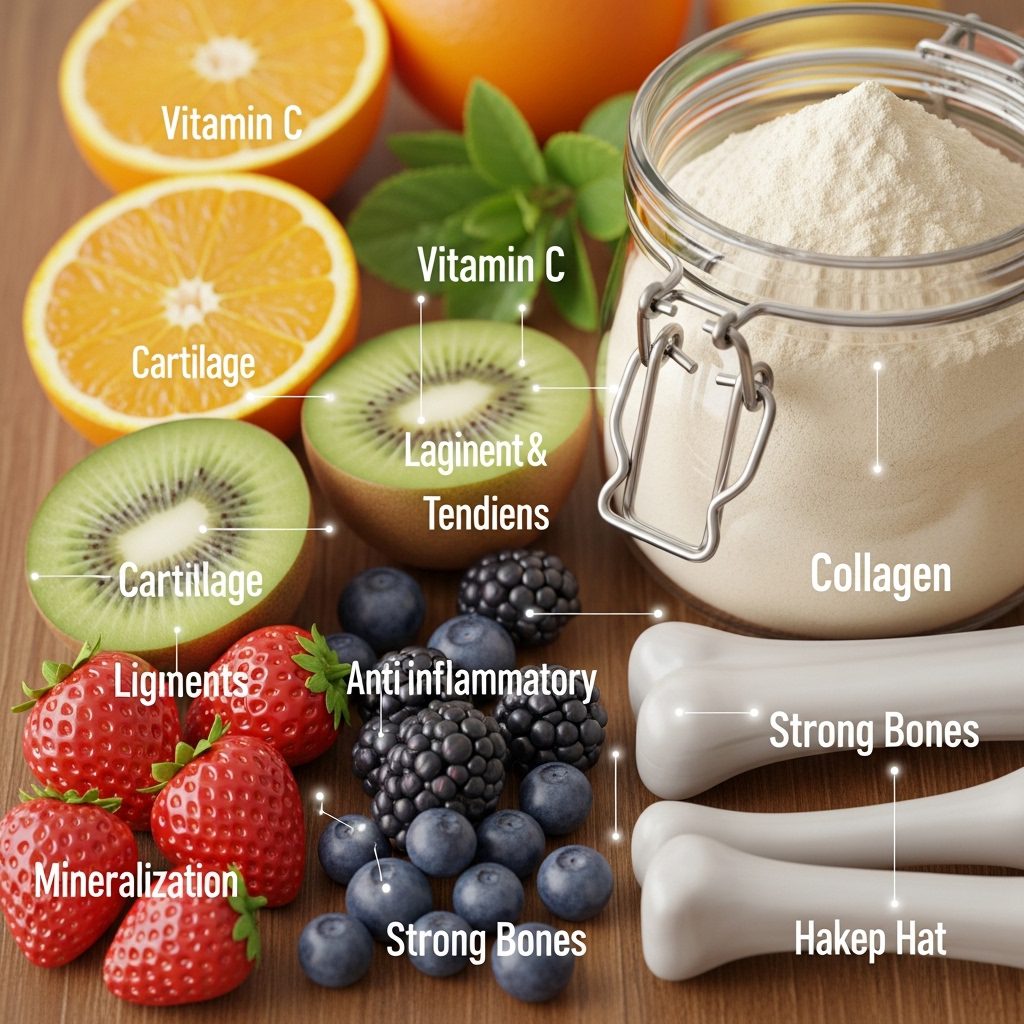
Collagen forms the structural framework of cartilage, ligaments, and tendons. Adequate vitamin C ensures collagen fibers remain strong, maintaining joint flexibility and reducing wear and tear.
Reducing Inflammation:
Vitamin C’s antioxidant and anti-inflammatory properties help protect joints from oxidative stress and chronic inflammation, which are common contributors to arthritis and age-related degeneration.
Bone Strength:
Vitamin C indirectly supports bone health by enhancing collagen in the bone matrix, improving mineralization, and reducing the risk of fractures or osteoporosis.
Signs of Deficiency:
Insufficient vitamin C can have widespread effects:
- Weak, sagging skin
- Slow wound healing
- Hair and nail brittleness
- Joint pain or stiffness
- Gum bleeding or easy bruising
Severe deficiency can lead to scurvy, characterized by poor collagen formation, bleeding gums, joint pain, and delayed recovery from injuries.
Best Natural Sources of Vitamin C:
To maximize collagen production, focus on foods rich in vitamin C:
- Citrus fruits: Oranges, lemons, grapefruits, tangerines
- Kiwi: Especially golden kiwi, which has higher vitamin C content than oranges
- Red and yellow bell peppers: Provide up to twice the vitamin C of citrus
- Strawberries and berries: High in antioxidants and vitamin C
- Cruciferous vegetables: Broccoli, Brussels sprouts, and cauliflower
- Leafy greens: Spinach, kale, and parsley for additional support
Pairing these foods with protein sources—like chicken, fish, or bone broth—supports optimal collagen synthesis.

How to Combine Them Effectively:
Dietary synergy:
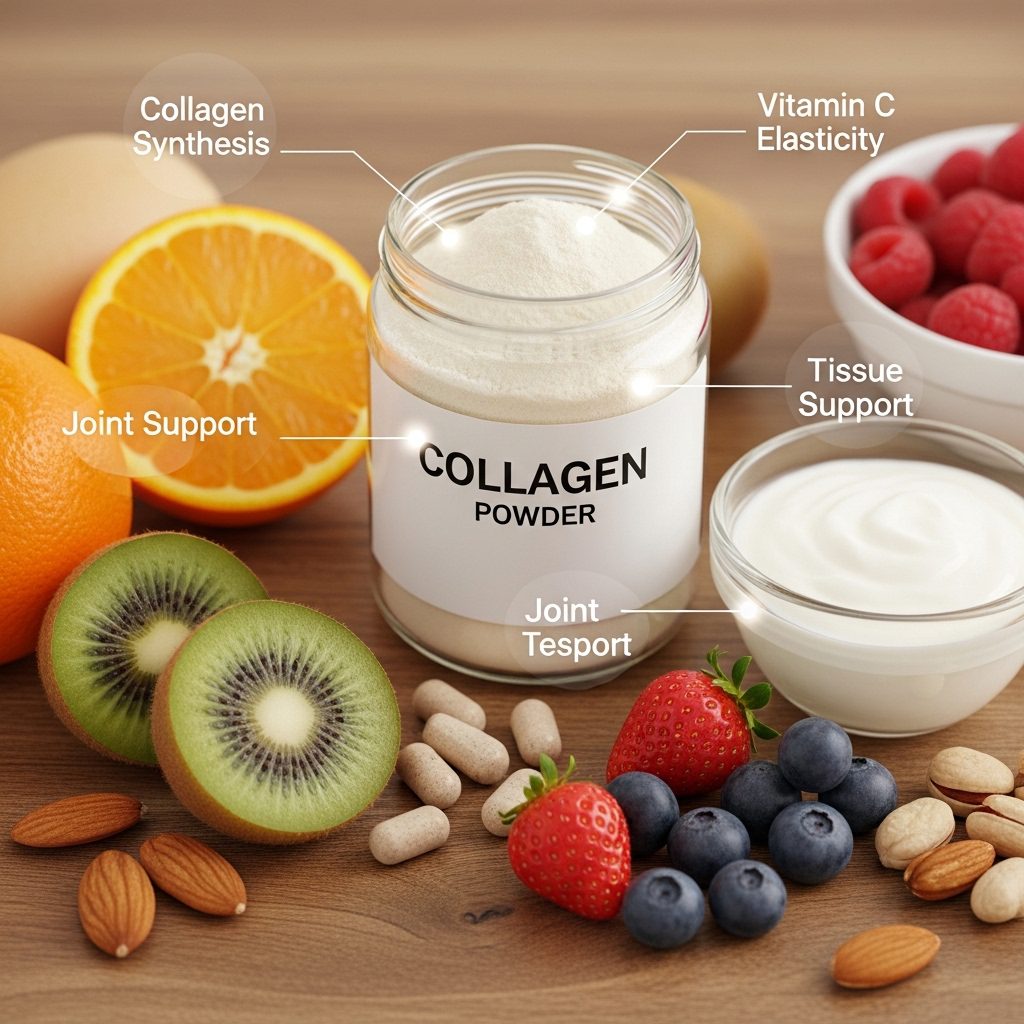
Pairing fruits rich in essential antioxidants with protein-rich foods helps the body naturally build and maintain strong connective tissues. This combination provides both the building blocks and the support needed for optimal results.
Supplements:
Using protein-based powders or capsules alongside supportive nutrients can improve absorption and enhance benefits for skin elasticity and joint comfort.
Timing:
Taking these nutrients on an empty stomach or about 30 minutes before meals may support better utilization by the body.
Consistency:
Visible improvements in skin texture and joint flexibility usually appear after a few weeks of regular intake, making consistency more important than high doses.
Common Myths:
Myth: “It’s only useful for preventing colds.”
Truth: Its role extends far beyond immunity, playing a key part in tissue repair, skin structure, and joint support.
Myth: “More is always better.”
Truth: The body naturally eliminates excess amounts, and very high intake may lead to digestive discomfort or other issues.
Myth: “Supplements are better than food.”
Truth: Whole foods provide a complex mix of nutrients and antioxidants that work together more effectively than isolated forms.
Practical Tips for Maximum Benefit:
- Consume at least 5 servings of fruits and vegetables daily, ensuring one is vitamin C-rich.
- Include fresh, raw foods when possible, as heat can degrade vitamin C.
- Avoid excessive sugar and processed foods, which can damage collagen.
- Stay hydrated to maintain skin elasticity and support cellular processes.
- Limit sun exposure and smoking to prevent collagen breakdown.
This nutrient duo works hand in hand to maintain youthful, resilient skin, strong nails and hair, and healthy joints. This combination promotes collagen production, protects existing fibers from damage, accelerates wound healing, and supports overall tissue integrity. By including vitamin C-rich foods and collagen sources in your daily routine, you can achieve long-lasting benefits that go beyond simple immunity.
Looking to improve your skin health, strengthen your joints, and support healthy aging naturally? Explore more science-backed nutrition guides on Nutrition Travels and discover practical strategies for long-term wellness.