

Are You Really Hungry — Or Just Feeding Your Feelings? That comforting snack you crave after a tough day might not be about your stomach at all — it could be your emotions calling. Learning to tell emotional hunger from physical hunger is like giving yourself a secret superpower for better health and self-awareness.

Why Is It Important to Know the Difference?
Most people think hunger just means an “empty stomach,” but the truth is much deeper.
Hunger can be caused by physical needs or emotional triggers. If we don’t spot the difference, we risk turning food into a quick emotional band-aid — eating for sadness, boredom, or stress — which can lead to overeating, guilt, and a cycle that’s hard to break.
Awareness is not a luxury — it’s a tool that helps us eat more mindfully and live with more peace.
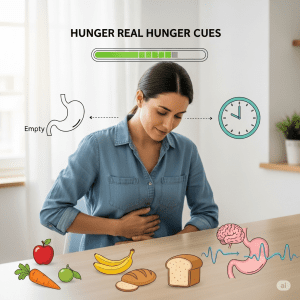
First: What Is Real (Physiological) Hunger?
Physical hunger is when your body genuinely needs food for energy and function.
It usually happens after several hours without eating or when your blood sugar drops. Your body gives clear signs when this kind of hunger appears.
Signs of Real Hunger:
- It builds up gradually, not suddenly.
- You feel a physical emptiness or tightness in your stomach.
- You’re open to eating almost anything — from a simple sandwich to a salad — not chasing that one specific “comfort” craving.
- You can wait a little before eating.
- After eating, you feel satisfied without guilt.
The Science Behind It:
- The stomach releases a hormone called ghrelin, which sends hunger signals to the brain.
- A part of the brain called the hypothalamus monitors your energy and sugar levels and signals when it’s time to eat.
Second: What Is Emotional Hunger?
Emotional hunger is when your feelings — not your body — push you to eat.
In this case, you’re not eating because you need energy, but because you feel sad, stressed, bored, or overwhelmed.
Signs of Emotional Hunger:
- Comes on suddenly, without warning.
- Is linked to emotions like sadness, anger, or anxiety.
- Craves specific comfort foods — often sugary or fatty.
- You keep eating even after you’re full.
- You feel guilty or regretful afterward.
- You turn to food as a quick escape from emotions — or as a “reward” after a stressful moment — even if your body doesn’t actually need it.
Why Does It Happen?
When we’re under stress or emotional pressure, the brain releases dopamine, a chemical that gives us temporary pleasure.
Food becomes a quick way to feel better — even though it doesn’t solve the real problem.

Third: A Simple Comparison
| Feature | Real | Emotional |
| How it starts | Gradually | Suddenly |
| Root cause | Physical need for energy | Emotional or mental trigger |
| Type of food desired | Whatever’s available to refuel | Highly specific cravings (often sweets, salty snacks, or your go-to comfort dish) |
| After eating | You feel full and content | You feel guilt or regret |
Fourth: How Can I Manage Emotional Hunger?
It’s not wrong to feel like eating when you’re stressed — but what’s important is to be aware of it.
Here are some tips to help you manage emotional hunger:
- Ask yourself: “Am I really hungry, or do I feel something else?”
- Drink a glass of water, and wait a few minutes.
- Change your focus: Try walking, reading, or listening to music.
- Write down your feelings: Keep a simple “hunger diary” to note when the urge to eat hits, what you were feeling, and what you chose to do instead. Over time, you’ll spot clear patterns.
- Try breathing exercises or meditation to reduce stress.

It may be hard to tell emotional and physical hunger apart at first, but it gets easier with time and self-awareness.
The more in tune you are with your body and emotions, the better choices you’ll make around food.
And always remember:
Food is made to nourish your body — not to replace your emotions.
Start your journey to mindful eating with Nutrition Travels!
Learn to distinguish real hunger from emotional cravings and get daily tips to help you and your family make healthier food choices. Visit our site now to discover more smart nutrition secrets for a vibrant, happy life!