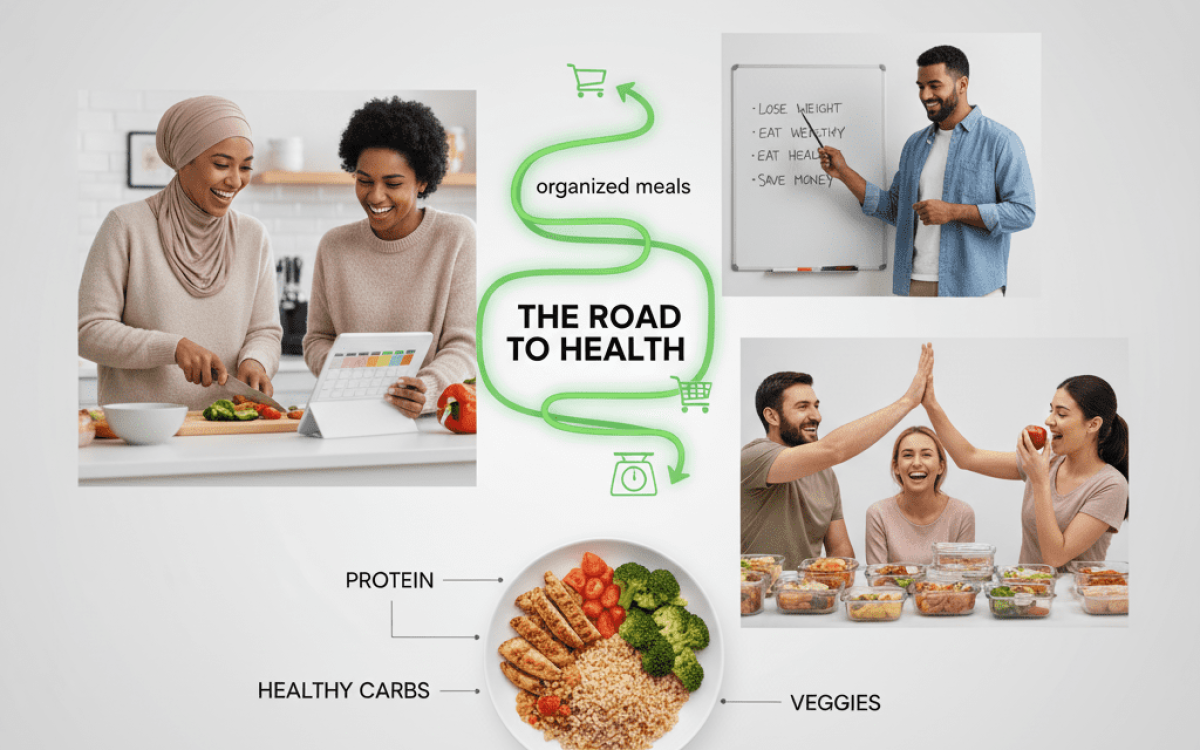
If you’re aiming to lose weight and stay healthy without complications or strict diets, creating a weekly meal plan is one of the best decisions you can make. It helps you control calories, avoid random eating, reduce waste, simplify shopping, and most importantly, keeps you steadily on track toward your goal without stress or dietary chaos.
Instead of waking up every day wondering, “What will I eat today?” you’ll have a clear vision and a practical system that fits your personal needs, lifestyle, and your goal of losing weight and staying healthy. With a little planning, healthy habits become part of your day—not an extra burden.
Define Your Goal for a Weekly Meal Plan :
Before you begin, ask yourself: Why do I want a weekly meal plan?
Is your goal to:
-
- Lose weight?
- Maintain good health?
- Organize meal times?
- Avoid fast food?
- Reduce spending?
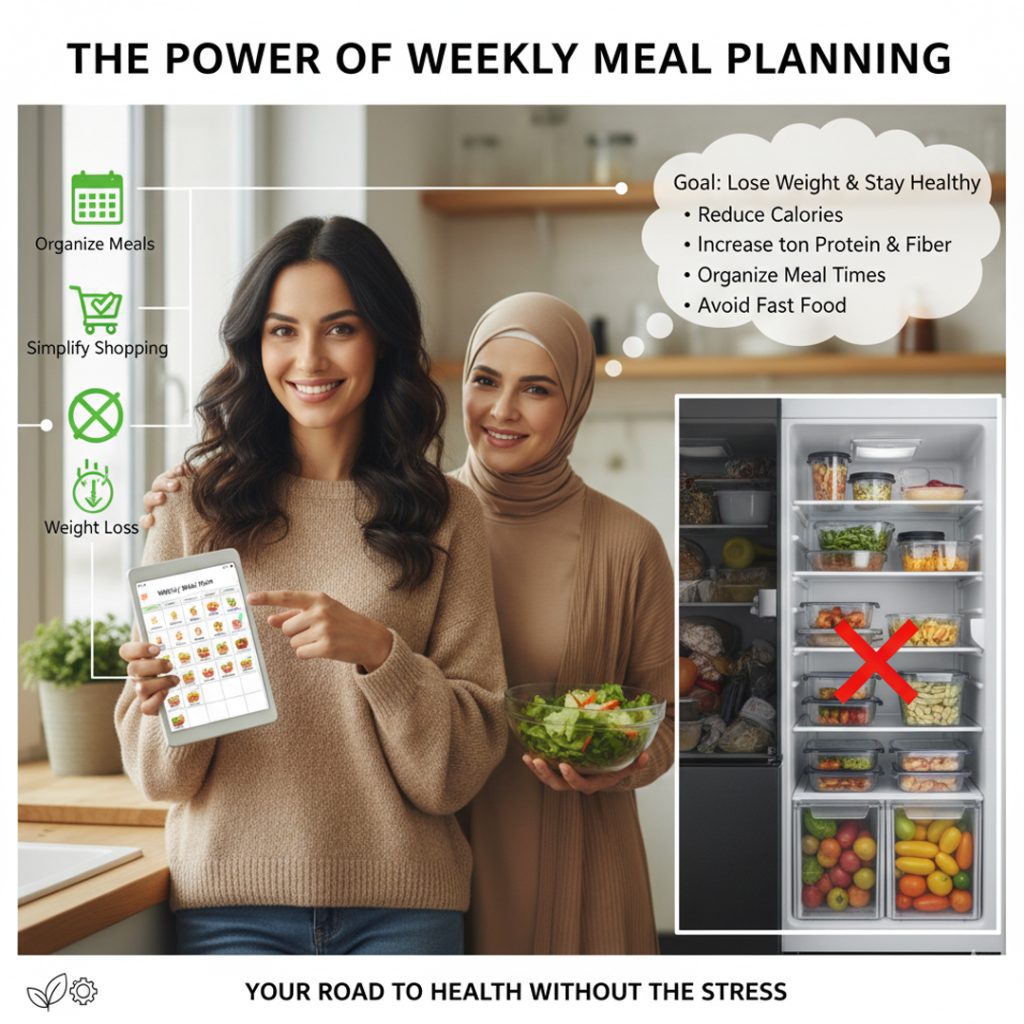
Since your goal is to stay healthy and lose weight, that will be the main focus of your weekly meal plan. This means concentrating on:
-
- Reducing calories
- Increasing protein and fiber
- Limiting sugars
- Organizing meal times
- Avoiding reliance on fast food
Writing your goal at the start of the week helps you stick to your plan with intention rather than treating it as a temporary experiment.
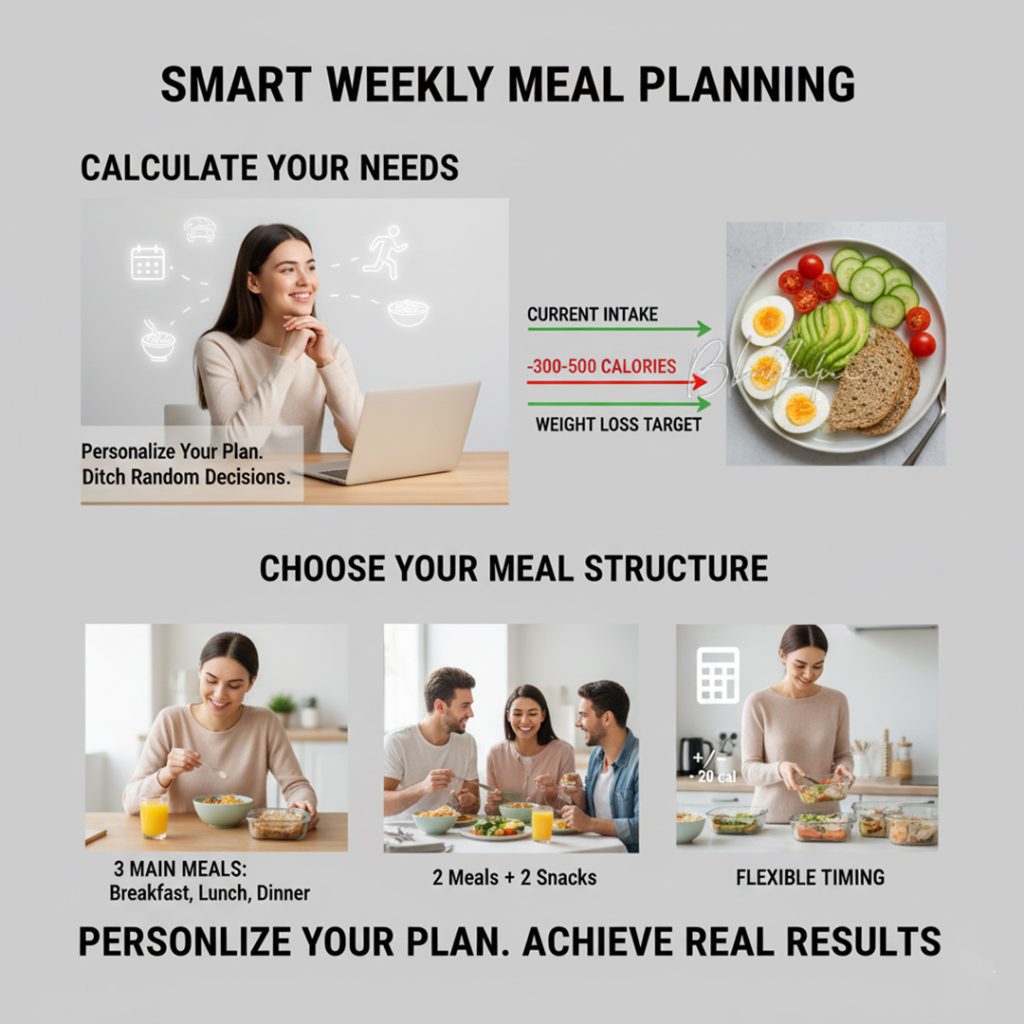
Calculate Your Daily Calorie Needs
To create an effective weekly meal plan, you should have a general idea of how many calories your body needs for weight loss. Generally, an adult aiming to lose weight healthily can reduce 300–500 calories from their daily intake to support gradual weight loss without deprivation.
No complicated calculations needed—just determine:
-
- Is your lifestyle low-activity or moderate?
- How many meals do you want per day?
- Do you enjoy snacks?
When your plan is built around your needs, your choices become intentional and aligned with your goal, instead of random decisions that easily derail any diet.
Choose the Number of Daily Meals :
Since you’re one person with a goal of weight loss, you can structure your plan based on one of the following patterns:
- Three main meals (breakfast – lunch – dinner)
- Two main meals + two snacks
- Fixed calorie intake with flexible timing
Choosing your style from the start makes it easier to organize ingredients and portion sizes without confusion or daily decision fatigue.
Create a List of Core Foods :
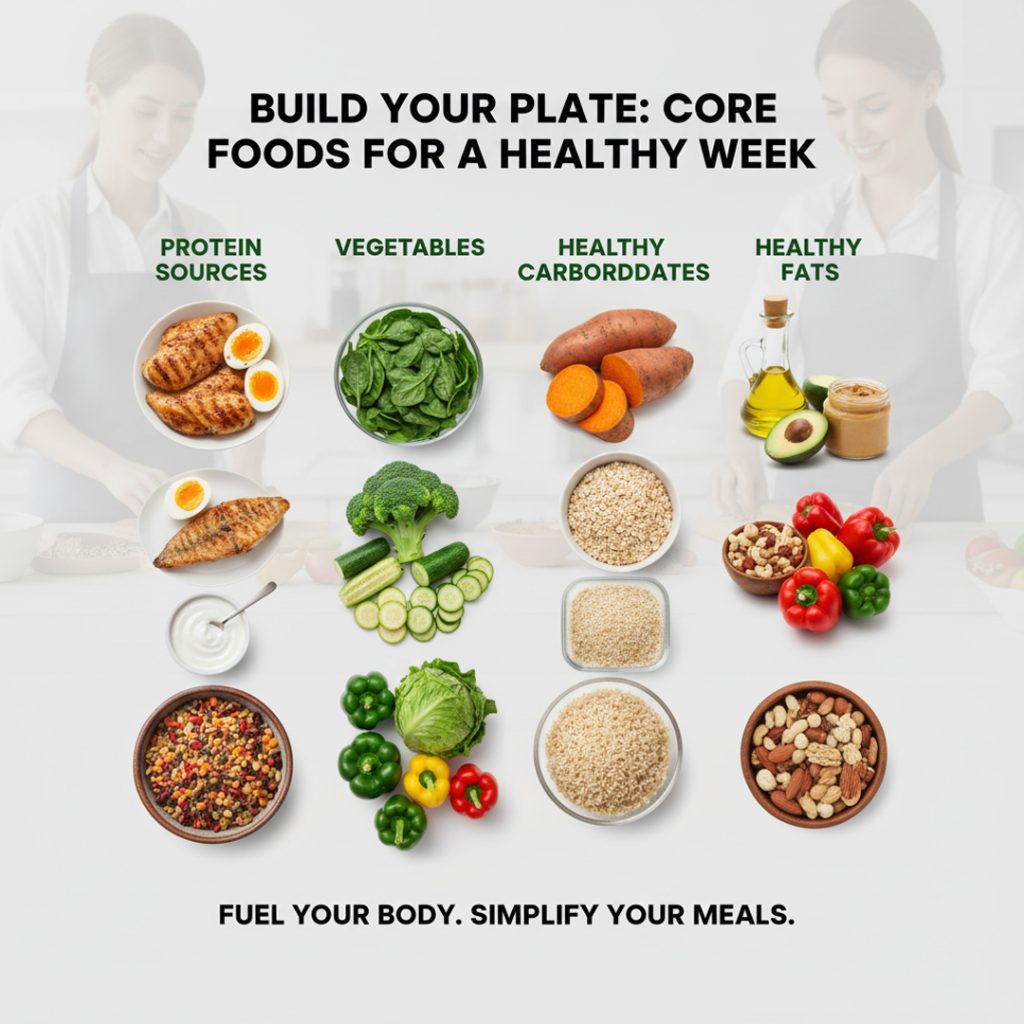
To build a successful weekly meal plan, you need a clear and varied list of foods that includes:
Protein sources:
-
- Grilled chicken
- Eggs
- Fish
- Legumes (like lentils and beans)
- Greek yogurt
Vegetables:
-
- Spinach
- Broccoli
- Zucchini
- Cucumber
- Lettuce
- Bell peppers
Healthy carbohydrates:
-
- Oats
- Sweet potatoes
- Brown rice
- Quinoa
Healthy fats:
-
- Olive oil
- Avocado
- Nuts
Having these basics ready makes building your weekly meal plan easier—especially if you’re cooking only for yourself.
Understand Your Weekly Routine Before Planning
To make your weekly meal plan realistic, consider these questions:
-
- Do you work outside the house daily or for limited hours?
- Do you eat most of your meals at home?
- Do you prefer preparing food for one day or the whole week?
- Do you have fixed eating times?
Once you answer these, your weekly meal plan will better fit your life—and you’ll avoid food waste or breaking the plan due to schedule conflicts.
Build Balanced Meals for Each Day in your weekly meal plan :
Now comes the practical part. Each meal in your weekly meal plan should include three components:
- Protein – for slow digestion, satiety, and muscle support
- Vegetables – for fiber, cleansing, and vitamins
- Healthy carbs or natural fats – for energy and comfort

Example of one day in a weekly meal plan for one person aiming to lose weight:
1. Breakfast:
Oats with low-fat yogurt and a light fruit.
2. Lunch:
Grilled chicken breast + green salad + 1 tbsp olive oil.
3. Dinner:
Lentil soup or fish with steamed vegetables.
4. Optional Snack:
A handful of nuts or an apple.
When you apply this logic across the week, you’ll have a complete, flexible plan that helps you lose weight without stress.
Create a Clear Weekly Schedule
You can write your weekly meal plan in a notebook, a PDF file, a paper on the fridge, or a mobile app. The only requirement is that it’s clearly visible to you.
Simple table example:
| Day | Breakfast | Lunch | Dinner | Snack |
| Saturday | Oats + Yogurt | Chicken + Salad | Lentils + Vegetables | Apple |
| Sunday | Eggs + Vegetables | Fish + Brown Rice | Tuna Salad | Nuts |
And you continue the rest of the week the same way.
Having a written plan reduces random decision-making significantly and makes you more committed and motivated.
Smart Meal Prep :
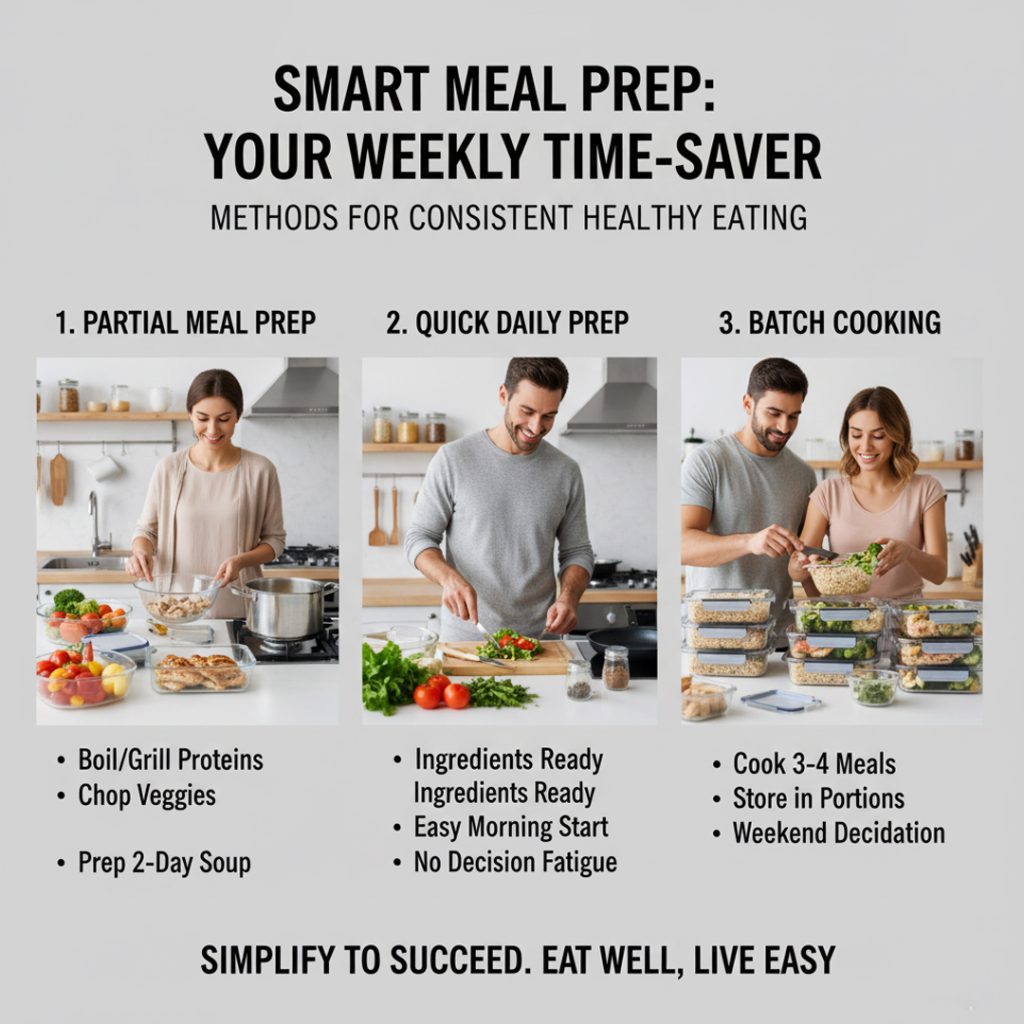
One of the key elements of a successful plan is preparing some foods in advance to save time and avoid giving up when hungry or busy.
You can follow one of these methods:
Partial Meal Prep for your weekly meal plan
- Boil or grill chicken or fish
- Prepare a soup that lasts two days
- Chop vegetables and store them in sealed containers
Quick Daily Prep:
- Prepare ingredients for each meal separately without full cooking
- Start your day easily without confusion or lengthy cooking
Batch Cooking:
- Dedicate one day of the week (e.g., Friday or Saturday)
- Prepare 3–4 main meals and store them in containers
- Divide portions according to calories and goals
The more practical and simple your plan is, the more likely you’ll stick to it consistently.
Smart Food Storage for your weekly meal plan :
Good storage makes it easier to commit to your plan and prevents spoilage and waste.
Refrigerator storage:
- Sealed containers for salads and vegetables
- Cooked protein for 2–3 days
- Yogurt and cut fruit
Freezer storage:
- Chicken or fish pieces ready to cook
- Soup, lentils, or cooked vegetables
- Healthy frozen bread for quick meals
Complete Example of a weekly meal plan for Weight Loss
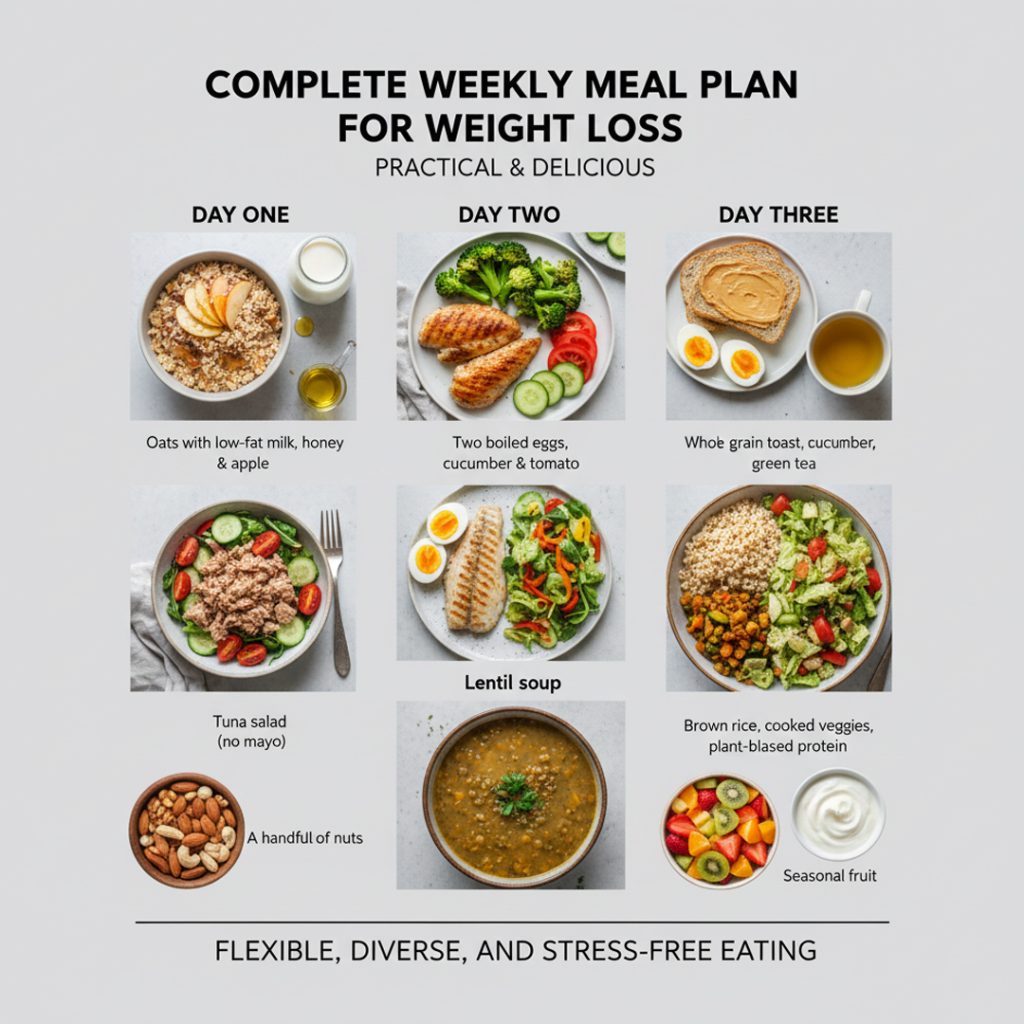
Here’s a practical model for one person who wants a healthy plan that supports weight loss without deprivation:
weekly meal plan : Day One
- Breakfast: Oats with low-fat milk + 1 tbsp honey + apple
- Lunch: Grilled chicken breast + broccoli + 1 tbsp olive oil
- Dinner: Tuna salad without mayonnaise
- Snack: A handful of nuts
Day Two:
- Breakfast: Two boiled eggs + cucumber and tomato
- Lunch: Grilled fish + green salad
- Dinner: Lentil soup
- Snack: Yogurt
weekly meal plan :Day Three
- Breakfast: Whole grain toast + peanut butter + green tea
- Lunch: Brown rice + cooked vegetables + meat or plant-based alternative
- Dinner: Fattoush or tabbouleh salad
- Snack: Seasonal fruit
(And you repeat the pattern with slight variations based on preference.)
This approach makes your plan flexible, diverse, and suitable for weight loss without stress or boredom.
Handling Outings and Social Events in your weekly meal plan :
It’s normal to have meetings, visits, long shifts, or travel. Don’t worry—here are smart solutions:
- Take a ready snack (apple, nuts, yogurt)
- Order salad or grilled protein when eating out
- Drink water before meals to reduce hunger
- Avoid soda and white bread
When your plan is flexible, you won’t feel guilty or like you’ve failed in any situation.
Ready to take charge of your health and build a weekly meal plan that supports weight loss and well-being?
Don’t just read—visit NutritionTravels now to explore practical tips, easy recipes, and step-by-step guides that help you create a personalized weekly meal plan that fits your goals and lifestyle.
Start your journey to a healthier body and better energy today!