
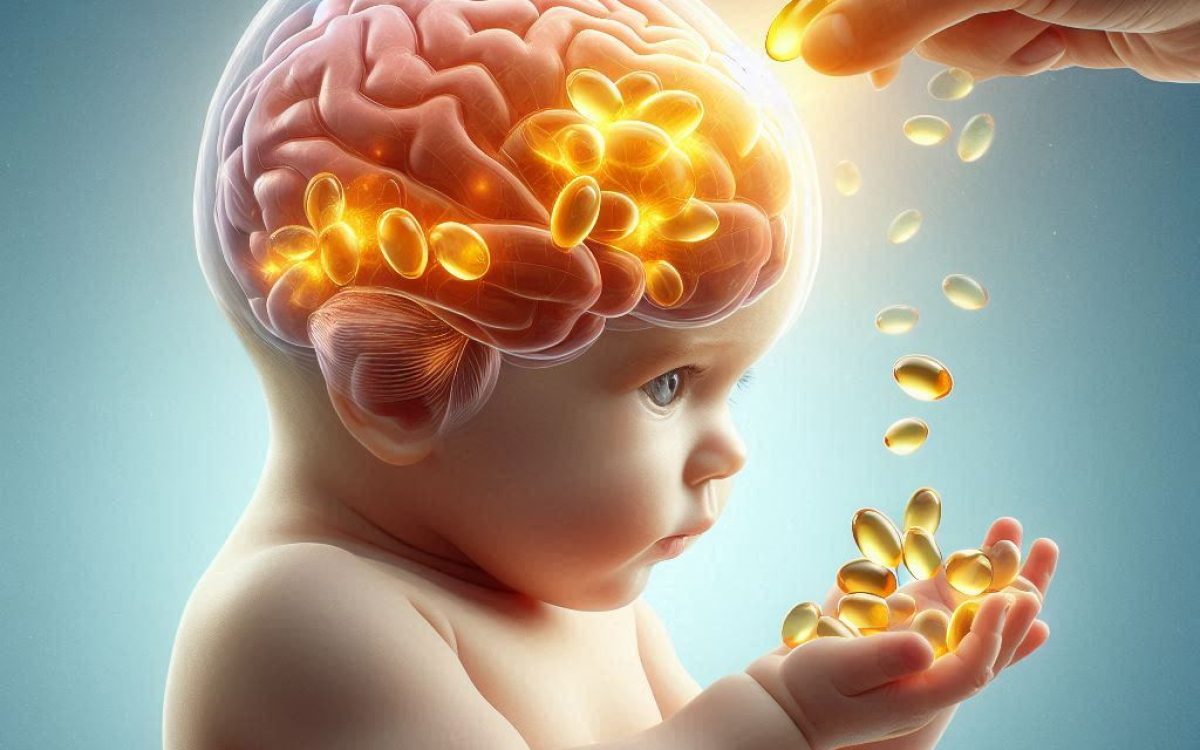
A child’s brain is one of the most complex and sensitive organs in the human body, with millions of neural connections forming during the early years of life. Nutrition plays a crucial role in supporting a child’s mental and cognitive development, and Omega-3 is considered one of the most important nutrients that directly affect brain health.

What Are Omega-3 Fatty Acids?
Omega-3 is one of the essential fatty acids that play a key role in a child’s growth and development. However, the body cannot produce Omega-3 on its own, so it must be obtained from external sources either through food or dietary supplements. The most important types of Omega-3 for infants and children are:
- Docosahexaenoic Acid (DHA): A major component of the child’s brain and retina, DHA contributes to the formation of cell membranes and facilitates the transmission of neural signals.
- Eicosapentaenoic Acid (EPA): Supports neural functions, improves mood, enhances learning ability, and has anti-inflammatory effects.
During pregnancy, the fetus receives most of its DHA directly from the mother’s blood, making maternal nutrition essential for healthy brain development.
Why Is Omega-3 Important for Baby Brain Development?
1. Promotes Neural Growth:
DHA is a key part of the cell membranes of neurons and helps improve the flexibility of brain membranes and the speed of neural signaling. Children who receive adequate DHA often have better learning and concentration abilities.

2. Enhances Cognitive Functions:
Studies have shown that children who consume Omega-3 exhibit higher language skills, logical reasoning, and problem-solving abilities compared to those who do not get enough.
3. Supports Vision and Visual Development:
DHA is an essential component of the retina. Children who receive sufficient DHA during pregnancy and breastfeeding enjoy better vision and healthy visual development.
4. Positive Impact on Mood and Behavior:
Research suggests that Omega-3 can reduce mood disorders and hyperactivity in children and help improve focus and emotional calmness, supporting academic performance and social behavior.
Natural Sources of Omega-3:
1. Nuts and Seeds:
Walnuts, chia seeds, flaxseeds contain ALA, a type of Omega-3 that the body can partially convert to DHA and EPA.
They can be added to breakfast meals, yogurt, or salads.

2. Fatty Fish:
Salmon, mackerel, tuna, sardines are very rich in DHA and EPA.
It is recommended that pregnant women eat fish two to three times per week, choosing low-mercury options.
3. Plant Oils:
Flaxseed oil, walnut oil, hemp oil are good sources of Omega-3, suitable for adding to food after cooking or in salads.

Best Ways to Boost Your Child’s Brain with Omega-3:
1. Start During Pregnancy: Consume foods rich in DHA and EPA from the early months to support fetal brain growth.
2. Breastfeeding: Breast milk contains DHA if the mother has an adequate Omega-3 intake.
3. Diverse Diet After 6 Months: When introducing solid foods, gradually add Omega-3 sources, such as fortified cereals with nuts or finely ground fish.
4. Interactive Activities: Play, reading, and social interaction enhance the effectiveness of Omega-3 in supporting cognitive and mental development.
5. Balanced Nutrition: In addition to Omega-3, ensure sufficient intake of proteins, vitamins (especially B12 and D), and minerals essential for brain development.

Omega-3 fatty acids play a vital role in supporting children’s brain growth, enhancing cognitive abilities, and improving vision and behavior. Through a balanced diet rich in Omega-3, parents can provide a strong foundation for their children’s brain health in the long term.
It is recommended to focus on fatty fish, nuts, seeds, and plant oils, and add supplements when necessary while maintaining balanced nutrition and physical activity. Investing in Omega-3 is a direct investment in your child’s intelligence, happiness, and future health.
For more information and tips about Omega-3 and children’s nutrition, you can visit our website at Nutrition Travels to access all the useful and up-to-date details.