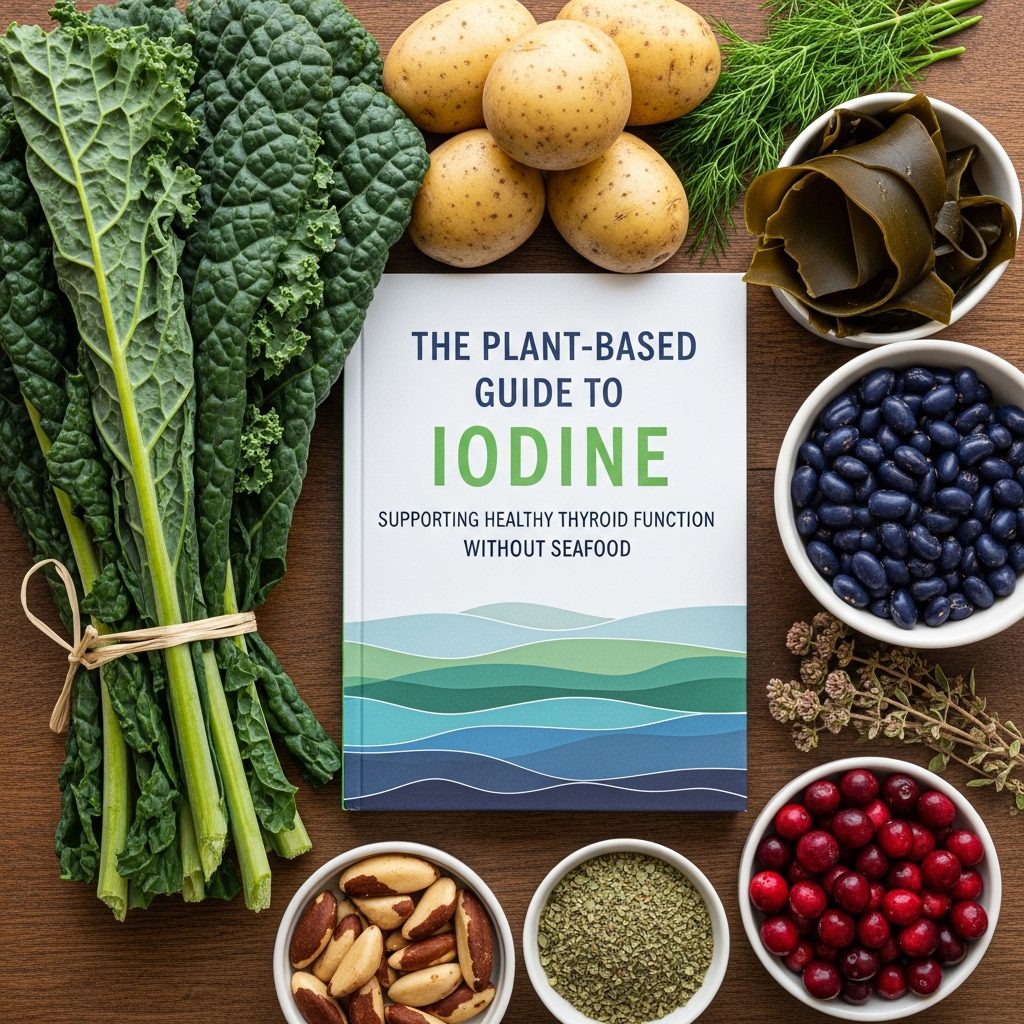
Is it possible to maintain thyroid health without eating fish or other seafood? This question comes up frequently, especially among those following a plant-based diet. The plant-based guide to iodine provides a clear, practical framework for meeting your needs safely and effectively.
Iodine is a trace mineral with a huge impact. It is essential for producing thyroid hormones (T3 and T4), which regulate metabolism, energy levels, body temperature, focus, and mood. Insufficient iodine intake can subtly affect daily activity and overall well-being.
Traditionally, fish and seafood are the most well-known iodine sources. But what about plant-based diets? Can a plant-based approach provide enough iodine to keep the thyroid functioning properly? The answer is yes, with thoughtful planning.
The Plant-Based Guide to Iodine: Why Iodine Matters:
Have you ever felt persistent fatigue, constant cold, or slow metabolism? These could be signs of reduced thyroid function, with iodine deficiency being one potential cause. Understanding and following a plant-based iodine plan ensures you cover your daily needs without relying on seafood.
The Challenge for Plant-Based Diets:
The issue isn’t that plant-based diets lack iodine entirely, but that its content in vegetables and grains can be inconsistent. Soil iodine levels vary from one region to another, which affects the iodine naturally present in plant foods.
The plant-based iodine guide focuses on reliable sources and strategies to maintain consistent intake.

Key Sources of Iodine for Plant-Based Diets:
1- Iodized Salt:
The simplest and most accessible method. Adding a moderate amount of iodized salt to meals can cover a large portion of daily needs. Moderation is important to avoid excessive sodium intake.
2- Seaweed (in controlled amounts):
Certain types, like nori, contain iodine, but some seaweeds have very high levels. The guide emphasizes balance — not overconsumption — to keep intake safe.
3- Fortified Plant-Based Dairy Alternatives:
Some plant-based milks and yogurts are fortified with iodine. Reading nutrition labels helps ensure you’re getting a meaningful contribution toward your daily requirement.
The Plant-Based Guide to Iodine: Is Every Plant-Based Eater at Risk of Iodine Deficiency?
Not necessarily. Adequate iodine intake depends on your overall dietary pattern, use of iodized salt, and meal variety. Studies do indicate, however, that plant-based individuals may be at higher risk if planning is overlooked. This highlights the value of a deliberate, informed approach rather than guesswork.
Signs That Iodine Intake May Be Low:
-
- Chronic fatigue
- Difficulty losing or maintaining weight
- Dry skin
- Hair thinning
- Enlarged thyroid (goiter)
These symptoms are not a self-diagnosis but should prompt review of iodine intake according to plant-based guidelines.

Balance: The Core Principle:
Daily iodine needs:
-
- Adults: ~150 mcg
- Pregnancy: ~220 mcg
- Lactation: ~290 mcg
Excess iodine can also disrupt thyroid function, especially in those genetically predisposed to thyroid disorders. The plant-based iodine guide emphasizes three principles:
-
- Moderation
- Consistency
- Avoiding arbitrary supplement use
The Plant-Based Guide to Iodine: Ensuring Adequate Intake Without Overdoing It:
1- Use iodized salt wisely:
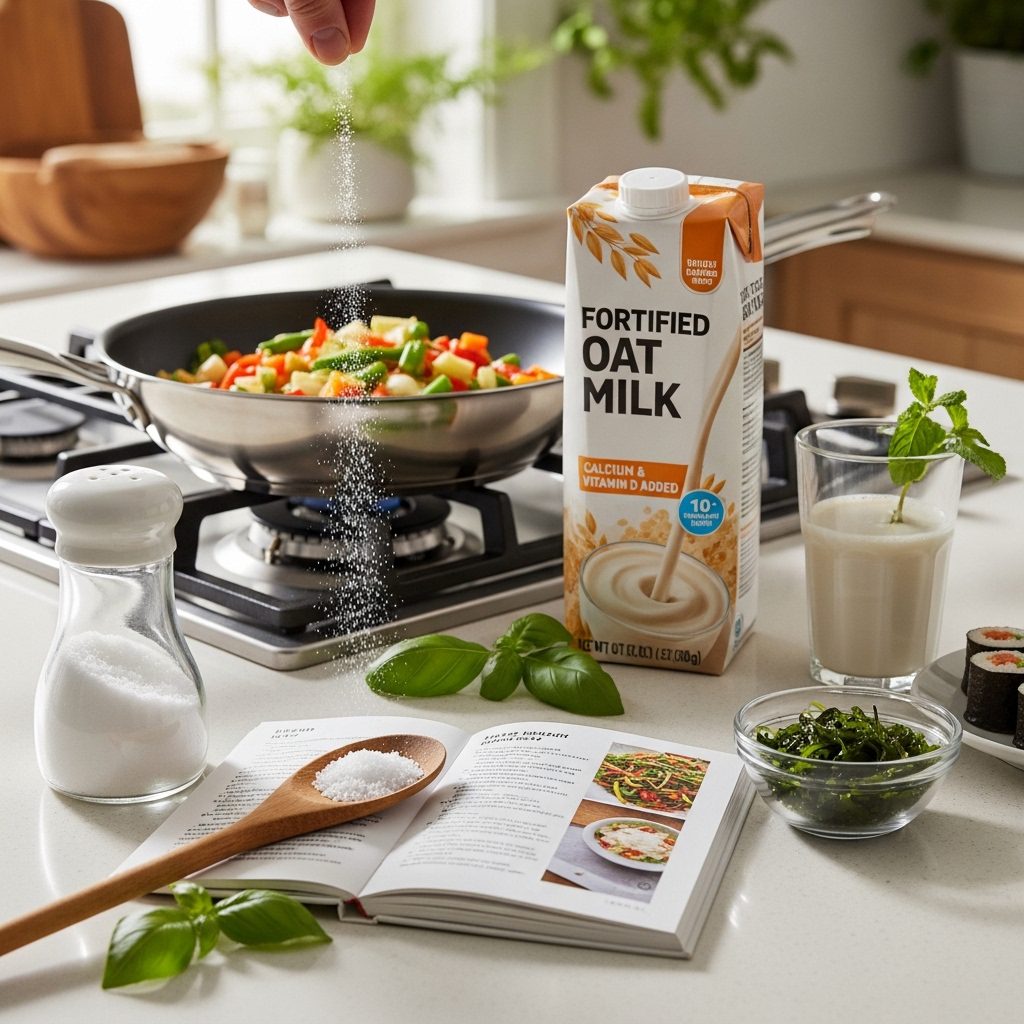
A quarter to half teaspoon daily (within safe sodium limits) usually meets daily requirements. If you use non-iodized sea salt, intake may be insufficient.
2- Moderate seaweed consumption:
Some seaweeds contain iodine far above daily needs. The guide recommends small, infrequent portions, not daily consumption.
3- Monitor supplements:
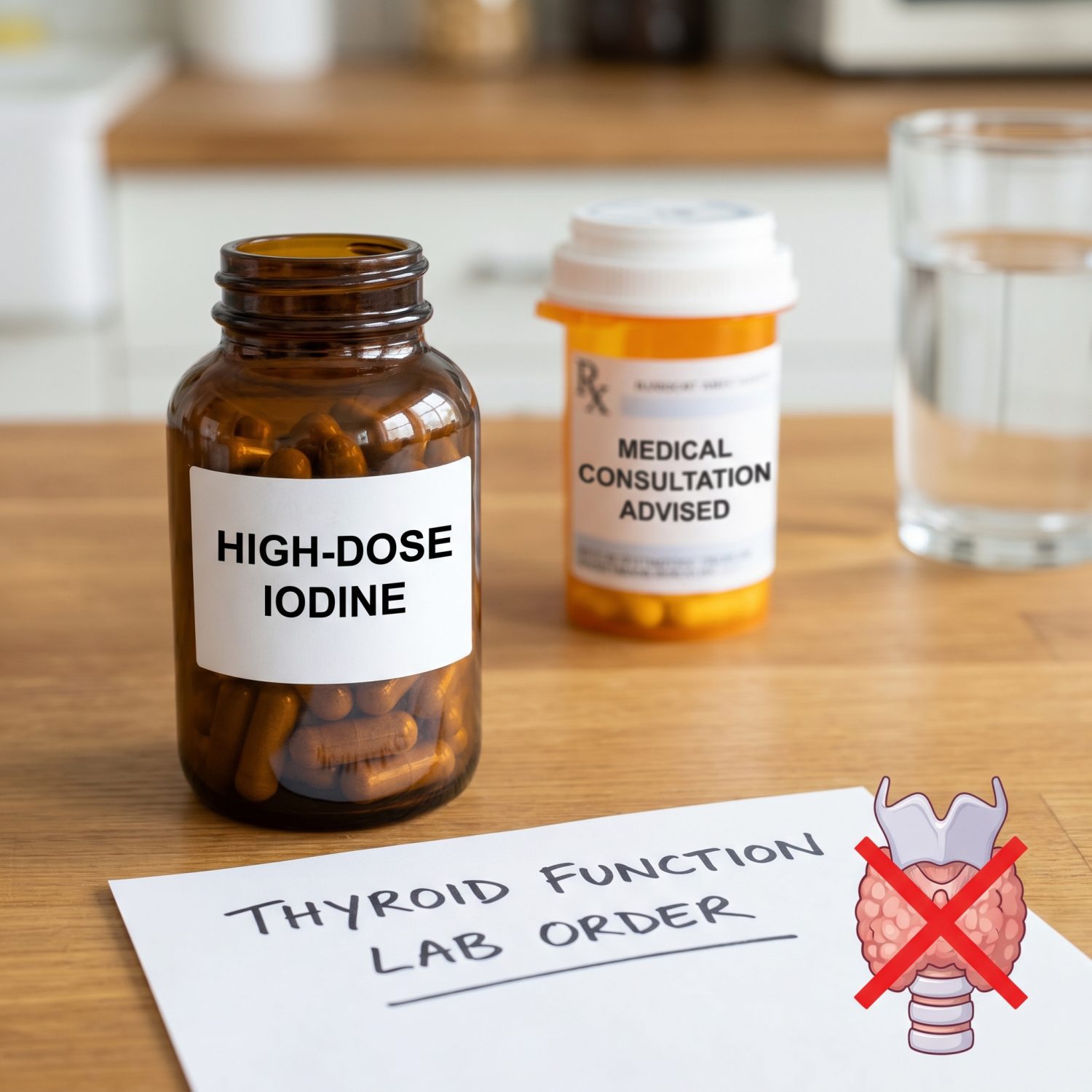
Certain supplements contain high-dose iodine. These should only be taken after medical consultation and lab testing, as excess intake can disrupt thyroid function rather than prevent deficiency.
A Simple Weekly Plan to Apply the Plant-Based Iodine Guide:
- Use iodized salt in cooking moderately
- Consume fortified plant-based milk several times a week
- Include small amounts of seaweed once a week (if desired)
- Avoid combining supplements with foods extremely high in iodine during the same period
This ensures steady iodine intake without large fluctuations.
The Plant-Based Guide to Iodine: When to Seek Medical Testing:
Medical evaluation is recommended if you:
-
- Are planning pregnancy
- Are pregnant or breastfeeding
- Have a family history of thyroid disorders
- Experience ongoing fatigue or weight changes
Thyroid function testing helps guide safe dietary or supplement adjustments.
The Plant-Based Guide to Iodine: What Science Says:
According to the National Institutes of Health (NIH), iodine deficiency is a major, preventable cause of thyroid disorders worldwide. However, excess intake can also impair thyroid function. Balanced planning is essential.
Awareness Makes the Difference:
Following a plant-based diet doesn’t mean sacrificing thyroid health. On the contrary, understanding the plant-based iodine guide allows you to support energy, metabolism, and hormonal health confidently.
Smart nutrition relies on knowledge, not fear. The more you understand trace minerals like iodine, the more informed and balanced your dietary choices become.
For those who want deeper insights on mindful nutrition and practical lifestyle tips combined with wellness and travel inspiration, visit nutritiontravels, where we translate science into actionable guidance for everyday life.