

Have you ever wondered why some children struggle more with frequent colds or complain about difficulty seeing in dim light? Sometimes, the answer isn’t complicated — it may come down to one essential nutrient, Understanding The Importance of Vitamin A can make a meaningful difference in supporting both vision and immune development during the critical school years.
Between ages 6 and 12, children experience steady physical growth, cognitive development, and constant exposure to new environments — classrooms, playgrounds, sports activities. Their bodies need proper nutritional support to keep up. And vitamin A plays a central role in that process.
In this first part, we’ll explore how The Importance of Vitamin A connects directly to healthy eyesight and why it matters more than many parents realize.
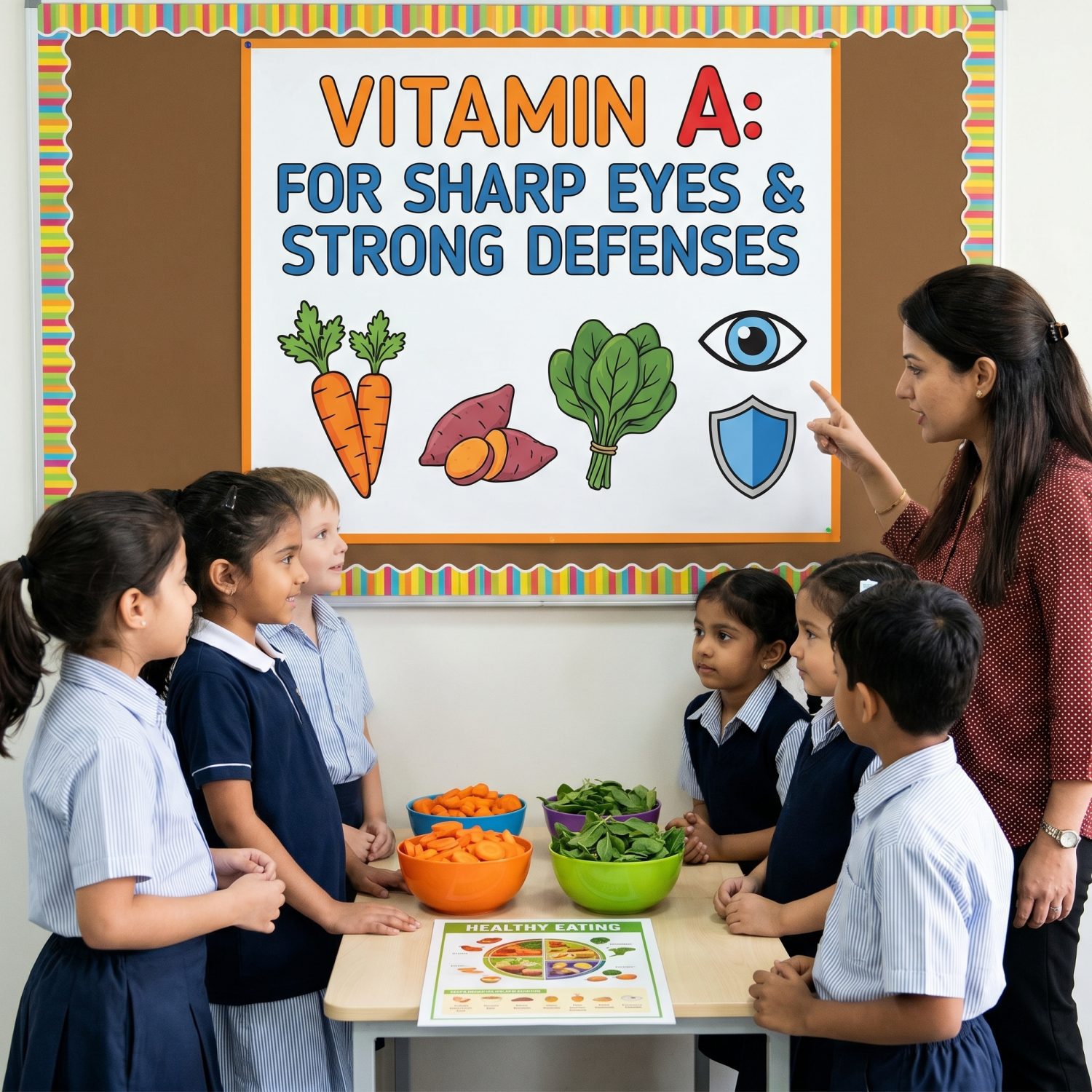
The Importance of Vitamin A: What Is Vitamin A and Why Does It Matter?
Vitamin A is a fat-soluble vitamin that supports several key functions:
- Vision
- Immune defense
- Cell growth and development
- Skin and mucosal integrity
When discussing The Importance of Vitamin A, most people immediately think about eyesight — and they’re right to do so. But its role goes beyond simply “helping you see”.
Vitamin A exists in two primary forms:
-
- Preformed vitamin A (retinol) — found in animal products
- Provitamin A carotenoids (like beta-carotene) — found in plant foods
Both forms contribute to maintaining healthy vitamin A levels when consumed in balanced amounts.

The Importance of Vitamin A for Healthy Vision:
Let’s start with what vitamin A is best known for: vision.
Inside the retina, vitamin A is essential for producing rhodopsin — a pigment that helps the eye adapt to low-light conditions. Without adequate levels, children may struggle with night vision or adjusting to dim environments.
Early signs of deficiency can include:
-
- Difficulty seeing in low light
- Dry eyes
- Increased eye sensitivity
Severe deficiency, though less common in developed regions, can lead to serious complications.
Understanding The Importance of Vitamin A helps parents appreciate why consistent intake through food matters — especially during school years when visual demands increase (reading, screen use, classroom boards).
The Importance of Vitamin A in Immune Development:
Beyond vision, vitamin A plays a powerful role in immune health.
School-aged children are constantly exposed to new viruses and bacteria. Vitamin A helps maintain the integrity of mucosal barriers — such as those lining the respiratory and digestive tracts — which act as the body’s first line of defense.
Additionally, vitamin A supports the production and function of white blood cells, helping the immune system respond effectively.
Research shows that adequate intake contributes to better immune resilience. This reinforces The Importance of Vitamin A as more than just a “vision vitamin” — it’s a foundational nutrient for growing bodies.
Are Children Getting Enough?
Many children obtain sufficient vitamin A through a varied diet. However, picky eating habits, low vegetable intake, or restrictive diets can reduce intake.
Common dietary sources include:
-
- Carrots
- Sweet potatoes
- Spinach
- Eggs
- Dairy products
- Liver (in moderation)
Encouraging colorful plates often supports adequate intake naturally.
In Part Two, we’ll explore:
-
- Recommended daily amounts
- Signs of deficiency and excess
- Practical meal strategies
- When supplementation might be considered
Let’s continue building a clearer picture of The Importance of Vitamin A for healthy growth.
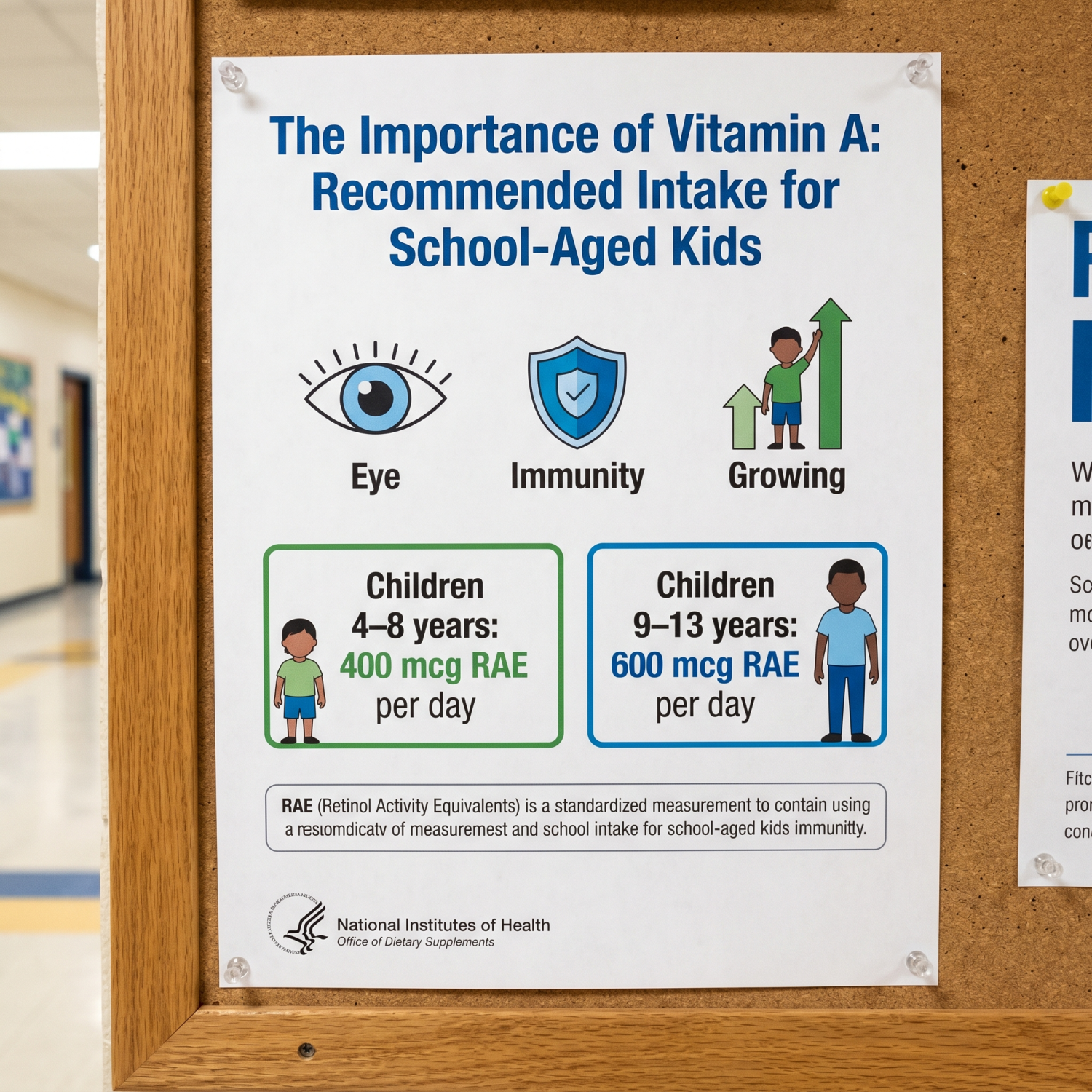
The Importance of Vitamin A: Recommended Intake for School-Aged Kids:
According to the U.S. National Institutes of Health (NIH):
- Children 4–8 years: 400 mcg RAE per day
- Children 9–13 years: 600 mcg RAE per day
RAE stands for Retinol Activity Equivalents — a measurement that accounts for different forms of vitamin A.
For official guidelines, visit the NIH Office of Dietary Supplements .
This government resource provides evidence-based recommendations and safety information related to The Importance of Vitamin A.
Can Too Much Vitamin A Be Harmful?
Yes — and this is important.
Because vitamin A is fat-soluble, excess amounts (especially from supplements or high-dose animal sources) can accumulate in the body.
Symptoms of excessive intake may include:
- Headaches
- Nausea
- Dizziness
- In severe cases, liver complications
This is why focusing on food sources rather than high-dose supplements is usually the safest approach unless medically advised.
Understanding The Importance of Vitamin A also means respecting balance — not assuming that more is better.
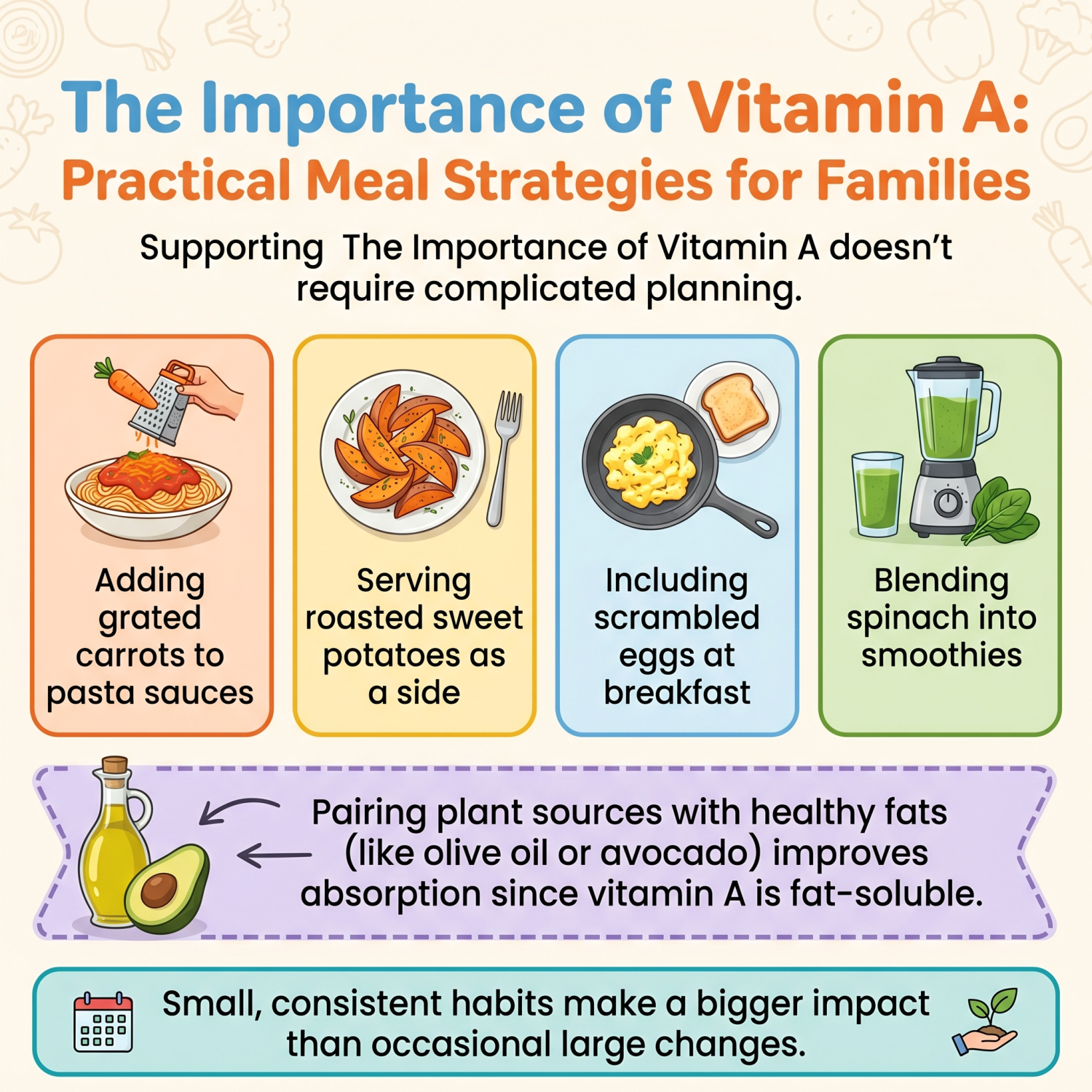
The Importance of Vitamin A: Practical Meal Strategies for Families:
Supporting The Importance of Vitamin A doesn’t require complicated planning.
Try:
Adding grated carrots to pasta sauces
Serving roasted sweet potatoes as a side
Including scrambled eggs at breakfast
Blending spinach into smoothies
Pairing plant sources with healthy fats (like olive oil or avocado) improves absorption since vitamin A is fat-soluble.
Small, consistent habits make a bigger impact than occasional large changes.
When to Talk to a Pediatrician:
If a child experiences:
-
- Persistent vision complaints
- Frequent infections
- Extremely limited food variety
A healthcare professional can evaluate nutritional status and determine if testing or supplementation is needed.
Remember, The Importance of Vitamin A lies in steady, balanced intake — not extremes.
The Importance of Vitamin A: Nourishing Growth with Knowledge:
Healthy vision and strong immune defenses don’t happen by chance. They’re built daily through informed food choices.
By understanding The Importance of Vitamin A, parents can feel more confident in supporting their child’s development during critical school years.
If you’re interested in exploring more science-based nutrition insights — or learning how lifestyle, travel, and food culture influence family health — we invite you to discover more articles on nutritiontravels.
Because when knowledge guides your plate, growth follows naturally.