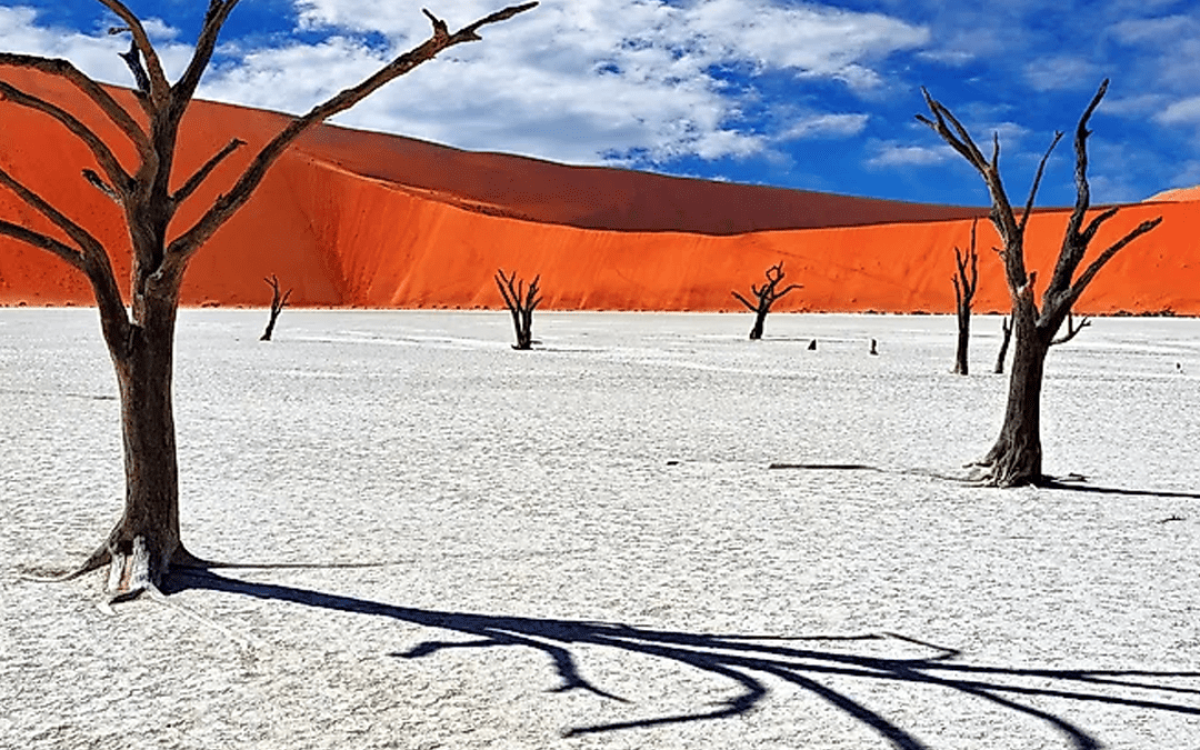
Sossusvlei Namibia Red Sand Dunes is one of the most iconic landscapes in the world. Located in Namibia’s Namib Desert, these towering red dunes attract photographers, adventurers, and travelers seeking unique desert experiences. In fact, Sossusvlei combines natural beauty, cultural heritage, and desert ecology. Visitors can explore massive dunes, the stark white clay pan of Deadvlei, and immerse themselves in the philosophy and traditions of the San people. Moreover, the desert’s colors change dramatically at sunrise and sunset, creating breathtaking scenery.
Visiting Sossusvlei is not only about seeing the dunes. It is about feeling the silence, observing the desert’s patterns, and appreciating the ancient processes that shaped this remarkable landscape. Consequently, travelers leave with more than photos—they gain understanding, perspective, and connection to nature.
Cultural and Historical Context of Sossusvlei Namibia Red Sand Dunes:
Long before tourism developed, the San people inhabited this desert. They survived by reading subtle signs of water, vegetation, and wildlife. As a result, their culture emphasizes patience, careful observation, and deep respect for nature. Their oral stories explain desert survival, wildlife behavior, and seasonal rhythms.
European explorers arrived in the 19th century. They documented the dunes but largely overlooked Indigenous knowledge. Today, Sossusvlei is part of Namib-Naukluft National Park. This ensures both preservation and visitor access, allowing travelers to experience the desert responsibly.
The park also protects diverse wildlife and rare plants adapted to extreme conditions. For example, desert-adapted oryx, springbok, and endemic lizards thrive despite limited water. Visitors who take time to observe these species gain insight into the desert’s resilience.
Iconic Dunes of Sossusvlei Namibia Red Sand Dunes:
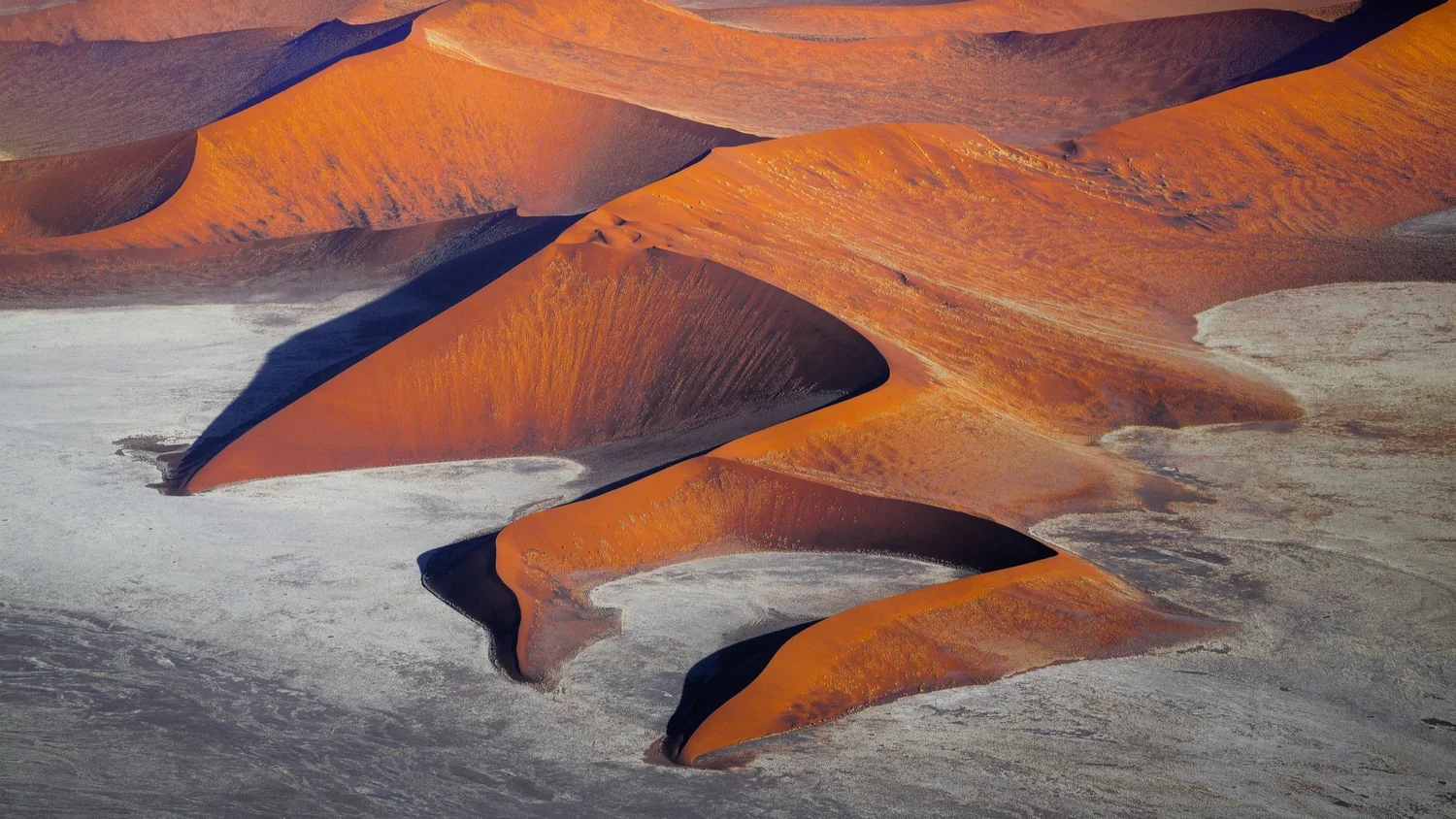
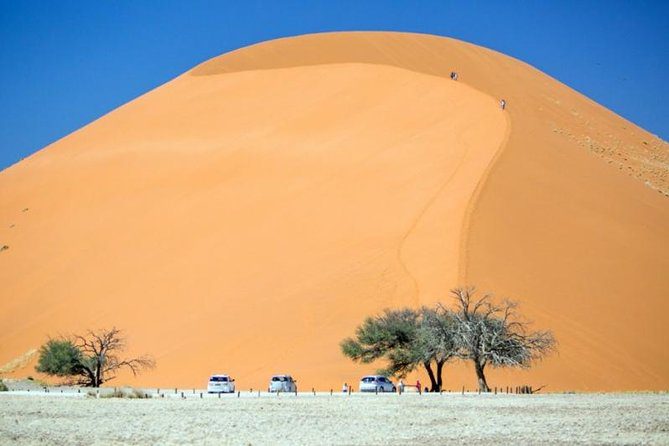
The dunes’ signature red color comes from iron-rich minerals that oxidized over millions of years. Thus, the desert has its vivid and distinctive hues. Some dunes rise over 300 meters, creating dramatic landscapes. For instance, Big Daddy and Dune 45 are globally recognized for their scale and photographic potential.
Big Daddy Dune:
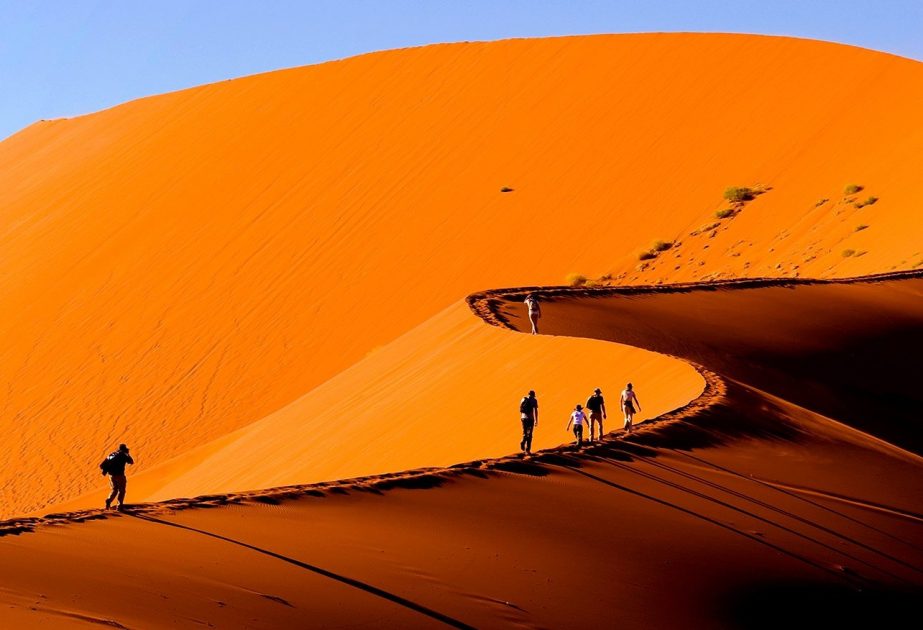
Big Daddy is the tallest dune in Sossusvlei. Climbing it offers panoramic views over the red sands and the white clay pan of Deadvlei. Additionally, the climb challenges the body while calming the mind. Standing at the summit, travelers witness endless dunes stretching to the horizon. The shifting shadows and warm light create a meditative experience.
Suggested image alt text: “Sossusvlei Namibia Red Sand Dunes Big Daddy at sunrise”
Dune 45:
Dune 45 is famous for its accessibility and photogenic shape. Sunrise casts a glow of deep orange and red over the slope. Similarly, many visitors start their desert excursions here to catch the first light. The dune’s compact size and iconic form make it ideal for early morning photography.
Suggested image alt text: “Sossusvlei Namibia Red Sand Dunes Dune 45 aerial view”
Hidden Vlei and Elim Dune:
Hidden Vlei and Elim Dune are quieter areas of Sossusvlei. In fact, walking here allows visitors to experience the desert’s solitude. These dunes reveal the vastness of the Namib Desert, where silence dominates and human presence feels minimal. Consequently, explorers can reflect and connect with nature in an uninterrupted environment.
Deadvlei: The White Clay Pan:
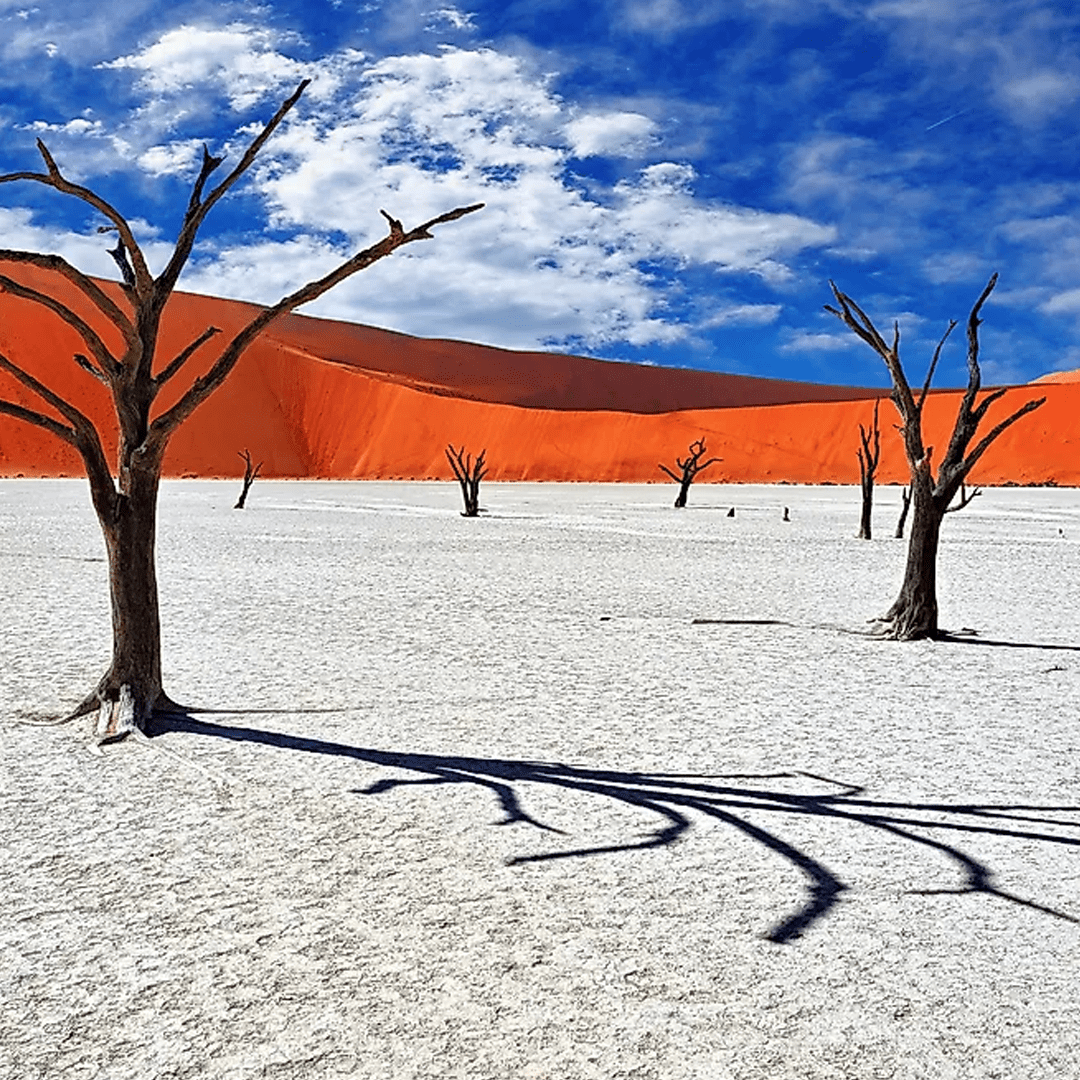
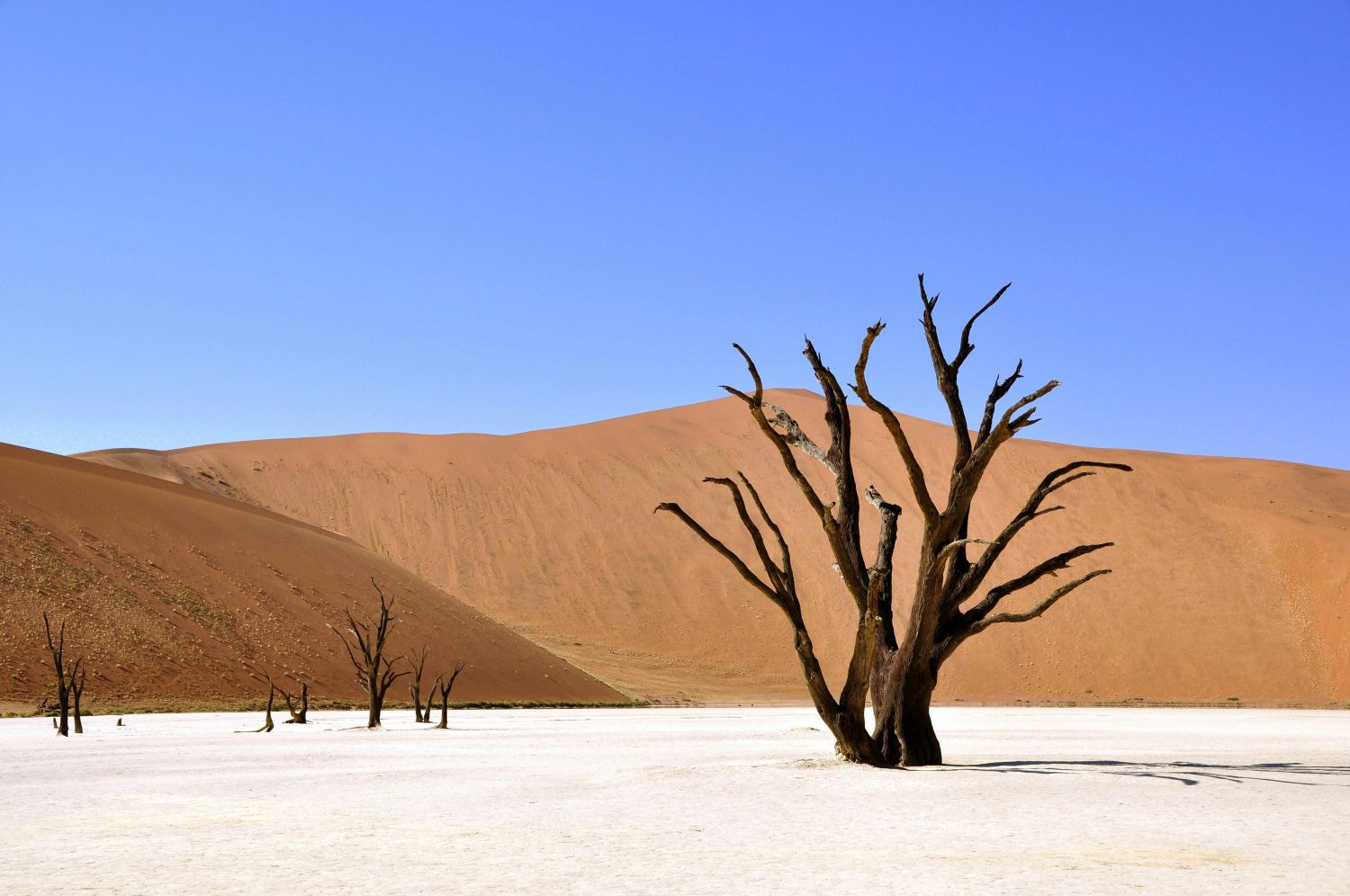
Deadvlei lies next to Sossusvlei. It is a white clay pan dotted with black camel thorn tree skeletons. Some of these trees are over 900 years old. As a result, the stark contrast between black trees, white clay, and surrounding red dunes creates a dramatic and unique scene.
Visiting at sunrise or sunset intensifies these colors. The long shadows from the trees stretch across the pan, while the dunes glow in the background. Similarly, the quiet stillness enhances the otherworldly feeling of this ancient landscape.
Suggested image alt text: “Sossusvlei Namibia Red Sand Dunes Deadvlei clay pan with skeleton trees”
Desert Culture and Travel Etiquette:
Life in the Namib Desert teaches adaptation and respect for resources. Water, food, and shelter must be carefully managed. For example, San people developed survival skills over centuries by observing animal patterns, seasonal changes, and the desert’s subtle signs.
Travelers to Sossusvlei should follow simple etiquette:
- Stick to marked trails
- Respect wildlife and cultural sites
- Leave no trace of your visit
- Dress in light, breathable clothing and wear sun protection
Moreover, the desert encourages minimalism and reflection. Visitors who slow down and observe the environment gain a deeper appreciation for both natural beauty and cultural heritage.
Modern Tourism and Conservation:
Sossusvlei has become a top international destination. However, park authorities carefully manage visitor impact. Lodges are solar-powered, and tours minimize environmental disruption. Additionally, educational programs teach travelers about desert ecology, geology, and local culture.
Conservation efforts ensure the dunes, pans, and wildlife remain protected. Thus, tourists can explore safely while preserving the desert’s fragile environment. These measures highlight a balance between access and sustainability, ensuring Sossusvlei remains pristine for future generations.

Practical Travel Tips for Sossusvlei Namibia Red Sand Dunes:
- Best Time to Visit: May–September for cooler temperatures and optimal sunrise experiences
- Summer Months: November–February; early mornings are recommended to avoid heat
- Getting There: Approximately 5 hours from Windhoek; 4×4 vehicles are recommended for remote areas
- Safety: Bring water, sun protection, and sturdy shoes; mobile reception is limited
- Expectations: Remote and quiet landscapes; sunrise and sunset provide the best visuals
Visitors should prepare for desert conditions while embracing the adventure. In fact, early mornings and late afternoons offer the most comfortable temperatures and the most vibrant colors.
Why Visit Sossusvlei Namibia Red Sand Dunes:
Sossusvlei Namibia Red Sand Dunes is more than a scenic destination. It offers lessons in resilience, patience, and connection with nature. Sunrise and sunset reveal ever-changing colors and shadow patterns. Walking the dunes encourages reflection and humility.
Ultimately, Sossusvlei connects travelers with the desert’s ancient rhythms. It inspires awe and fosters understanding of both natural and cultural history. Explore meaningful journeys with Nutrition Travels, where cultural insight, natural beauty, and travel guidance come together in every experience.