
Have you ever thought about trying a plant-based diet but held back because you feared feeling deprived? Or maybe you thought it would be complicated, expensive, or require strange recipes you wouldn’t know where to start?
Relax… more than 70% of people who switch to a plant-based diet don’t start fully from day one, and they don’t give up everything at once. The real secret to success isn’t “strict adherence,” but a smart, gradual transition.
In this article, I’ll guide you step by step on how to start a plant-based diet without suffering—no deprivation, no confusion, and no feeling like you’re in a “harsh health boot camp.” On the contrary… you’ll discover that it can be easier and more delicious than you imagine!
What is a Plant-Based Diet Really?
There’s a common misconception that a plant-based diet means “eating only lettuce and cucumber,” or that it’s “for the weak” or “for people with illnesses.” The truth? Today, a plant-based diet has become a lifestyle for many athletes, celebrities, and business owners seeking higher energy, better health, and a lighter body.
A plant-based diet simply focuses on whole foods from plants:
- Vegetables
- Fruits
- Legumes (lentils, chickpeas, beans, fava beans)
- Whole grains (oats, brown rice, quinoa)
- Nuts and seeds
- Plant-based alternatives like oat milk or soy milk

It can also be:
- Flexitarian: Mostly plant-based with occasional eggs or fish
- Vegetarian: No meat but includes dairy and eggs
- Vegan: 100% plant-based
Start at the level that suits you—don’t pressure yourself to be perfect from day one.
Why Choose a Plant-Based Diet in the First Place?
- Lighter, more sustained energy throughout the day
- Clearer skin and improved digestion
- Achieve a healthy weight without strict deprivation
- Protection against chronic diseases (heart, blood pressure, diabetes)
Greater respect for your body—and sometimes also for the environment and animals.
And most importantly… the feeling of lightness. You’ll truly feel your body thanking you.
How to Start Without Confusion? (Smart Transition Plan) :
Before you close the fridge and declare war on all animal products—focus with me:
Don’t eliminate… replace.
Start applying these steps:
1- Choose one meal a day to be plant-based
- If breakfast is the easiest meal for you → make it always plant-based (oats + banana + nuts, for example)
- If lunch is your main meal → make it a strong plant-based meal full of protein (lentils or chickpeas)
- If dinner is naturally light → make it a vegetable soup, broccoli salad, or chickpea sandwich
Start with just one meal… and after two weeks, make it two meals.
2- Don’t change all your recipes—just adjust them
- Replace a cheese sandwich → with a chickpea or tahini & veggie sandwich
- Replace a burger → with a plant-based burger (lentils or soy) ready-made or homemade
- Replace a pasta with meat → with pasta and tomato-vegetable sauce
In other words: keep the dishes you love—just change the ingredients.

Realistic example of a full day on a plant-based diet (easy and budget-friendly):
|
Meal |
Example |
|
Breakfast |
Oats with plant-based milk + banana + a sprinkle of cinnamon |
|
Snack |
Handful of almonds or dates |
|
Lunch |
Yellow lentils or fava beans + green salad |
|
Snack |
Piece of dark chocolate or roasted corn |
|
Dinner |
Chickpea or tahini sandwich + cucumber and tomato |
Notice anything? None of these meals are strange or difficult… they are probably foods you already know!

How to Ensure a Balanced Plant-Based Diet Without Deficiency?
The most common concern when switching to a plant-based diet is: “Will I get enough protein? Iron? Essential vitamins?”
The truth? If you understand the simple rules below, you won’t need to worry.
How to Get Enough Protein on a Plant-Based Diet?
The belief that “protein = meat” is very old and inaccurate. All plants contain protein—some have high enough amounts to easily cover your daily needs.
Top Plant-Based Protein Sources:
|
Source |
Protein Amount |
|
Cooked lentils (1 cup) |
18 g |
|
Chickpeas or beans (1 cup) |
14 g |
|
Tofu (100 g) |
15 g |
|
Peanuts or peanut butter (2 tbsp) |
8 g |
|
Chia or flax seeds (1 tbsp) |
3–4 g |
 Easy tip:
 Easy tip:
If you include at least one “protein ingredient” in every meal—you’re completely safe.
- Breakfast: Peanut butter or oats with soy milk
- Lunch: Lentils, beans, or chickpeas
- Dinner: Nuts + broccoli salad or plant-based “tuna”
- What About Calcium and Iron?
Iron is found in lentils, spinach, beans, and raw cocoa. All you need is to pair it with vitamin C (a squeeze of lemon or orange) to boost absorption.
Calcium is found in tahini, sesame seeds, broccoli, and fortified plant-based milk such as soy or oat milk.
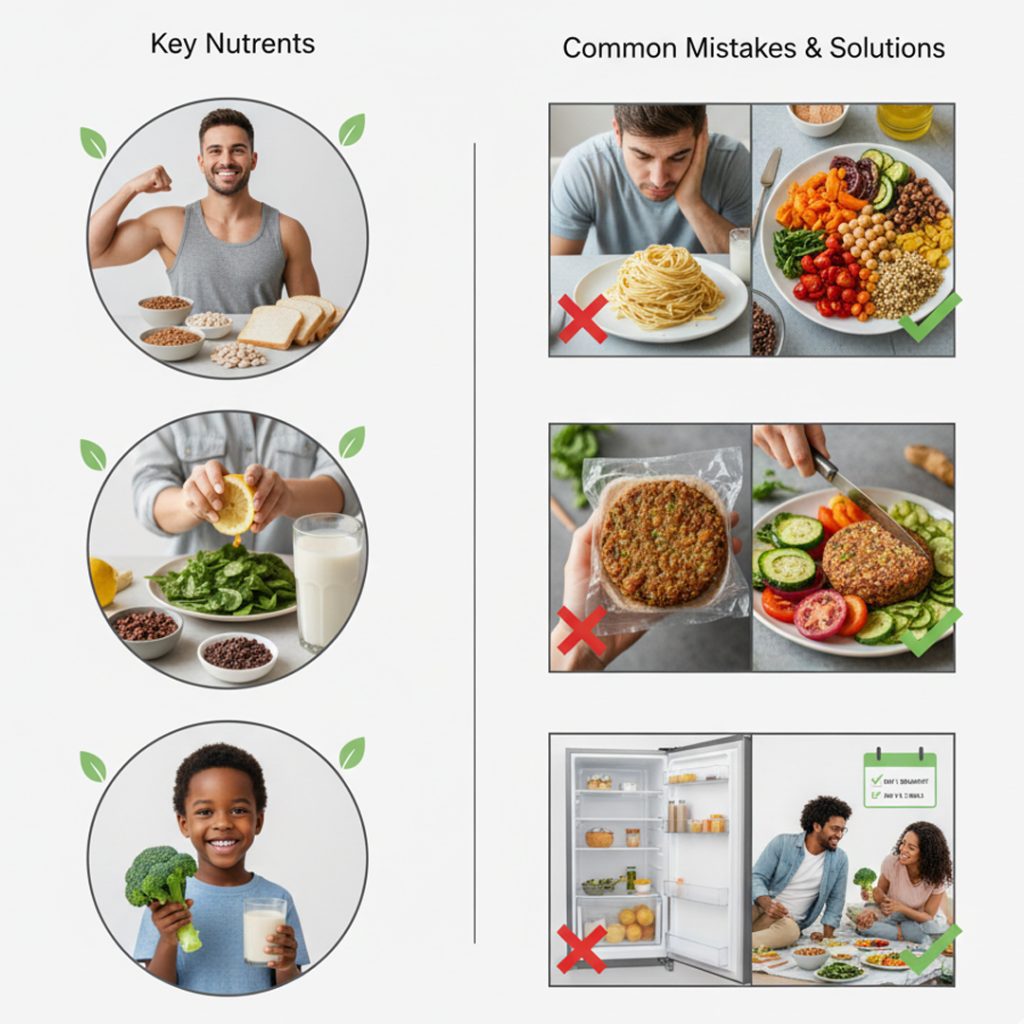
Common Mistakes Beginners Make on a Plant-Based Diet :
- Relying only on bread and pasta → makes the body sluggish and can cause weight gain
Solution: Make vegetables + protein a core part of every plate - Buying overly processed plant-based alternatives (heavily processed veggie burgers) → full of oils and sugar
Solution: Choose simple-ingredient alternatives or make them at home - Jumping in too strictly and suddenly → leads to boredom and reverting to old habits
Solution: Start gradually… and remember: “80% is better than 0%”
Top 5 Quick Plant-Based Meals (Ready in Under 10 Minutes) :
- Chickpea sandwich + cucumber + olive oi
- Oats with plant-based milk + apple + nuts
- Red bean salad + corn + tomato
- Baked potatoes + tahini sauce
- Toast with peanut butter + banana

Summary of the Journey to a Plant-Based Diet :
- Start with one meal a day
- Focus on adding, not eliminating
- Spread protein intake throughout the day
- Don’t aim for perfection… aim for consistency
If you want to dive deeper into the world of healthy nutrition and explore diverse topics like plant-based eating, boosting immunity, improving mood, or even losing weight without deprivation — visit our website nutritiontravels and start a fun discovery journey with simple, scientific, and immediately practical articles.