
Calcium is the cornerstone of strong bones and healthy teeth, and it is often associated with dairy products. But what about vegans or those who are lactose intolerant? The good news is that strong bones are possible without dairy by focusing on plant-based calcium sources and smart absorption strategies. In this article, we’ll explore the best plant-based calcium sources, tips for maximizing absorption, and recommended daily intake to keep your bones healthy, along with a practical guide to easily include these foods in your daily diet.
Why Calcium is Essential for Bone Health:
Calcium makes up about 99% of the mineral content in bones, giving them strength and density. A deficiency in calcium can lead to weak bones, increased risk of fractures, and osteoporosis as we age. Adults typically need 1000–1300 mg of calcium per day to maintain bone health, and requirements may vary depending on age, sex, or pregnancy/lactation.
For vegans, it’s crucial to focus on both natural and fortified plant-based calcium sources, since some plant foods contain compounds like oxalates and phytates that reduce calcium absorption.

Top Plant-Based Calcium Sources:
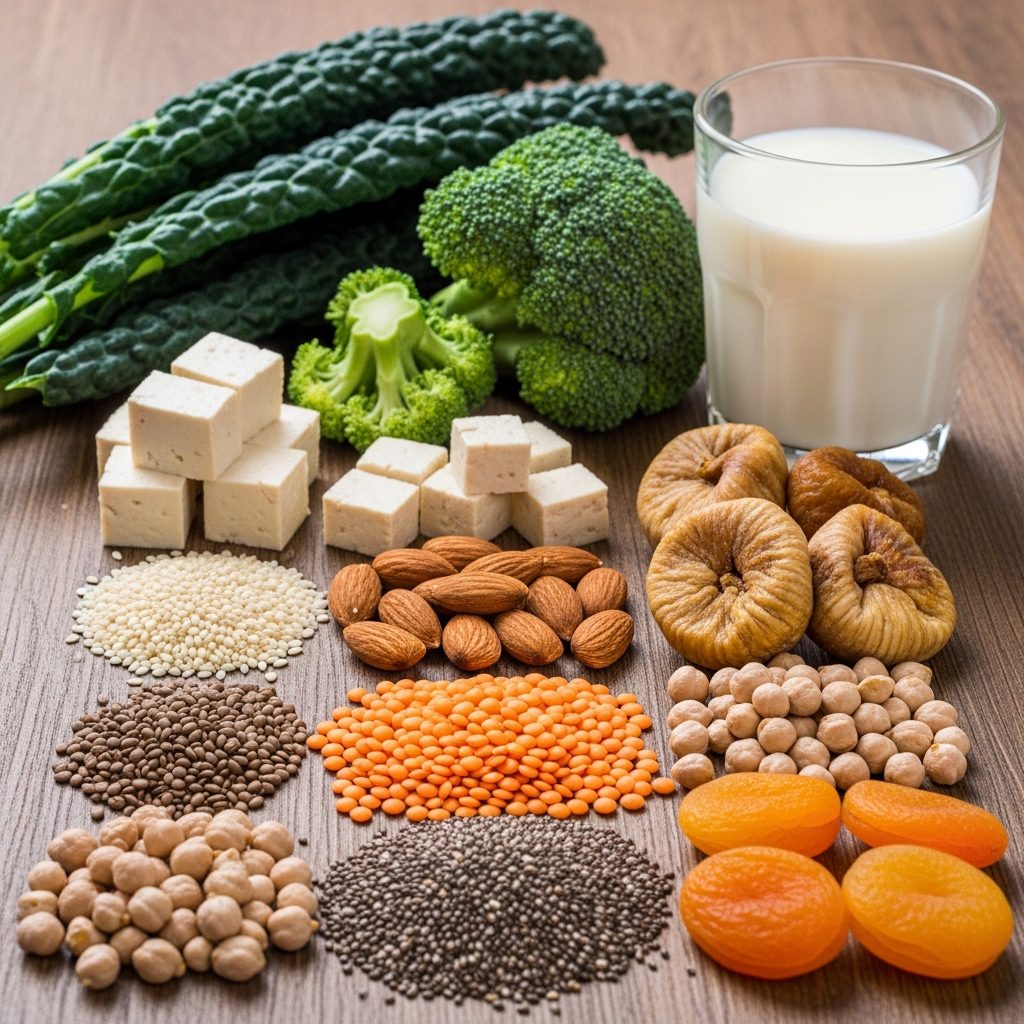
You can build a calcium-rich diet by incorporating a variety of plant foods. Key sources include:
1- Dark Leafy Greens:
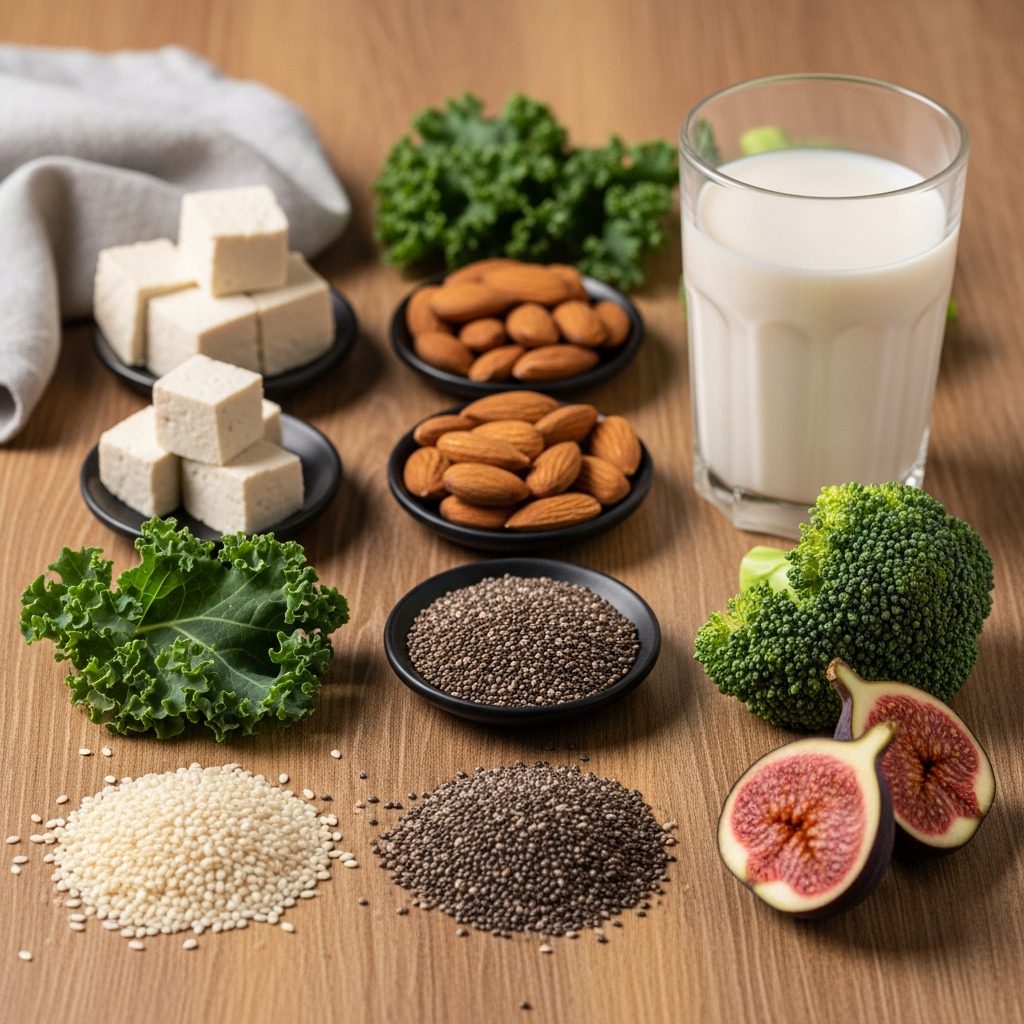
Leafy greens are one of the best plant-based calcium sources:
- Kale: high in calcium and easily absorbed.
- Broccoli: rich in calcium and vitamin K, which supports bone health.
- Spinach: high in calcium but contains oxalates that limit absorption.
- Chinese cabbage and collard greens.
Tip: Cooking spinach reduces oxalates, improving calcium absorption.
2- Tofu and Fortified Soy Milk:
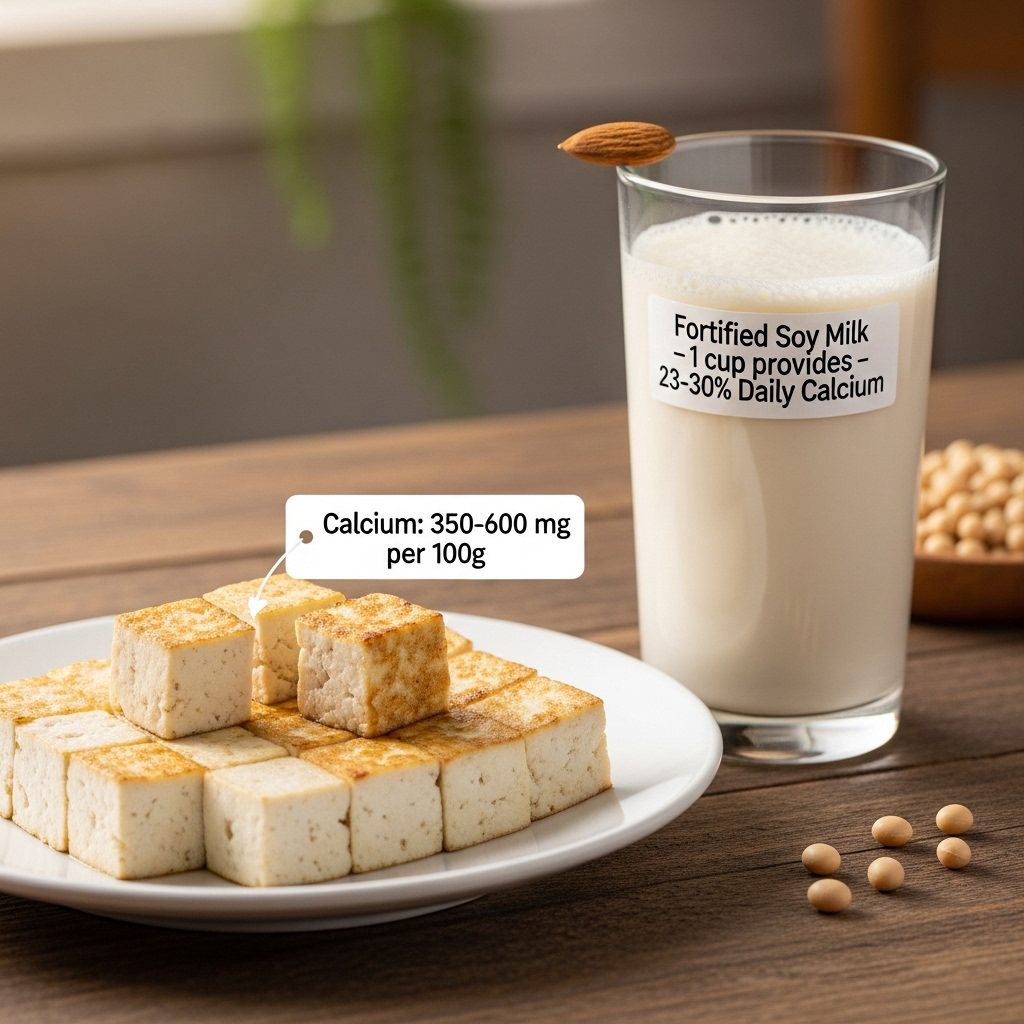
- Tofu: sometimes made with calcium sulfate, containing 350–680 mg of calcium per 100 g.
- Fortified soy or almond milk: one cup provides about 23–30% of the daily calcium requirement.
3- Nuts and Seeds:
- Almonds: rich in calcium and magnesium, which helps retain calcium in bones.
- Sesame seeds and tahini: one tablespoon of tahini contains around 90 mg of calcium.
- Chia and flax seeds: can be added to salads or plant-based yogurt.
4- Legumes:
- White beans, lentils, and chickpeas.
- Provide both calcium and protein to support bone strength.
5- Dried Fruits:
- Dried figs and apricots are rich in calcium and potassium.
- Can be eaten as snacks or added to salads.
6- Fortified Foods:
- Fortified orange juice.
- Plant-based milk alternatives such as soy, almond, or oat milk with added calcium.
Tips to Improve Plant-Based Calcium Absorption:
Not all plant-based calcium sources are absorbed equally. To maximize benefits:
1- Vitamin D: essential for calcium absorption. Ensure sun exposure (20–30 minutes daily) or consume fortified foods or supplements.
2- Vitamin K: found in leafy greens, helps direct calcium to the bones.
3- Vitamin C: enhances plant calcium absorption when eaten with citrus, peppers, broccoli, or tomatoes.
4- Limit salt and caffeine: excessive amounts increase calcium loss through urine.
5- Reduce oxalates and phytates: foods like spinach contain oxalates, which reduce absorption. Soaking seeds and nuts lowers phytate content.
6- Dietary variety: combining different calcium-rich foods improves overall absorption.
7- Exercise: weight-bearing exercises like walking, running, and resistance training boost bone density.

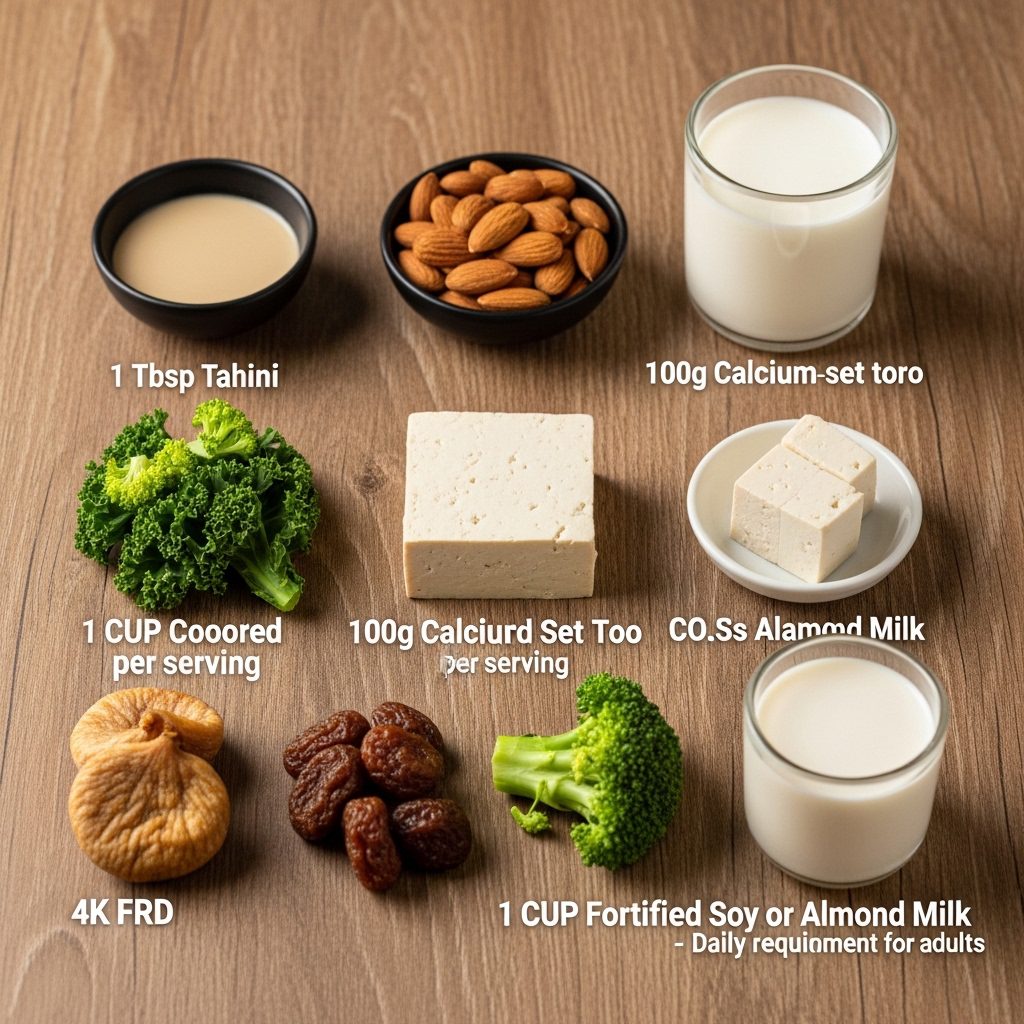
Approximate Calcium Content per Serving:
| Food Type | Source | Approx. Calcium |
| Seeds | 1 tbsp tahini | 90 mg |
| Nuts | Handful of almonds | 80 mg |
| Tofu (calcium-set) | 100 g | 350–680 mg |
| Leafy greens | 1 cup cooked kale or broccoli | 150–250 mg |
| Dried fruit | 4–5 dried figs | 60–100 mg |
| Fortified plant milk | 1 cup soy/almond milk | 300 mg |
Daily Calcium Requirements:
- Adults: 1000–1300 mg per day.
- Teenagers and older adults: may require higher amounts.
- Vegans: focus on a mix of natural and fortified plant-based foods to meet daily needs.
Practical Tips for a Calcium-Rich Routine:
1- Add a tablespoon of sesame seeds or tahini to salads or smoothies.
2- Eat a handful of almonds or other nuts as a snack.
3- Incorporate tofu into main meals.
4- Include dark leafy greens daily.
5- Drink fortified plant milk instead of dairy.
6- Combine calcium sources with vitamin C-rich foods for better absorption.
7- Ensure regular sun exposure or vitamin D supplementation.
8- Perform resistance exercises regularly to strengthen bones.

Building strong bones without dairy is entirely possible with a plant-based diet rich in calcium and supported by vitamins D, K, and C, along with regular exercise. Integrating dark leafy greens, legumes, nuts, tofu, and fortified plant milks ensures you meet your daily calcium needs effectively.
Start today by incorporating these foods into your meals and enjoy healthier, stronger bones. For more practical tips, recipes, and guidance on plant-based nutrition, visit Nutrition Travels and embark on your journey to optimal bone health