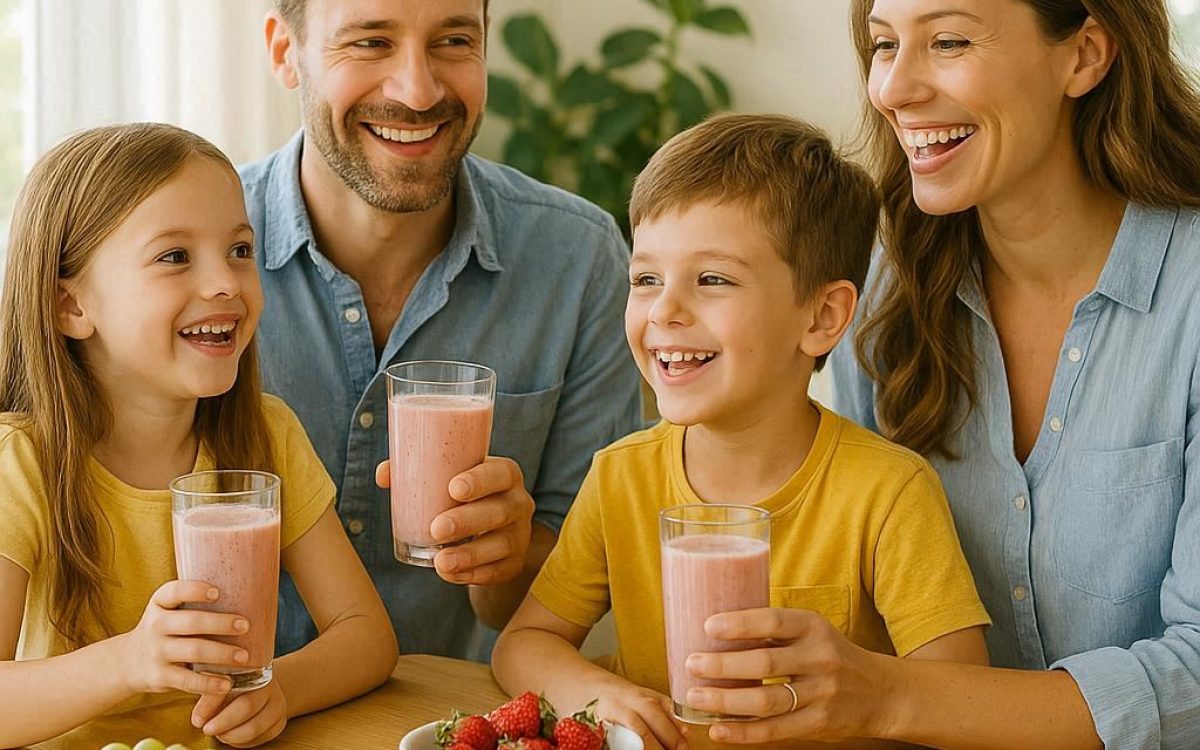
Getting kids to eat enough fruits and vegetables can be a daily challenge for parents. Luckily, smoothies are a simple, fun, and colorful way to pack essential nutrients into a drink your kids will actually enjoy. But not all smoothies are created equal — some are loaded with added sugar, artificial juices, or heavy ingredients that can outweigh the benefits.
This guide will help you create delicious, healthy smoothies that your kids will love — and you’ll feel great about serving.
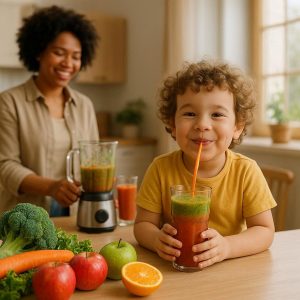
1- Why Smoothies Are Perfect for Kids
Smoothies offer a creative solution to common nutrition struggles. They’re:
- Quick and convenient: Perfect for busy mornings or post-school snacks.
- Packed with nutrients: When made right, smoothies deliver vitamins, minerals, fiber, and antioxidants.
- Customizable: You can sneak in veggies, seeds, or even healthy fats without compromising flavor.
Unlike sugary juices, smoothies retain the fiber from fruits and vegetables, helping stabilize blood sugar levels and keep kids full for longer.
2- The Right Balance: Fruits, Veggies, and More
A good smoothie should balance taste and nutrition. Too much fruit adds excess sugar, while too many greens can make the taste bitter. Here’s a simple formula to get it right:
The 3-2-1 Rule:
- 3 parts fruit – bananas, berries, mango, or pineapple for sweetness and texture.
- 2 parts vegetables – spinach, kale, or zucchini for extra nutrients.
- 1 part protein or healthy fat – Greek yogurt, milk, nut butter, or chia seeds for fullness and energy.
This ratio ensures a smooth texture, balanced taste, and steady energy — without sugar crashes.
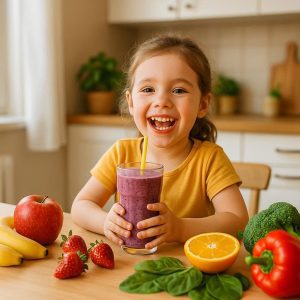
3- Choosing the Best Ingredients
The ingredients you use determine whether your smoothie is a nutrient powerhouse or a sugar bomb.
Fruits
Opt for whole fruits instead of juices. Great choices include:
- Bananas for creaminess
- Berries for antioxidants
- Apples and pears for natural sweetness
- Mango or pineapple for tropical flavor
Vegetables
Start with mild-tasting greens such as:
- Spinach (neutral flavor)
- Kale (add a small amount first)
- Carrots or beets (for color and sweetness)
- Zucchini or cauliflower (adds thickness without taste)
Protein Sources
- Greek yogurt or plain yogurt
- Milk or plant-based milk (almond, oat, or soy)
- Nut butters or seed butters
- Protein powder (for older kids or active teens)
Healthy Fats
Fats are essential for brain development:
- Avocado
- Chia seeds or flaxseeds
- Peanut or almond butter
Natural Sweeteners
If your child prefers sweeter flavors, use:
- Dates or a touch of honey
- Ripe bananas
- Steamed apples
Avoid refined sugar or syrups — they spike blood sugar and lead to energy crashes.
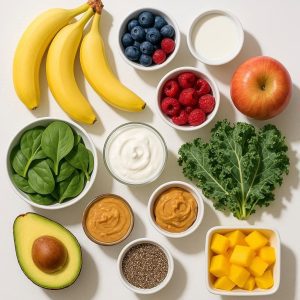
4- The Power of Fiber
Smoothies are a great way to increase your child’s fiber intake, which supports healthy digestion and prevents constipation.
Include high-fiber ingredients such as:
- Oats
- Flaxseeds
- Berries
- Apples with skin
A fiber-rich smoothie keeps kids full for longer and helps maintain balanced energy throughout the day.
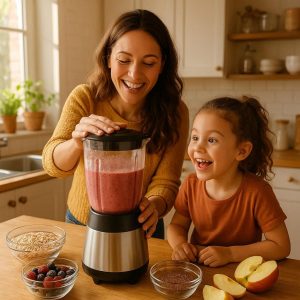
5- Make It Fun and Kid-Friendly
Getting kids excited about smoothies starts with presentation and involvement.
Fun Tips:
- Let them pick fruit combinations or name their own smoothie creations.
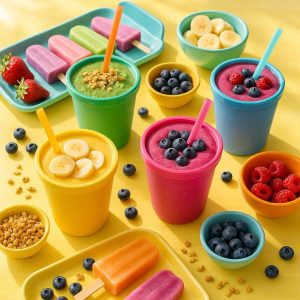
- Serve smoothies in colorful cups with straws.
- Add a sprinkle of granola, fruit slices, or cocoa nibs on top.
- Turn smoothies into popsicles for a healthy frozen treat.
When kids feel involved, they’re more likely to enjoy what they helped create.
6- Avoiding Hidden Sugar and Additives
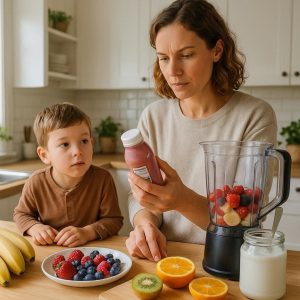
Many store-bought smoothies or “kid-friendly” blends contain more sugar than soda. To avoid this, always:
- Check ingredient labels — avoid anything with “corn syrup,” “concentrate,” or “flavored syrup.”
- Skip flavored yogurts and use plain ones instead.
- Don’t add fruit juices — stick to water, milk, or coconut water.
Remember: the natural sugars in whole fruits are balanced with fiber, but added sugars are not.
7- Quick and Delicious Smoothie Ideas
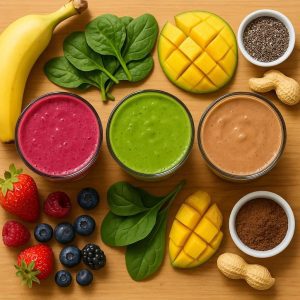
Here are some kid-approved smoothie recipes to get you started:
Berry Banana Blast
- 1 banana
- ½ cup strawberries
- ½ cup blueberries
- 1 cup milk or almond milk
- 1 tbsp chia seeds
Tropical Energy Smoothie
- ½ mango
- ¼ cup pineapple
- ½ banana
- ½ cup spinach
- 1 cup coconut water
Chocolate Peanut Power
- 1 banana
- 1 tbsp cocoa powder
- 1 tbsp peanut butter
- 1 cup milk
- 1 tbsp oats
Each smoothie is nutrient-dense, easy to blend, and irresistibly tasty for kids.
8- Time-Saving Tips for Busy Parents
Smoothie-making doesn’t have to take long. Try these shortcuts:
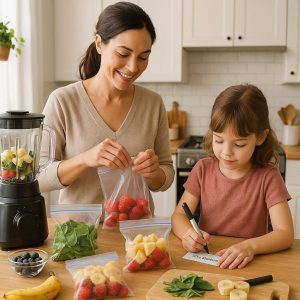
- Pre-freeze fruit in small bags for quick grab-and-blend mornings.
- Batch prep: Make large portions and freeze them in ice cube trays for later.
- Use a high-speed blender for smoother texture and faster prep.
- Add oats or seeds for extra nutrition and creaminess.
You can even involve your kids — let them toss ingredients into the blender for fun and learning.
9- Common Mistakes to Avoid
Even healthy smoothies can go wrong if you’re not careful. Avoid:
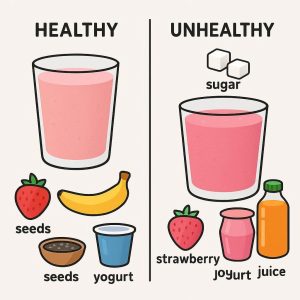
- Using too much fruit (leads to sugar overload).
- Adding flavored yogurts or juices.
- Skipping protein or healthy fats — they help maintain steady energy.
- Forgetting portion control — one large smoothie may be more than a child needs in a snack.
Balance is key. A smoothie should nourish, not replace, whole meals.
10- Final Thoughts: Smoothies as a Family Habit
Healthy smoothies can become a family tradition, not just a kids’ treat. They’re a perfect way to sneak in nutrition, reduce processed snacks, and encourage creativity in the kitchen.
Start with simple, colorful ingredients, and let your kids’ tastes guide the process. Remember — the best smoothie is the one your child actually drinks!
At Nutrition Travels, we believe that small, consistent choices create lasting health.
Blend up a smoothie today and discover how easy it can be to turn healthy eating into a daily joy for your kids — one sip at a time.