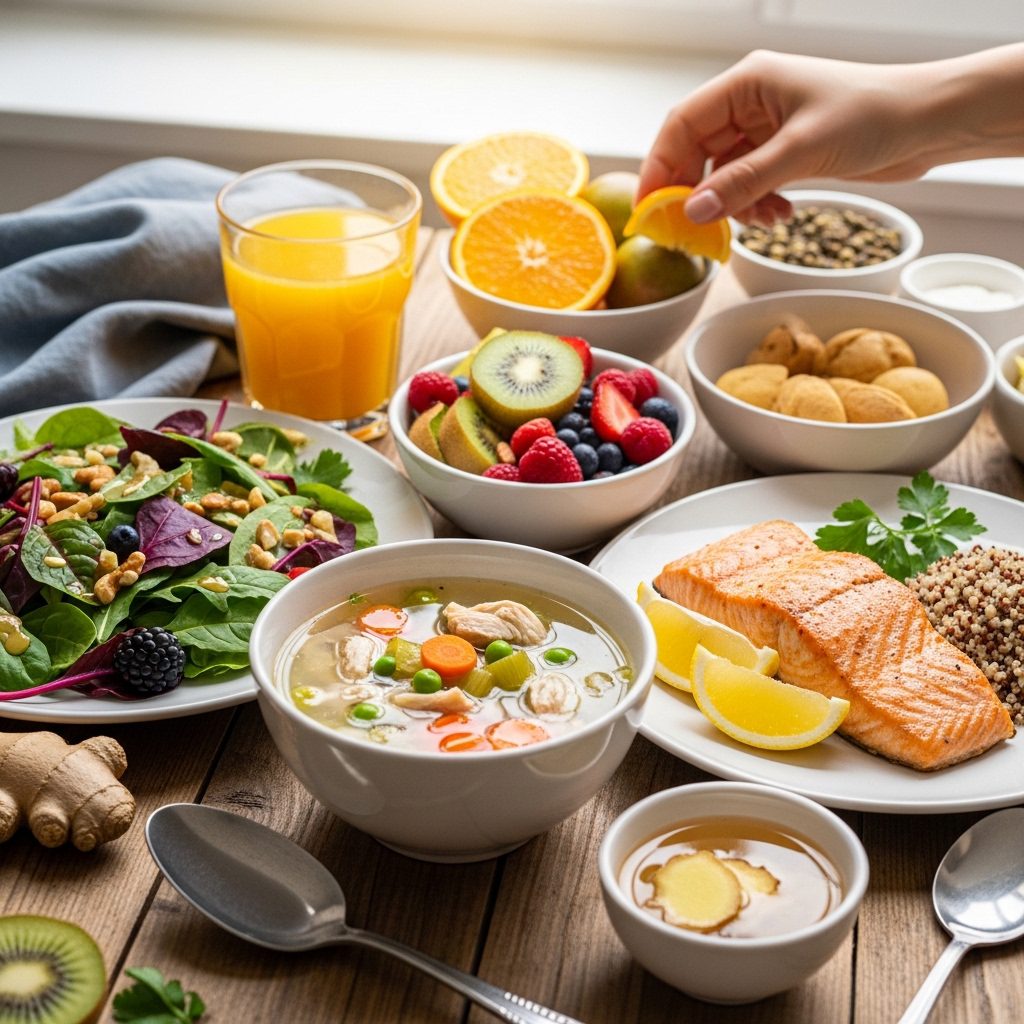

In a world filled with food trends, detox challenges, and “miracle diets,” one timeless principle still holds true — balance is everything.
A balanced plate isn’t just about calories or portion control. It’s about creating harmony between nutrients, colors, and flavors that nourish your body, fuel your energy, and make eating a joyful, sustainable habit.
So, how can you build a plate that truly supports your wellbeing — every single day?
Let’s dive into the art (and science) of balance.

Why Balance Matters
Your body thrives on variety. Every nutrient — from carbohydrates and protein to healthy fats and fiber — plays a vital role in how you feel, think, and move.
When your meals are balanced, your blood sugar stays steady, your energy lasts longer, and your brain stays sharp.
On the other hand, unbalanced meals can lead to crashes, cravings, and mood swings. Ever felt sleepy after lunch or cranky before dinner? That’s your body asking for balance.
In other words, a balanced plate isn’t restrictive — it’s liberating. It gives you structure without taking away flavor, freedom, or enjoyment.

The Benefits of a Balanced Plate
Creating a balanced meal goes far beyond weight control. In fact, it’s a foundation for total wellbeing.
- Steady energy levels: Balanced meals prevent sugar spikes and dips that drain your focus.
- Better digestion: Including fiber and healthy fats keeps your gut happy and efficient.
- Improved mood: Nutrient-rich foods support brain chemistry and mental health.
- Long-term health: Balanced eating lowers the risk of diabetes, heart disease, and inflammation.
Moreover, when your meals are balanced, you’re more likely to sustain healthy habits and enjoy your food without guilt. Balance fuels more than your body — it powers your life.
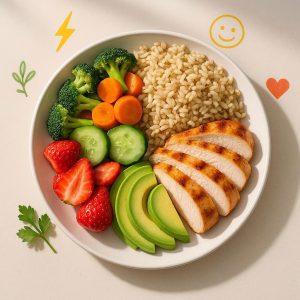
Macronutrient Harmony: Carbs, Protein & Fats
Think of your plate as a team where every player matters.
- Carbohydrates give you quick energy — choose whole grains, fruits, and veggies.
- Proteins repair and build — think fish, eggs, legumes, or lean meats.
- Healthy fats sustain you — like avocado, olive oil, nuts, and seeds.
As a general rule, half your plate should be fruits and vegetables, one-quarter protein, and one-quarter whole grains or complex carbs — with a drizzle of healthy fat.
This balance, therefore, becomes your personal formula for steady focus, satisfaction, and strength.

The Power of Colors
Each color on your plate represents a unique set of nutrients and antioxidants.
For instance:
- Red foods (like tomatoes and strawberries) are rich in lycopene for heart health.
- Orange & yellow foods (carrots, mangoes, corn) boost immunity and skin glow.
- Green foods (broccoli, spinach, kale) are loaded with iron, magnesium, and fiber.
- Blue & purple foods (blueberries, eggplant) protect your cells and enhance brain health.
As a result, eating the rainbow isn’t just aesthetic — it’s a natural way to cover all your nutritional bases.

Blood Sugar & Energy: Why Balance Keeps You Sharp
When you eat mostly refined carbs or skip protein, your blood sugar spikes and then crashes — leaving you tired, irritable, and craving sweets.
However, when your plate includes fiber, protein, and healthy fat, your digestion slows down.
Consequently, your body experiences steady energy, better concentration, and fewer mood swings.
In addition, balanced eating helps you break free from the rollercoaster of cravings and fatigue — and that’s where real energy begins.
Practical Guide: How to Build Your Plate Step-by-Step
So, how do you bring all this to life? Try this simple structure:
- Start with non-starchy veggies: Fill half your plate with greens, peppers, cucumbers, or broccoli.
- Add a source of protein: Grilled chicken, tofu, lentils, eggs — your choice.
- Include complex carbs: Brown rice, quinoa, whole wheat pasta, or sweet potatoes.
- Add healthy fats: A spoon of olive oil, avocado slices, or a handful of nuts.
- Hydrate smartly: Pair your meal with water or herbal tea instead of sugary drinks.
Above all, visualize your plate — colorful, varied, and satisfying. That’s balance made simple.

Cultural Twist: Balanced Plates Around the World
Balance looks different across cultures — and that’s what makes it beautiful.
For example, in the Mediterranean, olive oil, fish, and fresh vegetables create a heart-healthy foundation.
Meanwhile, in Asia, rice or noodles are balanced with tofu, seaweed, and colorful veggies.
Similarly, in the Middle East, grains like bulgur and lentils pair with fresh salads and grilled meats.
Ultimately, every cuisine has its own version of the “balanced plate.” The key, however, is mindfulness — not perfection.
Mindful Eating & Portion Control
Building a balanced plate also means tuning in to your body’s hunger cues.
Therefore, slow down. Enjoy your food. Eat until you’re satisfied — not stuffed.
Try the 80% rule (stop eating when you’re about 80% full). It helps digestion and prevents overeating without counting calories.
In addition, eating mindfully connects you to your food — and transforms mealtime into a moment of peace and gratitude.

A Mindset, Not a Menu
Balance isn’t a diet — it’s a mindset.
You don’t have to eat “perfectly” every day. Instead, aim for progress, not perfection.
When you see food as nourishment rather than numbers, every meal becomes an act of self-care.
That’s the true secret of a balanced plate: it’s not just what’s on it, but the love and awareness behind it.
A balanced plate is more than a health trend — it’s a way of living in sync with your body’s natural rhythm.
Every bite you take is a chance to fuel energy, clarity, and joy.
So next time you eat, look at your plate and ask:
“Is it colorful, nourishing, and balanced?”
If the answer is yes — you’re already on the path to long-term wellbeing.
Discover more mindful nutrition tips and wellness guides on NutritionTravels — where healthy eating meets global inspiration.