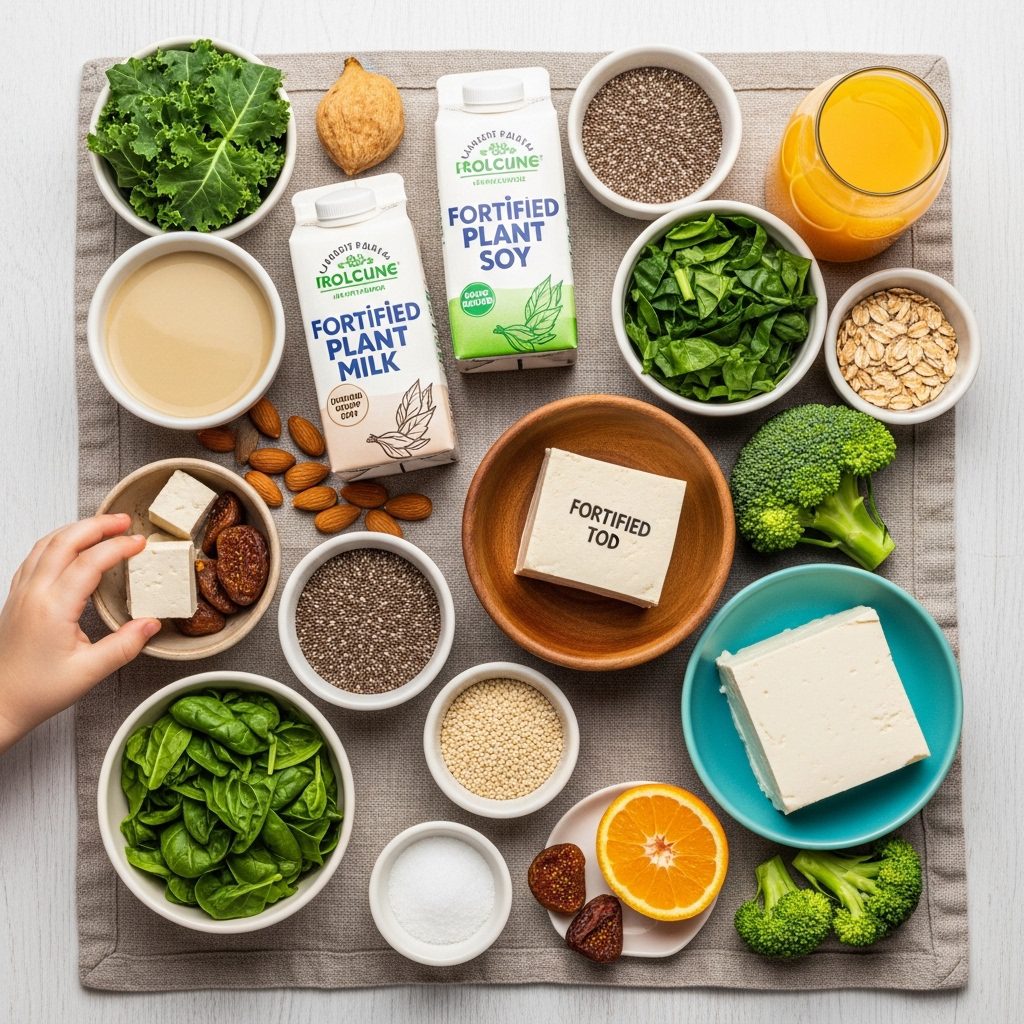
When discussing children’s bone health, milk and dairy products are often the first things that come to mind. However, scientific evidence confirms that calcium does not have to come exclusively from milk. It can be obtained in meaningful amounts from a variety of plant-based and whole-food sources.
Children in their growth years require adequate calcium to build strong bones and healthy teeth, and to support proper skeletal development. For families dealing with milk allergies, lactose intolerance, or plant-based dietary patterns, finding reliable non-dairy calcium sources becomes essential rather than optional.

Why Do Children Need Calcium from Non-Dairy Sources?
Calcium plays a vital role in:
-
- Building bones and teeth
- Supporting muscle contraction
- Regulating heart rhythm
- Transmitting nerve signals

According to the National Institutes of Health (NIH), children’s calcium needs vary by age:
-
- Ages 4–8: approximately 1,000 mg per day
- Ages 9–18: approximately 1,300 mg per day
This means meeting daily requirements does not depend solely on milk. A well-planned diet can provide sufficient calcium from diverse sources.
Calcium Beyond Milk: Top Plant-Based Sources of Calcium:
Many plant foods contain significant amounts of calcium, and some can approach the levels found in dairy products.
1- Dark Leafy Greens:
Examples include:
Kale
Broccoli
Swiss chard
These vegetables provide calcium along with vitamin K, which also supports bone health.
2- Legumes:
Chickpeas, white beans, and lentils are good contributors—especially when included regularly in a child’s diet.
3- Tahini and Sesame Seeds:
Sesame seeds are among the richest plant sources of calcium. One or two tablespoons of tahini can meaningfully boost a child’s daily intake.
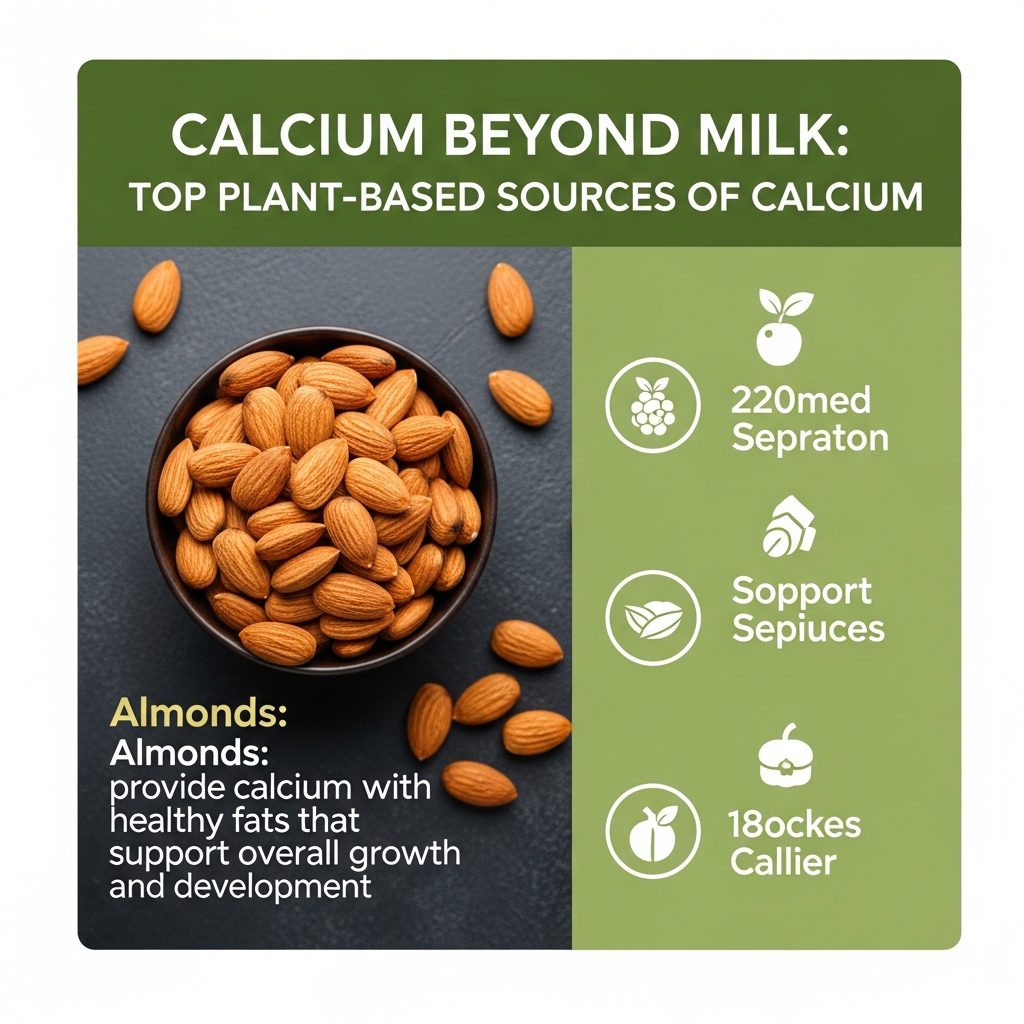
4- Almonds:
Almonds provide calcium along with healthy fats that support overall growth and development.
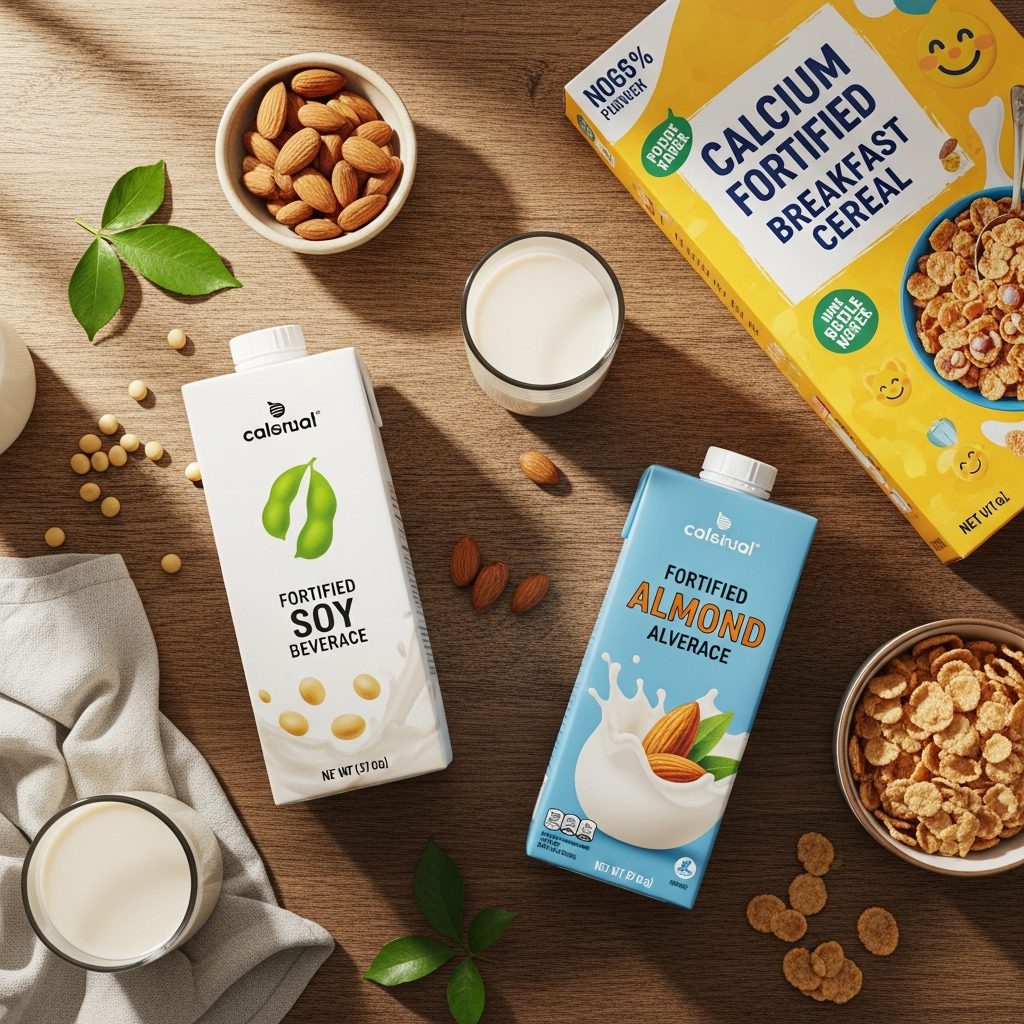
Calcium Beyond Milk: Fortified Foods as Additional Sources:
Certain products are fortified with calcium, including:
-
- Fortified soy beverages
- Fortified almond beverages
- Some breakfast cereals
Reading nutrition labels carefully is important to verify the actual calcium content.
Absorption Matters: It’s Not Just About Quantity:
Obtaining calcium from non-dairy sources must also consider factors that influence absorption, such as:
-
- Adequate vitamin D levels
- Avoiding excessive sodium intake
- Maintaining dietary variety
Vitamin D is essential for efficient calcium absorption. Safe sun exposure or medical guidance regarding supplementation may be necessary if deficiency is suspected.
Calcium Beyond Milk: A Practical Example for a School-Age Child:
Instead of relying solely on a glass of milk, a balanced breakfast might include:
-
- A tahini sandwich
- A glass of fresh orange juice
- A handful of almonds
This approach provides calcium from multiple sources while promoting dietary diversity.

Building a Daily Plan Without Milk:
The goal is not to overload meals with calcium, but to distribute sources throughout the day to enhance absorption and sustainability.
1- Calcium Beyond Milk: Spread Intake Across Meals:
For example:
-
- Breakfast with tahini or almonds
- Lunch including broccoli or white beans
- A snack with hummus or sesame
Smaller amounts distributed across meals may be better utilized than consuming a large amount at once.
2- Support with Vitamin D:
Calcium intake should be paired with:
-
- Safe, regular sun exposure
- Or medical consultation regarding vitamin D supplementation if needed
Without sufficient vitamin D, the body may not fully benefit from adequate calcium intake.

3- Calcium Beyond Milk: Minimize Interfering Factors:
Certain habits may reduce calcium utilization, such as:
-
- Excessive consumption of sugary sodas
- Very high sodium intake
- Heavy reliance on ultra-processed foods
A balanced diet remains the foundation.
Common Mistakes When Relying on Non-Dairy Calcium:
Despite the availability of alternatives, some errors may lead to unintended deficiency:
1- Relying on a single source.
2- Ignoring nutrition labels on fortified products.
3- Overlooking changing nutritional needs as children grow.
4- Using supplements without medical evaluation.
Excessive supplementation may cause digestive discomfort or, in some cases, increase the risk of calcium buildup.
When Are Calcium Supplements Necessary?
In most cases, a varied diet can meet children’s calcium requirements. However, supplementation may be considered in situations such as:
-
- Severe dairy allergy with difficulty meeting needs through food
- Highly restrictive diets
- Laboratory-confirmed deficiency
- Certain medical conditions

Any decision about supplements should be made in consultation with a pediatrician rather than based on general advice.
Calcium Beyond Milk: A Balanced Daily Example (Ages 9–12):
For a child requiring about 1,300 mg per day, a simple daily plan might include:
-
- Breakfast: Tahini sandwich and fruit
- Lunch: Rice with white beans and broccoli
- Snack: A handful of almonds
- Dinner: Hummus with whole-grain bread
This structure provides calcium from multiple plant-based sources without relying on a single food or immediate supplementation.
The goal is not to calculate every milligram daily, but to ensure consistency and variety.
Calcium Beyond Milk: Is Calcium Alone Enough for Strong Bones?
Scientifically speaking, no.
Bone health also depends on:
-
- Regular physical activity (running, jumping, active play)
- Adequate protein intake
- Sufficient vitamin D
- Sun exposure
- Proper sleep
Even with sufficient calcium intake, low physical activity can limit optimal bone mass development. Movement during childhood is just as important as nutrition.
Non-Dairy Calcium: A Safe and Effective Option with Proper Planning:
Relying on calcium sources beyond milk is not merely a backup strategy for children who avoid dairy—it can be part of a diverse, balanced dietary pattern that supports healthy growth.
The key principles include:
-
- Diversifying plant-based and whole-food sources
- Supporting absorption with vitamin D
- Avoiding unnecessary supplementation
- Monitoring growth with a pediatric healthcare provider

With thoughtful planning, children can build strong bones without exclusive reliance on milk.
If you are looking for accurate, science-based nutrition information grounded in reliable governmental sources and want practical guidance on applying non-dairy calcium strategies in your child’s daily life, we invite you to visit our website, NutritionTravels.