Switching to a vegan lifestyle offers incredible health, ethical, and environmental benefits. Yet one of the most common questions vegans face is: “Am I getting enough protein?”
The truth is — yes, you can meet your protein needs entirely from plants. However, it’s not just about the amount of protein — it’s about ensuring your body receives all nine essential amino acids, the building blocks of life.
This guide explains how to build a complete amino acid profile on a vegan diet, what foods to combine, and how to make sure your meals support energy, muscle strength, and overall health.
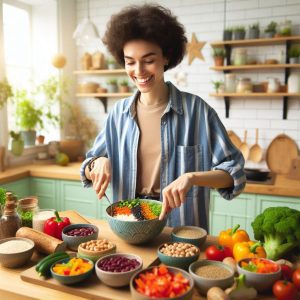
1- Understanding Amino Acids: The Foundation of Protein
Proteins are made up of smaller units called amino acids — 20 in total, nine of which are considered essential. Your body can’t produce these nine on its own, meaning you must get them through food.
The 9 Essential Amino Acids:
- Histidine
- Isoleucine
- Leucine
- Lysine
- Methionine
- Phenylalanine
- Threonine
- Tryptophan
- Valine
Animal-based foods naturally contain all nine essential amino acids in balanced amounts, which is why they’re called “complete proteins.”
Many plant-based sources, however, lack one or more of these amino acids. The good news? You can easily combine foods to create complete proteins — no meat required.
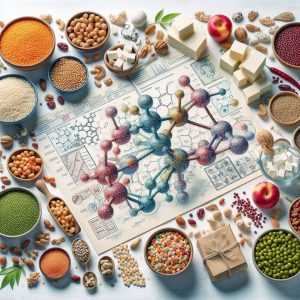
2- The Myth of Incomplete Plant Proteins
For years, people believed that plant proteins were “incomplete” and inferior to animal proteins. Modern research has proven this wrong.
Most plant foods do contain all essential amino acids — just in varying proportions. What matters most is eating a diverse, balanced diet throughout the day.
You don’t need to “combine” foods in every meal, as once thought. Your body maintains an amino acid pool, drawing from it as needed.
Still, intentional variety ensures that no single amino acid becomes deficient — especially for growing kids, athletes, or anyone on a fully vegan plan.
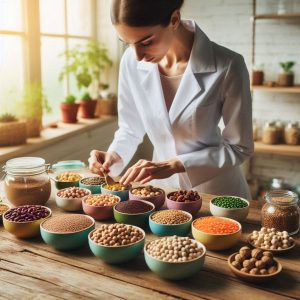
3- Complementary Protein Combinations
Pairing certain plant foods naturally fills in amino acid gaps. Here are classic, nutrient-packed combinations that help you achieve a complete amino acid profile:
- Legumes + Grains: Beans with rice, lentil soup with bread, or hummus with whole-grain pita
- Grains + Nuts/Seeds: Oatmeal with chia seeds or peanut butter on whole-grain toast
- Legumes + Nuts/Seeds: Chickpea salad with sunflower seeds or lentil curry with cashew topping
Each pair complements the other — where one is low in lysine, the other provides plenty, and vice versa.
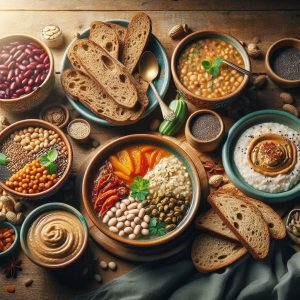
4- Best Vegan Sources of Protein and Amino Acids
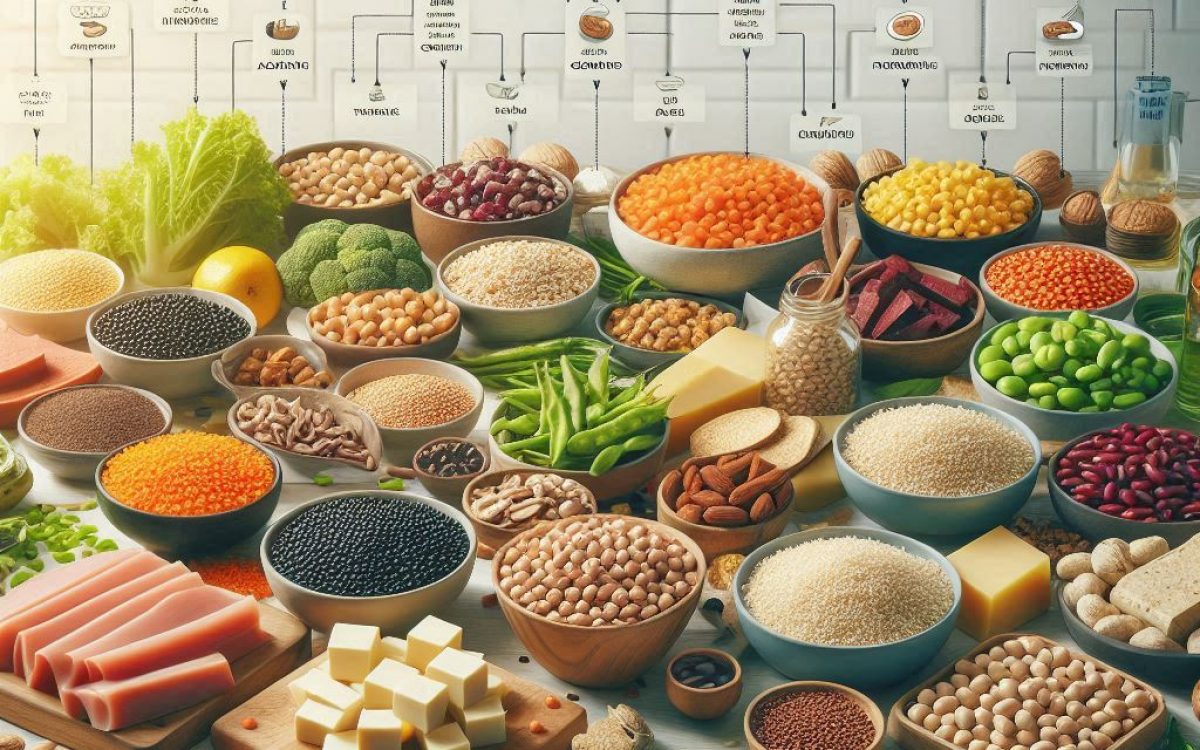
Here are powerhouse vegan foods rich in essential amino acids and easy to incorporate into everyday meals:
1- Legumes
Includes lentils, chickpeas, black beans, and peas.
They’re excellent sources of lysine, one of the most commonly lacking amino acids in grains.
Tip: Try lentil soups, bean burritos, or hummus wraps for a delicious protein boost.
2- Whole Grains
Brown rice, quinoa, oats, buckwheat, and whole wheat provide methionine and cysteine — essential for metabolism and tissue repair.
Tip: Quinoa is a standout because it’s one of the few plant-based complete proteins.
3- Nuts and Seeds
Almonds, chia, hemp, flax, and pumpkin seeds offer not only protein but also omega-3 fats, fiber, and magnesium.
Tip: Add them to smoothies, salads, or yogurt alternatives for extra crunch and nutrition.
5- Smart Meal Planning for Complete Protein
You don’t need to obsess over every amino acid — smart planning does the work for you.
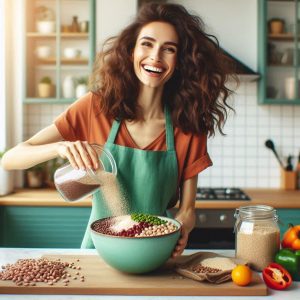
Here’s an example of a balanced vegan day that naturally includes all essential amino acids:
- Breakfast: Oatmeal with almond butter, chia seeds, and banana
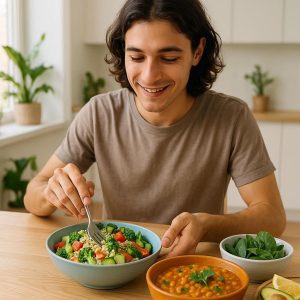
- Lunch: Quinoa salad with black beans, corn, and avocado
- Snack: Edamame or a smoothie with soy milk and hemp seeds
- Dinner: Lentil curry with brown rice and steamed vegetables
By mixing legumes, grains, and seeds, you cover every amino acid your body needs for muscle repair, immune function, and energy production.
6- The Role of Supplements in Vegan Diets
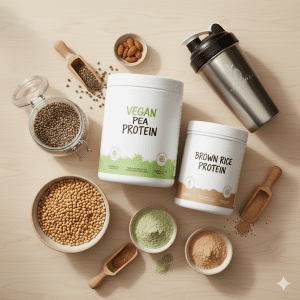
A well-planned vegan diet typically provides enough amino acids without supplements. However, in certain cases — like athletes, bodybuilders, or those with limited food variety — plant-based protein powders can be beneficial.
Vegan Protein Powder Options:
- Pea protein (high in lysine)
- Brown rice protein (high in methionine)
- Hemp protein (contains all essential amino acids)
- Soy protein isolate (complete and easily digestible)
Blended powders often combine these sources to create a well-rounded amino acid profile. Choose options with minimal additives and no added sugars for best results.
7- Nutrients That Support Protein Utilization
Amino acids don’t work in isolation — they need vitamins and minerals to function efficiently.
Key nutrients that enhance protein metabolism:
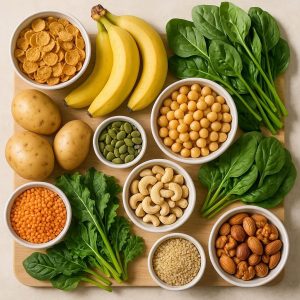
- Vitamin B6: Helps convert amino acids into usable forms. Found in bananas, potatoes, and chickpeas.
- Iron: Essential for oxygen transport. Found in lentils, spinach, and fortified cereals.
- Zinc: Supports cell repair. Found in pumpkin seeds, cashews, and quinoa.
- Magnesium: Aids in muscle relaxation and enzyme function. Found in leafy greens and nuts.
Balanced nutrition ensures your body not only receives amino acids but also uses them effectively for energy, growth, and recovery.
8- Common Mistakes to Avoid
Even on a healthy vegan diet, a few habits can hinder protein balance.
Avoid these pitfalls to maintain steady energy and complete nutrition:
- Relying too heavily on processed vegan foods (often low in amino acid diversity)
- Skipping meals or under-eating calories
- Ignoring iron and B12 intake
- Forgetting hydration, which supports nutrient transport and muscle recovery
Pro Tip: Plan your meals weekly to include variety, colors, and textures — your body (and taste buds) will thank you!
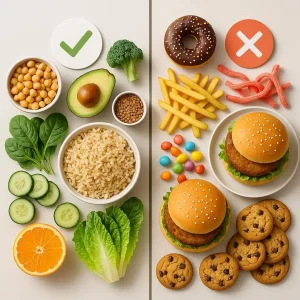
Achieving a complete amino acid profile on a vegan diet isn’t difficult — it’s about diversity, balance, and planning.
By combining legumes, grains, nuts, seeds, and soy products, you give your body all the tools it needs to thrive — naturally.
Don’t let myths about “incomplete proteins” hold you back. With awareness and creativity, plant-based eating can fuel your strength, energy, and wellness every day.
At Nutrition Travels, we believe that building a healthy vegan lifestyle starts with simple, informed choices.
Join us for expert tips, plant-based recipes, and guides that help you eat smarter, feel stronger, and live more sustainably.