

Have you ever wondered whether it’s better to work out on an empty stomach or after a meal?
Some people swear that fasted workouts are the secret to burning fat faster, while others argue that your body needs fuel before any effort.
So, who’s right?, In this article, we’ll break down the science behind fasted training, when it’s beneficial, when it’s not, and how to choose the best approach for your body and lifestyle.
What Does It Mean to Train Fasted?
The concept is simple: training fasted means exercising after at least 8 hours without food — usually in the morning before breakfast.
During this time, your blood sugar is low, and your body begins relying on fat as an alternative source of energy.
However, the energy source your body uses depends on the type and intensity of your workout.
- In light or moderate exercises, your body tends to use more fat for fuel.
- In high-intensity training (like sprints or heavy lifting), it needs quick glucose from carbohydrates.

The Science Behind Fasted Training
Most people who choose to work out fasted aim to boost fat burning.
But what does research say?
- Yes, the body burns more fat during a fasted workout compared to training after eating.
- But that doesn’t necessarily mean you lose more body fat overall.
That’s because your body might compensate later in the day by adjusting your metabolism or increasing your appetite.
In simple terms:
“Fasted workouts help your body use fat as instant energy — but they don’t automatically make you lose fat faster.”
Benefits of Fasted Training
Despite the debate, fasted training does have real, science-backed benefits — especially if done correctly.
- Boosts Fat Adaptation
When you train fasted, your body gradually becomes more efficient at using fat for energy, which can benefit endurance athletes or those practicing intermittent fasting. - Improves Focus and Discipline
Training without food teaches your body and mind to manage hunger and avoid quick sugar fixes, strengthening self-control and focus. - Enhances Insulin Sensitivity
Studies show that regular fasted training can improve your body’s response to insulin, potentially reducing the risk of type 2 diabetes. - Fits Busy Morning Routines
For those with tight schedules or who prefer morning workouts, fasted training is a simple and practical option.

When Fasted Training Isn’t Recommended
While it has benefits, fasted workouts aren’t suitable for everyone. Avoid training on an empty stomach if:
- You feel dizzy or weak during morning workouts.
- Your goal is muscle gain, since your body needs protein and carbs for building.
- You’re doing high-intensity or long-duration exercises, which require immediate fuel.
What Happens If You Eat Before Training?
Eating before your workout gives you instant energy from carbs and prevents low blood sugar.
This is ideal if your goal is to improve performance or lift heavier weights.
In short:
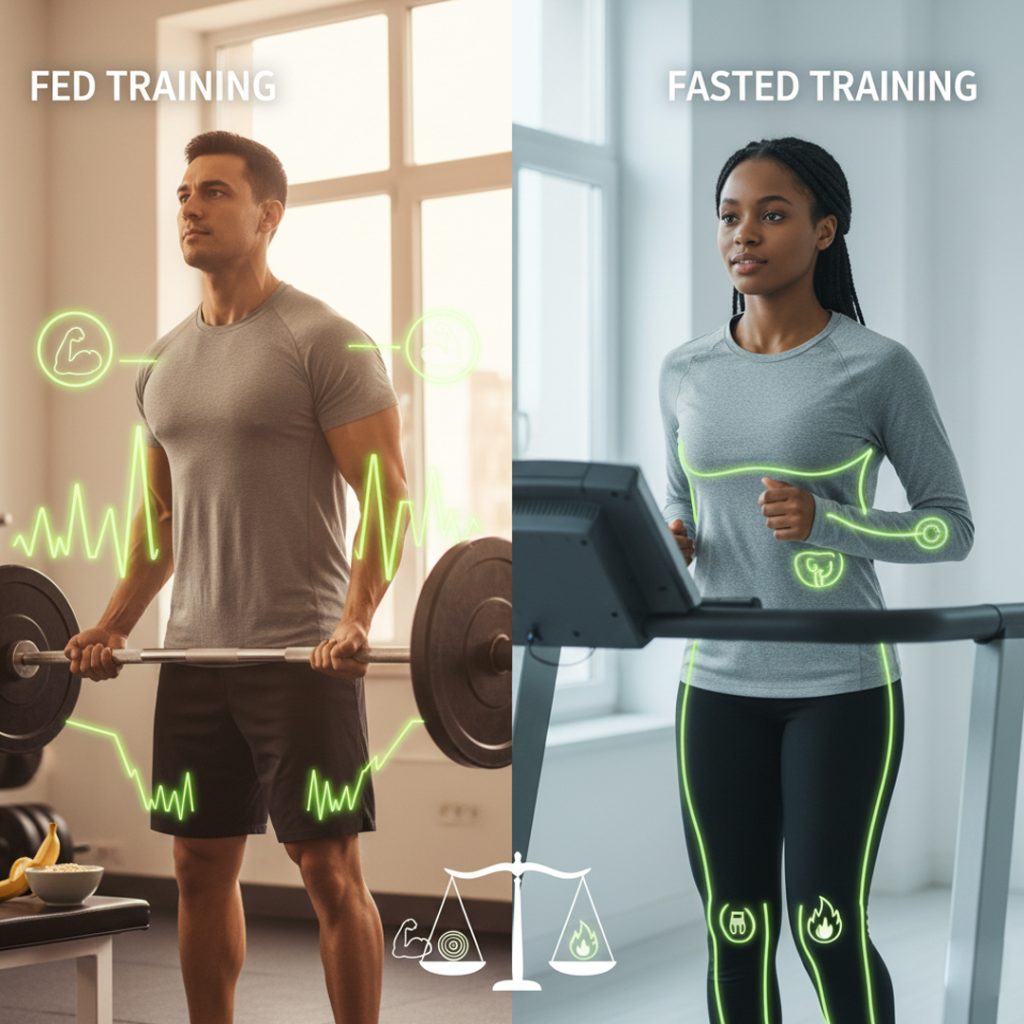
- Fasted training = Focus on fat burning.
- Fed training = Focus on performance and muscle results.
How to Choose What’s Right for You
Your choice between fasted or fed training depends on your personal goals:
| Goal | Best Option |
| Fat loss & discipline | Fasted training |
| Muscle gain & performance | Fed training |
| Balanced energy & maintenance | Mix both depending on your day |
In the end, there’s no universal rule — only what works best for your body.
Experiment, listen to your energy levels, and remember: nutrition and training are partners, not rivals.
If you’d like to explore more science-based fitness and nutrition insights, visit NutritionTravels — your go-to source for smarter health and performance.
How to Start Fasted Training Safely and Gradually
If you’ve decided to start fasted training, don’t jump in too quickly or without preparation.
Your body needs time to adapt to exercising without immediate energy from food.
Follow these simple steps to make the transition safe and effective:
1-Start with Light Workouts
Begin with brisk walking or gentle stretching for 20–30 minutes in the morning.
This helps your body gradually learn to use fat as a main source of energy without overstraining.
2-Don’t Skip Water
Fasting doesn’t mean skipping hydration.
Make sure you drink plenty of water before and during your workout — especially if you train early in the morning — to avoid dehydration and fatigue.
3-Listen to Your Body’s Signals
If you feel dizzy, nauseous, or extremely weak, that’s a clear sign your body needs fuel before training.
The goal isn’t to push yourself to the limit, but to find a smart, sustainable balance.
4-Mix Both Approaches
Some athletes follow a “Hybrid Training” style — doing fasted workouts two days a week and fed workouts on the others.
This method allows you to enjoy both the fat-burning benefits of fasted training and the performance boost of fueled sessions.

What to Eat After a Fasted Workout
After training in a fasted state, your body becomes highly efficient at absorbing nutrients.
Your post-workout meal is crucial for muscle recovery and energy replenishment.
Focus on these key components:
- High-quality protein: eggs, tuna, grilled chicken, or plant-based protein.
- Complex carbs: oats, sweet potatoes, or brown rice.
- Healthy fats: avocado or raw nuts.
Tip: Eat within 30–60 minutes after your workout to maximize recovery and muscle repair.
Fasted Training and Muscle Building: Do They Clash?
A common question: does training fasted prevent muscle growth?
Answer: No — but with conditions.
If your main goal is building muscle, nutrition becomes your top priority.
You can still train fasted as long as you compensate with enough protein and calories afterward.

Balanced strategy :
- Keep your workout short (no more than 45 minutes).
- Drink a protein shake or BCAAs immediately post-workout.
- Have a complete meal within an hour.
Best Time for Fasted Training :
The best time to train fasted is early in the morning after waking up, when your body’s fat-burning rate is highest.
However, avoid fasted training if:
- The weather is extremely hot.
- You didn’t sleep well the night before.
- You’re on your period or feeling physically exhausted.
Practical Tips for a Successful Experience :
- Start gradually: Try it twice a week, then increase based on how your body responds.
- Monitor your energy: If your performance drops, try a small pre-workout snack.
- Stay hydrated: Always replace lost fluids.
- Get enough sleep: Rest amplifies fasted training results.
- Track your progress: Focus on consistency — true changes take time, not days.

Make Training a Lifestyle
Exercise isn’t a battle with food or time — it’s harmony between body, mind, and energy.
Whether you train fasted or fueled, what truly matters is consistency and awareness.
Choose the method that keeps you closer to your goals, not what’s just trending.
Want to learn more about smart workouts, modern nutrition, and effective fasting strategies?
Visit NutritionTravels and start your health journey with confidence and balance.