
Have you ever wondered about the accuracy of the claims surrounding soy and Health ? Between supporters praising its health benefits and critics warning about potential side effects, the picture is not always clear. In this article, we will dive into the world of soy, uncovering scientific facts about its benefits, potential risks, and its relationship with hormones and thyroid function, while highlighting its diverse dietary uses. Our goal is to provide clear and reliable information to help you make healthy nutritional choices.
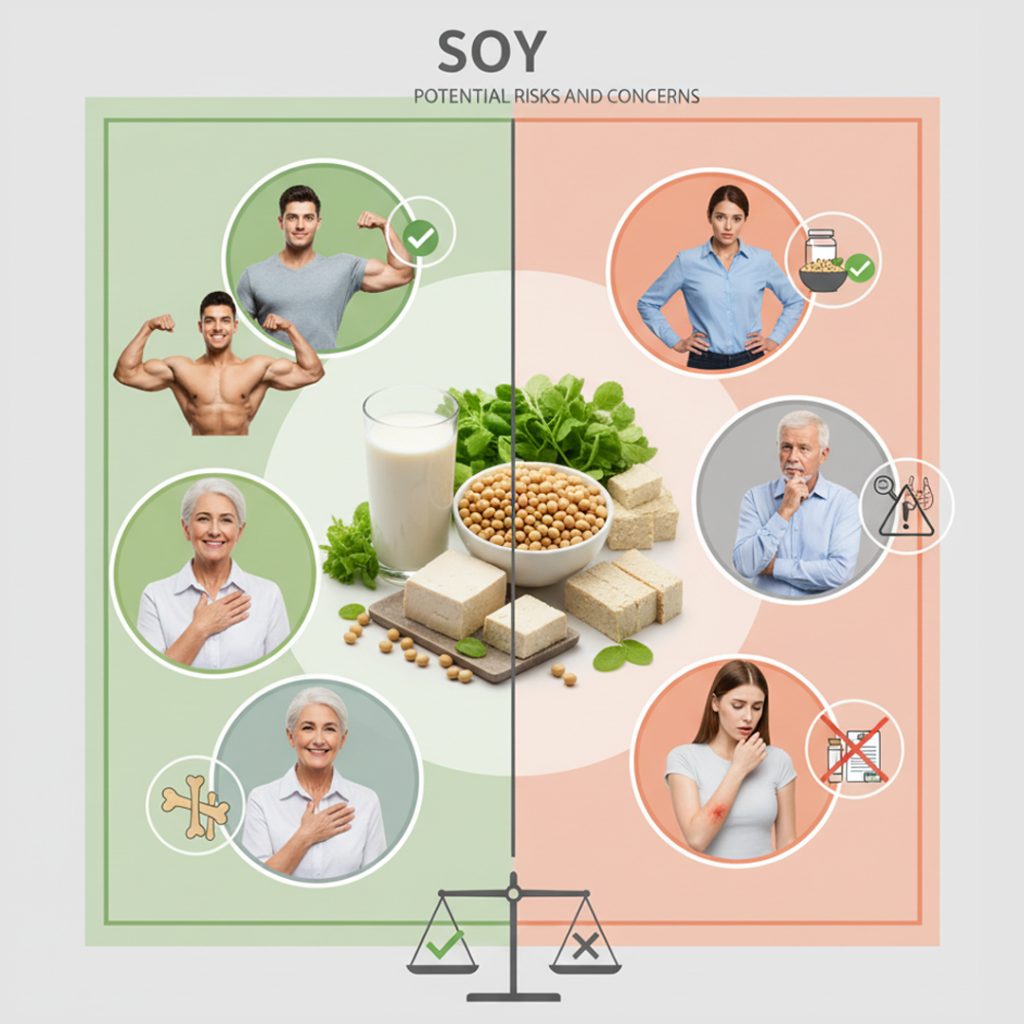
Benefits of Soy :
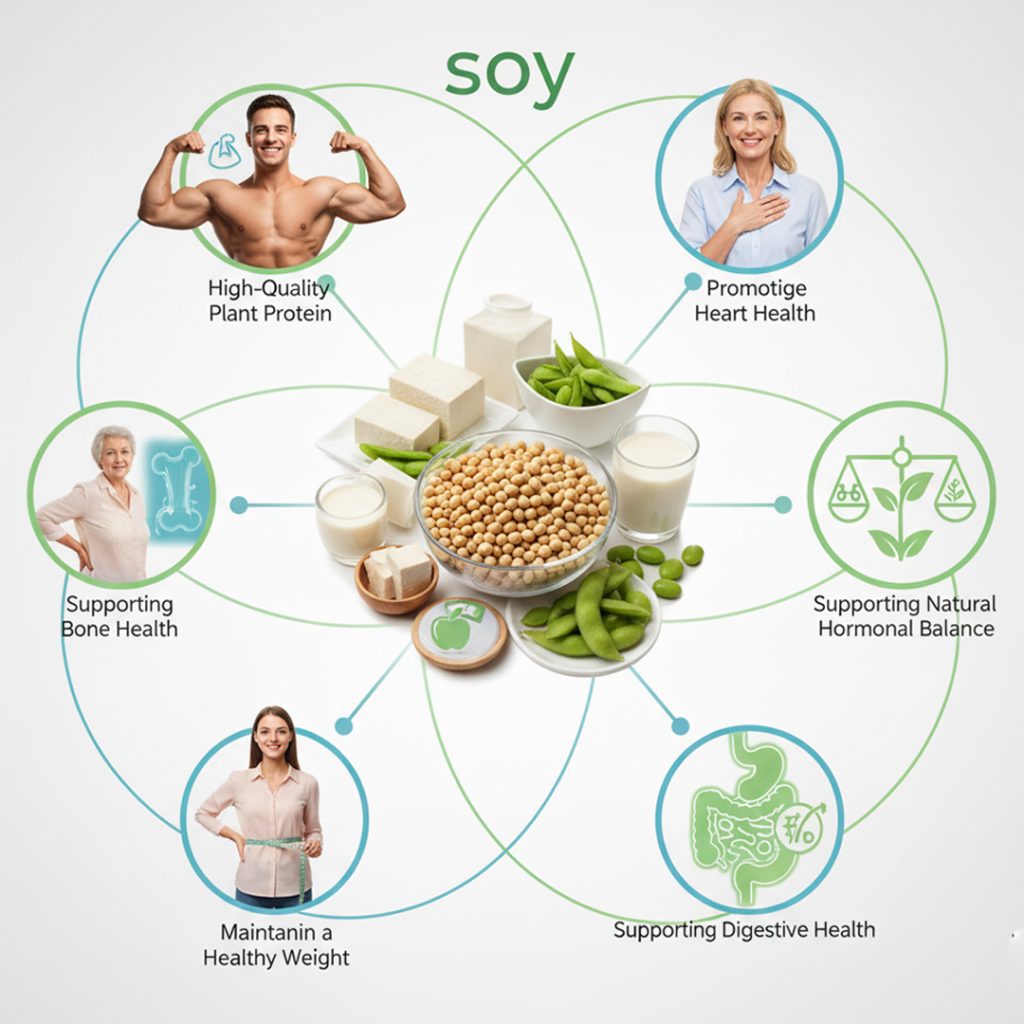
1. High-Quality Plant Protein
Soy is one of the most important sources of complete plant-based protein, containing all the essential amino acids the body needs. This makes it an excellent choice for vegetarians or anyone looking to reduce animal protein intake. The protein in soy helps build muscles, support the immune system, and contributes to feeling full for longer periods.
2. Soy and Health : Promoting Heart Health
Studies indicate that soy can be beneficial for heart health. It contains compounds called isoflavones, natural antioxidants that help reduce inflammation and lower LDL cholesterol levels. Regular inclusion of soy and Health in the diet may reduce the risk of cardiovascular diseases.
3. Supporting Bone Health
Soy contains calcium, vitamins, and other nutrients that support bone strength. Isoflavones may help slow down bone density loss, especially with aging, making soy beneficial for preventing osteoporosis.
4. Supporting Natural Hormonal Balance
Isoflavones in soy act as plant-based compounds similar to estrogen in the body, which may help regulate certain hormonal processes naturally. This effect can support overall health without the need for hormonal interventions.
5. Soy and Health: Maintaining a Healthy Weight
Consuming soy helps promote a sense of fullness due to its protein and fiber content, which aids in appetite control and reduces overeating, supporting the maintenance of a healthy weight.
6. Supporting Digestive Health
The fiber in soy enhances digestive system function and stimulates bowel movements, reducing constipation and aiding nutrient absorption.
Soy and Health: Controversial Aspects and Potential Risks
-
Hormonal Concerns
Despite the benefits of isoflavones, some studies have raised concerns about their hormonal effects. Excessive consumption of soy, especially in concentrated supplement forms, may affect hormonal balance in some individuals. However, most research suggests that moderate intake of natural soy foods is safe for most people.
-
Thyroid Issues
There is scientific debate regarding soy and thyroid function. Certain compounds in soy can interfere with iodine absorption, which is essential for thyroid hormone production, particularly in individuals with iodine deficiency. Therefore, consuming soy as part of a balanced diet is recommended, rather than relying heavily on it if there is a history of thyroid problems.
-
Food Allergies
Like any food, some individuals may be allergic to soy, which can manifest as skin rashes or digestive issues. It is important to monitor your body when introducing soy for the first time.

Soy and Health: Soy’s Impact on Hormones and Thyroid Function :
1. Isoflavones and Hormonal Balance
Isoflavones in soy act as phytoestrogens, meaning they can interact with estrogen receptors in the body. This does not necessarily mean they are harmful; they may contribute to supporting hormonal balance, especially in adults consuming moderate amounts.
2.Soy and Thyroid: Finding the Right Balance
Potential effects of soy on the thyroid are often linked to excessive consumption and low dietary iodine. Including soy within balanced meals, along with adequate iodine sources, ensures no negative impact on thyroid function.
Soy and Health: Dietary Uses
1.Soy Milk :
Soy milk is an excellent plant-based alternative to cow’s milk, rich in protein and lower in saturated fats. It can be used in tea, coffee, or smoothies.
2.Tofu :
Tofu is another form of soy, high in protein and easy to digest, suitable for salads, soups, or cooked dishes.
3.Tempeh and Natto :
These fermented forms of soy provide additional benefits, as beneficial bacteria in fermentation support digestion and gut health.
4.Soy Protein Powder :
Used in dietary supplements to boost plant-based protein intake, especially for athletes or those aiming to increase muscle mass.

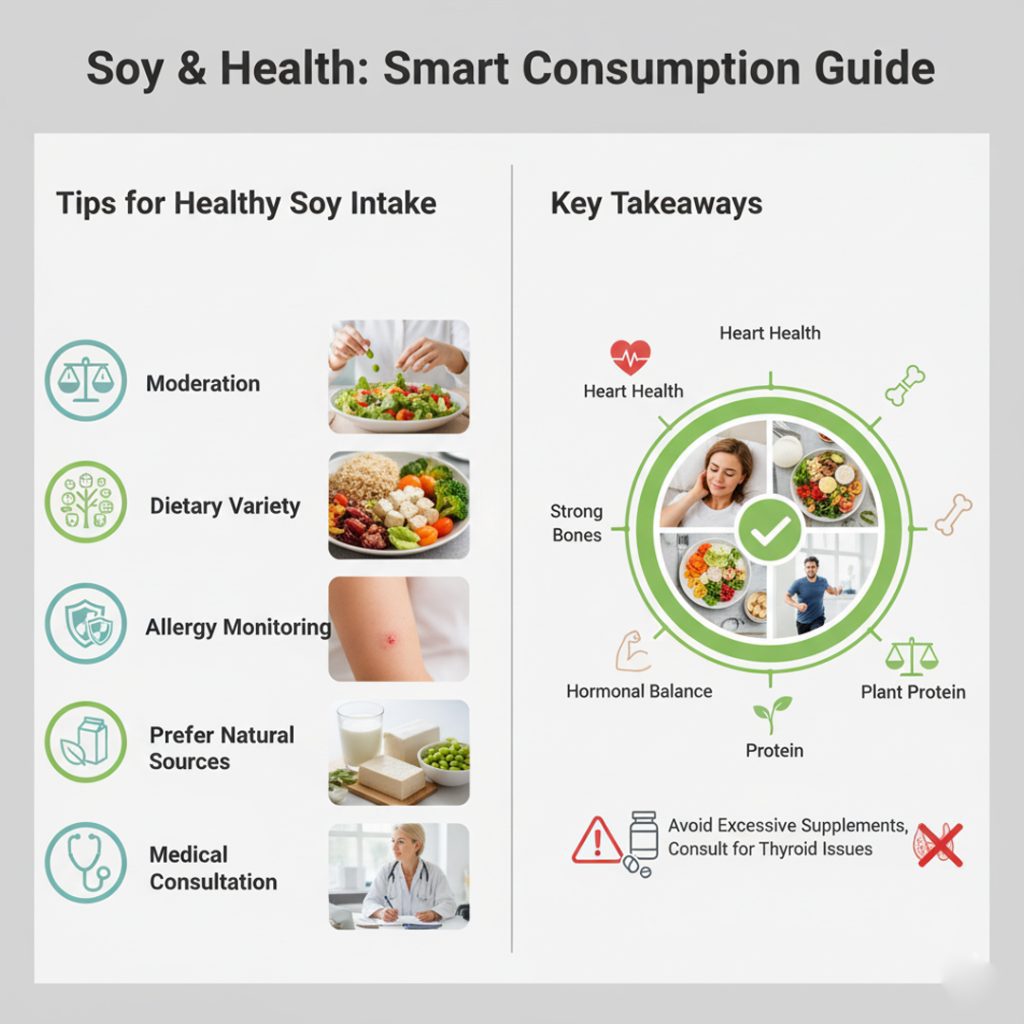
Tips for Consuming Soy and Health :
- Moderation: Consume soy in moderate amounts as part of a balanced diet.
- Dietary Variety: Combine with other plant-based protein sources to ensure all nutrients are obtained.
- Allergy Monitoring: Watch for allergic reactions when introducing soy for the first time.
- Prefer Natural Sources: It is better to consume soy in natural forms (milk, tofu, tempeh) rather than concentrated supplements.
- Medical Consultation: Those with thyroid issues should consult a doctor before excessive soy consumption.
Should You Include Soy?
Soy can be a healthy and valuable addition to the diet if consumed in moderation and as part of a balanced plan. Its benefits include supporting heart health, improving bone function, providing complete plant protein, and contributing to natural hormonal balance. However, attention should be paid to controversial aspects, particularly potential thyroid effects and allergies, while avoiding excessive intake of concentrated supplements.
By choosing natural and varied sources of soy and Health and including them in a balanced diet, one can enjoy its significant health benefits without risks.
If you want to explore more about soy and other diverse topics in nutrition and health, we invite you to visit our website: nutritiontravels to read specialized articles filled with useful information and practical health tips.