

Healthy Eating boosts overall well-being by supporting heart health, digestion, steady energy, weight management, and mood. Fiber, protein, Omega-3s, and antioxidants work together to keep the body and mind balanced and energized.

What Is Healthy Eating?
1. A Simple Definition of Healthy Eating
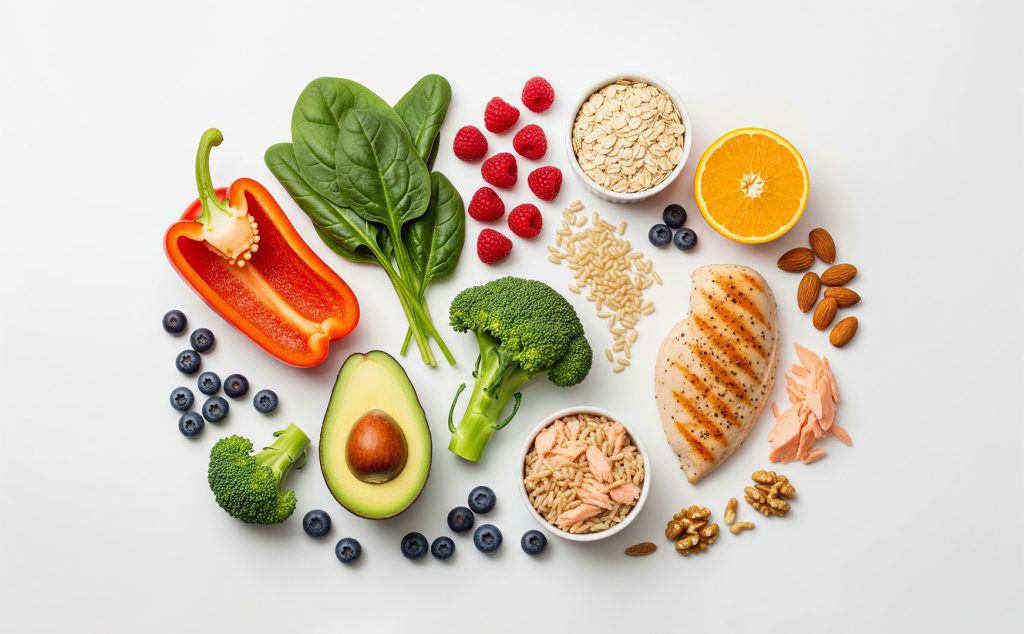
Healthy eating means choosing natural, whole foods like vegetables, fruits, whole grains, lean proteins, and healthy fats while avoiding processed foods. It’s about balance—replacing less healthy options with nourishing alternatives to fuel the body efficiently.
2. Why Is Healthy Eating Important?
Healthy eating isn’t just a weight-loss method; it’s a lifestyle that supports your overall health in several ways:
-
Maintains a Healthy Weight Naturally :
Natural foods rich in fiber and protein make you feel full for longer, reducing cravings for high-calorie junk foods. This helps your body regulate its weight without strict deprivation or harsh diets.
-
Reduces the Risk of Chronic Diseases :
Following a diet rich in vegetables, fruits, whole grains, and healthy proteins lowers bad cholesterol and blood sugar levels, which in turn reduces the risk of developing heart disease, high blood pressure, diabetes, and some types of cancer.
-
Boosts Energy and Focus:
Healthy foods provide a steady supply of energy, unlike refined sugars and fats that cause a quick spike followed by a sudden crash. This means better concentration at work or school, and improved physical and mental performance.
-
Improves Digestive Health:
The fiber found in vegetables, fruits, and whole grains helps improve bowel movements, prevents constipation, and promotes the growth of beneficial bacteria in your digestive system. This leads to better digestion and optimal nutrient absorption, which reflects positively on your overall health and energy.
-
Supports Mental Health and Mood:
Healthy foods contain important antioxidants and vitamins, such as B and C vitamins, which play a role in reducing stress, improving mood, and boosting brain function. Healthy eating helps achieve a balance between body and mind, and reduces feelings of mental and physical fatigue.
-
Reduces Chronic Inflammation:
Processed and fried foods increase inflammation in the body, while vegetables, fruits, and nuts help reduce it. Chronic inflammation is linked to many diseases like diabetes and heart disease. Healthy eating significantly lowers these risks.

Principles of Healthy Eating for Beginners
- Choose Fresh Ingredients:
Focus on natural, seasonal fruits and vegetables for rich vitamins and minerals. Fresh proteins like chicken, fish, and lean meats support muscle and overall health without additives. Whole grains (oats, brown rice, quinoa) provide long-lasting energy and stabilize blood sugar. The closer food is to its natural form, the healthier it is. - Avoid Processed Foods:
Processed meals often contain added sugars, unhealthy fats, preservatives, and high sodium, increasing risks of weight gain and chronic diseases. Start by replacing fast food with simple home-cooked meals—salads, grilled proteins, or vegetable soups—to gradually reduce dependence on processed foods. - Control Portion Sizes:
Healthy eating is about balance, not deprivation. Using smaller plates and dividing meals into protein, vegetables, and whole grains helps prevent overeating. Eat slowly and focus on each bite to better recognize fullness. - Drink Enough Water:
Water supports digestion, metabolism, and hydration. Aim for 6–8 glasses daily, drink before meals, and carry a bottle on the go. Adding lemon or cucumber slices improves taste and encourages more intake while reducing cravings for snacks.

Healthy Meal Ideas :
1. Breakfast Meals
-
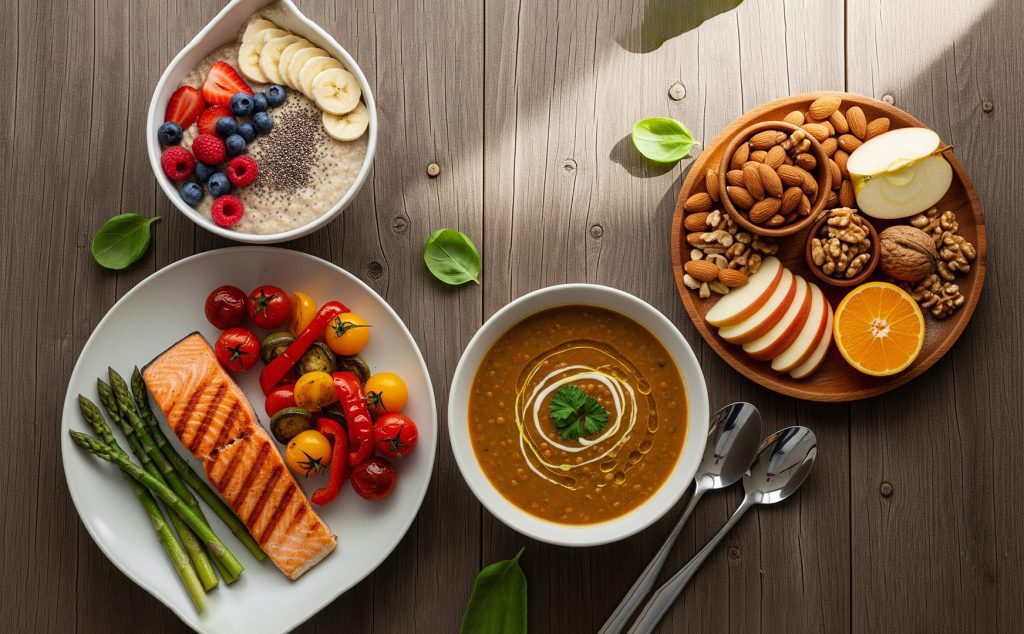
- Oatmeal with low-fat milk, banana, and a sprinkle of cinnamon.
- Boiled eggs with steamed vegetables and a slice of brown bread.
- Natural yogurt with nuts and berries.
2. Lunch Meals
-
- Grilled chicken salad with colorful vegetables and olive oil.
- Grilled fish with brown rice and seasonal vegetables.
- Lentil soup with a side salad and a piece of whole-grain bread.
3. Dinner Meals
-
- Steamed vegetables with tofu or grilled chicken.
- Quinoa salad with vegetables and avocado.
- Warm vegetable soup with chia seeds.
4. Healthy Snacks
-
- A handful of unsalted nuts.
- Slices of carrots and cucumber with natural hummus.
- Fresh fruits like an apple or an orange.
Tips for Applying Healthy Eating Daily :
-
- Start Gradually: Change one habit each week, such as replacing a fast-food meal with a healthy one.
- Plan Your Meals: Prepare a weekly list to help you stick to healthy eating and avoid quick decisions that might harm your plans.
- Use Healthy Cooking Methods: Grilling, boiling, or steaming is better than frying in oil.
- Diversify Protein Sources: Mixing between fish, eggs, poultry, and legumes gives your body all the essential amino acids it needs.
- Enjoy Your Food: Focus on the taste of healthy food and eat it slowly. Sharing meals with family or friends adds more joy to your meals.

The Benefits of Committing to Healthy Eating :
- Improves Heart Health:
Healthy eating reduces harmful fats and increases Omega-3s from fish, nuts, and olive oil, lowering bad cholesterol and heart disease risk. Whole grains and vegetables support blood pressure and circulation. - Boosts Digestion:
Fiber from vegetables, fruits, and legumes regulates bowel movements, reduces bloating, and supports gut bacteria for better nutrient absorption. - Increases Energy and Focus:
Vitamins, minerals, and Omega-3s in balanced meals with protein and whole grains provide steady energy, enhance focus, and prevent sluggishness. - Natural Weight Management:
Fiber-rich foods and proteins promote fullness, reduce cravings, and help maintain an ideal weight without strict diets. - Improves Mood:
Natural foods with antioxidants and Omega-3s reduce stress, protect cells, support brain function, and enhance emotional balance.

Common Mistakes When Starting Healthy Eating
-
- Relying only on salads without protein or carbohydrates.
- Trying to change all habits at once.
- Ignoring drinking water regularly.
- Buying packaged foods that claim to be healthy but are full of added sugars.
Simple Steps for Healthy Eating Success
-
- Section Seven: Simple Steps for Healthy Eating Success
- Start by changing one meal a day.
- Use fresh, natural ingredients whenever possible.
- Try new recipes weekly to keep meals interesting.
- Cook at home instead of relying on ready-made meals.
- Pay attention to how meals make you feel—comfort and fullness are the goal.
Healthy eating doesn’t have to be complicated. With simple steps, fresh ingredients, and basic planning, you can boost health, gain energy, and enjoy your food. Committing to these habits is a long-term investment in a balanced lifestyle.
- Section Seven: Simple Steps for Healthy Eating Success

Start your healthy eating journey step by step, and discover the difference in your energy, mental health, and weight.
For more healthy eating recipes and easy, nutritious meal ideas, visit our website NutritionTravels and start your delicious food journey today!