
Maintaining adequate calcium intake is essential for bone health, nerve function, and muscle contraction. Understanding meeting calcium requirements on a vegan diet is crucial for those avoiding animal products but wanting to support long-term skeletal health.
Many people assume that dairy is the only reliable calcium source. However, plant-based diets can provide sufficient calcium through a variety of foods, preparation methods, and nutrient combinations.
Why Meeting Calcium Requirements on a Vegan Diet Matters:
Calcium plays a central role in:
- Building strong bones and teeth
- Maintaining healthy blood pressure
- Supporting muscle and nerve function
- Ensuring proper blood clotting
Vegans may face challenges because common plant foods contain compounds like oxalates and phytates, which can reduce calcium absorption. By carefully choosing calcium-rich sources, absorption can be maximized.
Actionable tip: Track calcium intake daily to ensure it meets the recommended 1000 mg for adults (or 1200 mg for those over 50), adjusting for life stage and activity.

Best Plant-Based Foods for Meeting Calcium Requirements on a Vegan Diet:
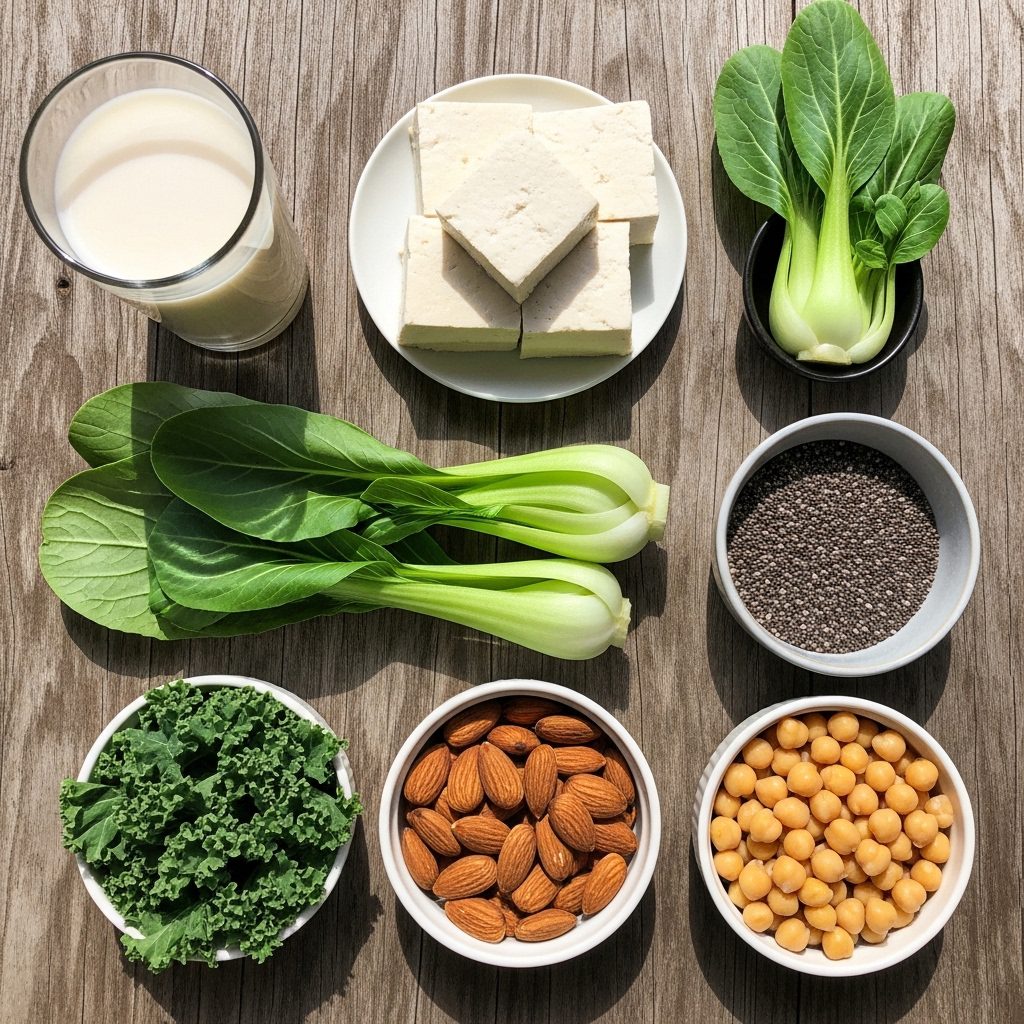
While fortified plant milks and tofu are common sources, there are many other foods rich in bioavailable calcium:
1- Leafy Greens:
Certain greens provide excellent calcium without heavy oxalate content.
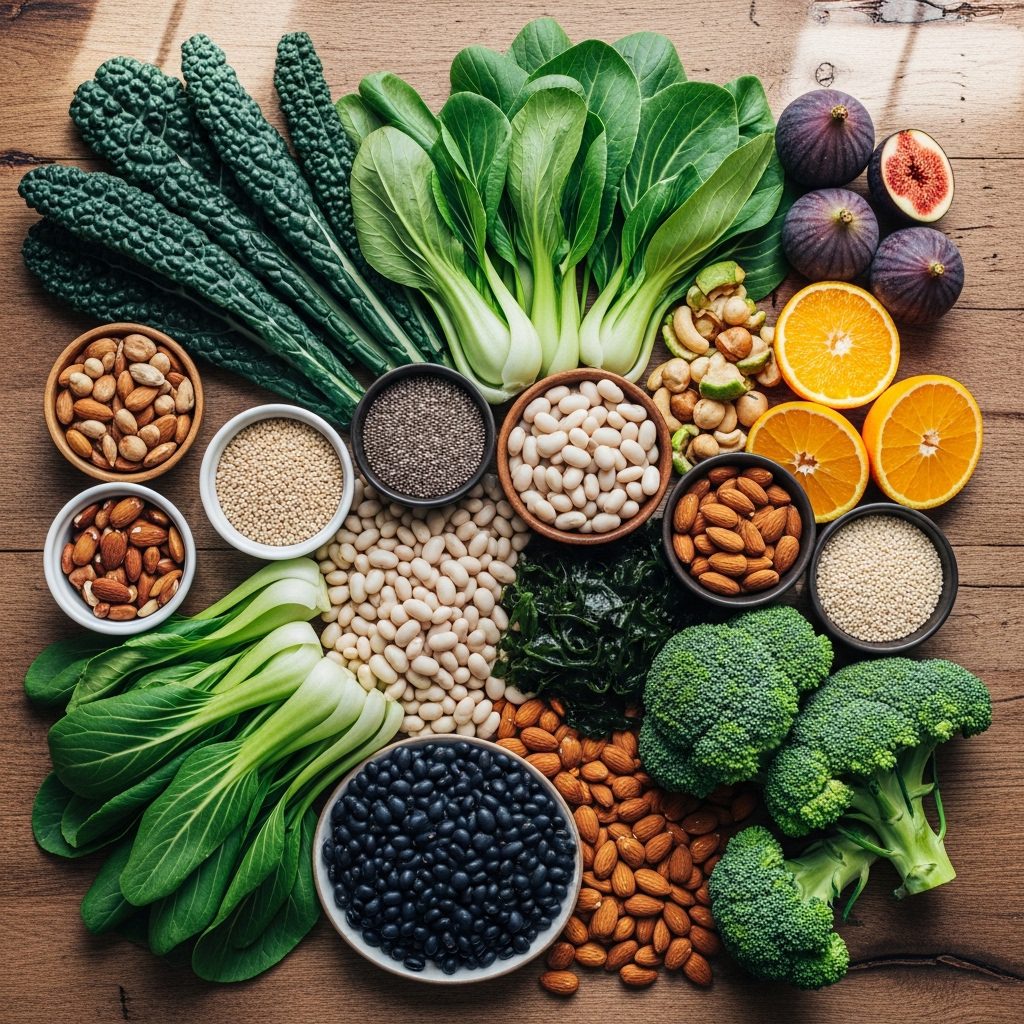
- Kale, bok choy, collard greens: Low in oxalates, calcium is well absorbed
- Spinach: High in calcium but also high in oxalates, absorption is lower
Tip: Include 1–2 servings of low-oxalate greens daily.
2- Nuts and Seeds:
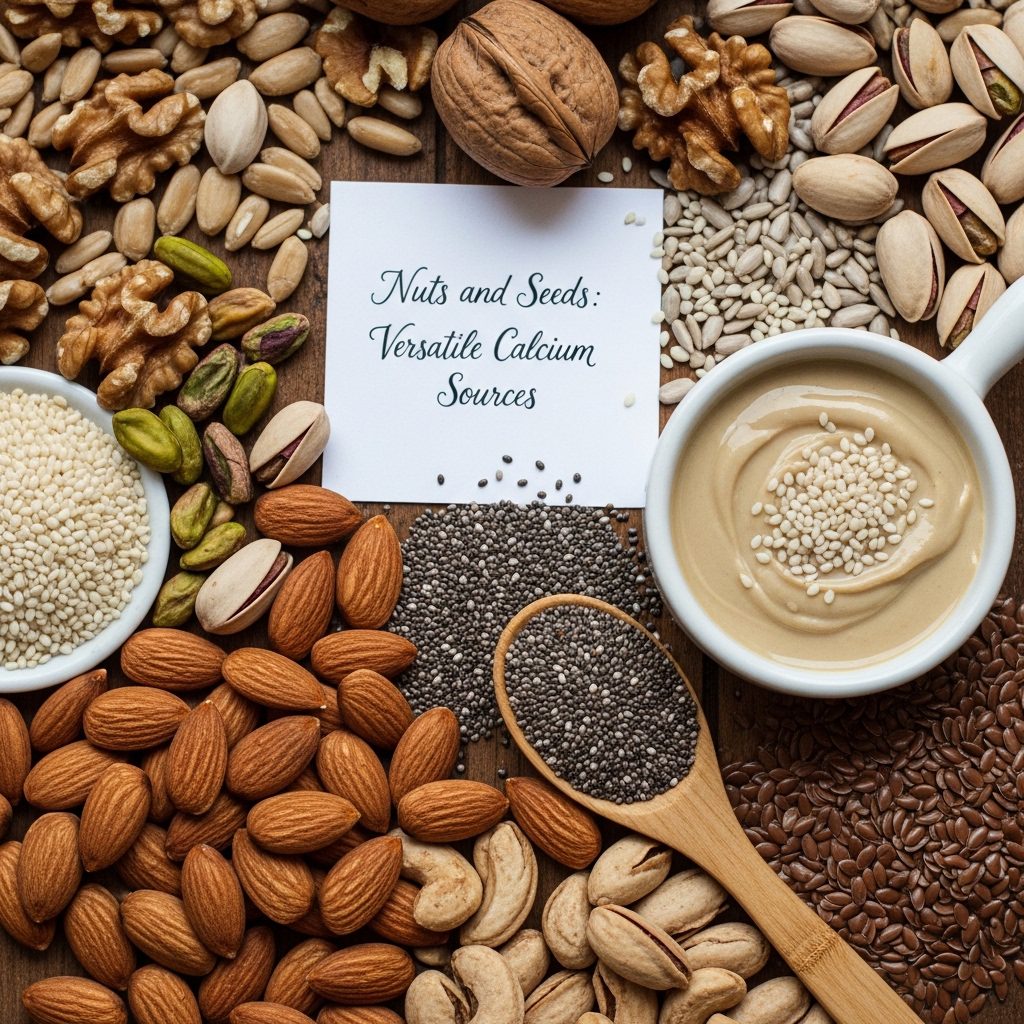
Seeds and nuts are versatile calcium sources.
- Almonds: 1 oz (~23 almonds) provides ~75 mg calcium
- Chia seeds: 1 tbsp contains ~80 mg calcium
- Sesame seeds / tahini: Excellent for sprinkling on salads and dishes
Actionable tip: Add seeds to smoothies, oatmeal, or salads for easy calcium boosts.
3- Legumes:
Beans, lentils, and chickpeas contribute moderate amounts of calcium and are also rich in protein and fiber.
- White beans: ~160 mg per cup
- Black beans: ~120 mg per cup
Tip: Incorporate legumes into soups, stews, or grain bowls multiple times a week.
4- Seaweed and Algae:
Certain seaweeds contain calcium and other minerals.
- Wakame, kelp, and nori are suitable occasional sources
- Calcium content varies, so check nutrition labels
Tip: Add small portions of edible seaweed to soups or sushi bowls 2–3 times per week.
5- Other Veggies and Fruits:
- Broccoli, okra, and Brussels sprouts: Provide moderate calcium and high fiber
- Figs and oranges: Fruit sources with added benefits for potassium and antioxidants
Tip: Combine vegetables and fruits in meals to enhance nutrient synergy.
Enhancing Calcium Absorption:
To maximize absorption on a vegan diet:
- Pair calcium sources with vitamin D (sun exposure, fortified foods, or supplements)
- Limit excessive oxalates (e.g., in spinach) in high-calcium meals
- Avoid excessive phytates (in raw legumes and grains) by soaking or fermenting
Actionable tip: Include small amounts of healthy fat (e.g., olive oil, nuts) with calcium-rich meals to improve uptake.
Calcium Supplements for Vegans: When Are They Necessary?
In some cases, supplementation may be necessary, especially for:
- Pregnant or breastfeeding women
- Individuals with limited sun exposure
- Older adults at risk of osteoporosis
Tip: Choose calcium citrate or calcium carbonate supplements as recommended by a healthcare provider, ensuring balanced intake with vitamin D.
Lifestyle Habits That Support Calcium Requirements on a Vegan Diet:
Beyond calcium intake, other lifestyle factors support bone density and overall skeletal health:
1- Weight-Bearing Exercise:
Walking, running, and resistance training stimulate bone formation and maintain strength.
2- Vitamin D and Sunlight:
Vitamin D is crucial for calcium absorption. Vegan sources include fortified foods, supplements, and sunlight exposure.
3- Limit Excess Sodium and Caffeine:
High sodium and excessive caffeine can increase calcium excretion. Moderate intake for bone health is advised.
4- Avoid Smoking and Excess Alcohol:
Both negatively impact bone density and calcium retention.
Sample Meal Plan for Meeting Calcium Requirements on a Vegan Diet:
- Breakfast: Chia pudding with almond milk and figs
- Snack: Handful of almonds and orange slices
- Lunch: Collard green wrap with hummus and chickpeas
- Snack: Roasted edamame or tahini on toast
- Dinner: Stir-fry with broccoli, bok choy, tempeh, and sesame seeds
- Hydration: Water or herbal tea throughout the day
This plan emphasizes calcium variety and absorption, ensuring daily needs are met.

Monitoring and Long-Term Considerations:
Regular bone health monitoring, particularly in adults and postmenopausal women, helps track the effectiveness of calcium intake. Pairing calcium-rich foods with lifestyle habits ensures long-term skeletal resilience.
Meeting calcium requirements on a vegan diet is achievable by going beyond fortified milks and tofu. Leafy greens, legumes, nuts, seeds, seaweed, and vitamin D synergy all contribute to strong bones and overall health.
Integrating varied calcium-rich foods with weight-bearing exercise, sunlight, and a balanced vegan lifestyle provides comprehensive support for skeletal strength.
Take proactive steps today to optimize your calcium intake and safeguard long-term bone health. For more practical plant-based nutrition tips and evidence-based strategies, explore Nutrition Travels and continue building a strong foundation for vibrant health.