Have you ever felt bloated or heavy after meals? Many people struggle with digestion and discomfort in the stomach. The good news is that fiber can be your best friend. It helps your digestive system work better, feeds the good bacteria in your gut, and can reduce bloating. In this article, we will share the 10 best high-fiber foods to improve digestion and feel lighter every day.
Why Fiber is Important
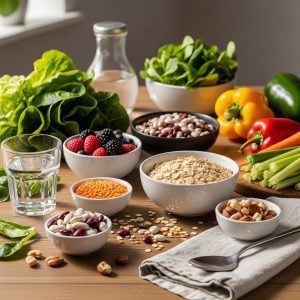
Fiber is a part of plant-based foods that your body cannot fully digest. There are two main types:
- Soluble fiber: This fiber dissolves in water and forms a gel-like substance. It helps soften stool, supports healthy bowel movements, lowers cholesterol, and feeds the beneficial bacteria in your gut.
- Insoluble fiber: This fiber does not dissolve in water. It adds bulk to your stool, makes bowel movements easier, and prevents constipation and bloating.
A diet rich in both types of fiber helps regulate digestion naturally and supports long-term gut health. For optimal results, drink plenty of water throughout the day and spread fiber intake across meals to avoid discomfort.
10 High-Fiber Foods for Better Digestion
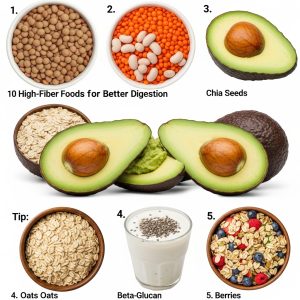
1. Legumes (Lentils and Beans)
Legumes are among the richest sources of fiber. One cup of cooked lentils provides about 15.5 grams of fiber. They help regulate bowel movements, reduce constipation, and feed beneficial gut bacteria. Legumes are also rich in protein, making them excellent for energy. Tip: Soaking beans overnight before cooking can reduce gas and make them easier to digest.
2. Chia Seeds
Chia seeds are small but powerful. They are very high in soluble fiber. When mixed with water, they form a gel that softens stool and improves digestion. Chia seeds also contain omega-3 fatty acids, which support heart health. Sprinkle them over oatmeal, smoothies, or yogurt for a simple fiber boost.
3. Avocado
Avocados are creamy, tasty, and full of fiber and healthy fats. They support digestion, help you feel full longer, and maintain a healthy balance of gut bacteria. Adding avocado to salads or toast can improve digestion while giving your meals a satisfying texture.
4. Oats
Oats contain beta-glucan, a soluble fiber that reduces bloating, improves digestion, and helps regulate blood sugar. They are gentle on the stomach and versatile for breakfast or snacks. Combining oats with fruits, nuts, or yogurt enhances both fiber and flavor.
5. Berries
Berries, such as strawberries, blueberries, and raspberries, are rich in fiber and antioxidants. They support healthy bowel movements, reduce inflammation, and help prevent digestive discomfort. Eating berries fresh or adding them to smoothies makes them easy to include daily.
6. Apples (with skin)
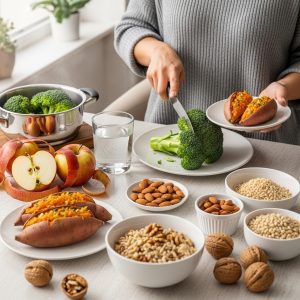
Apples are high in pectin, a soluble fiber that acts as a prebiotic, feeding good gut bacteria. The skin contains insoluble fiber, so eating apples unpeeled maximizes benefits. Apples also help control appetite and maintain steady energy levels throughout the day.
7. Broccoli
Broccoli is a cruciferous vegetable that contains insoluble fiber, increasing stool bulk and promoting regular bowel movements. Steaming or lightly sautéing broccoli makes it easier to digest while preserving nutrients. Broccoli also supports detoxification and overall gut health.
8. Sweet Potatoes
Sweet potatoes are rich in fiber, vitamins, and minerals. They are easy to digest, help regulate bowel movements, and provide energy. Baked or boiled sweet potatoes are gentle on the stomach and can be combined with grains or legumes for a balanced meal.
9. Nuts (Almonds and Walnuts)
Nuts provide fiber and healthy fats that help regulate bowel movements and maintain a healthy gut. They are easy to snack on and can improve satiety, reducing overeating. Soaking nuts overnight may make them even easier to digest.
10. Whole Grains (Barley, Quinoa, Brown Rice)
Whole grains provide both soluble and insoluble fiber, supporting gut health and providing sustained energy. Switching from refined grains to whole grains, like quinoa, barley, or brown rice, reduces bloating and helps maintain regular digestion.
Other Foods to Support Digestion
Digestive comfort can be further enhanced with:
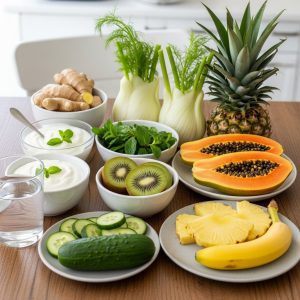
- Yogurt (Probiotics): Contains live bacteria that balance gut flora, reduce bloating, and support nutrient absorption.
- Ginger, Mint, Fennel: Natural remedies to soothe stomach muscles and reduce gas.
- Papaya, Pineapple, Kiwi: Contain digestive enzymes (papain, bromelain, actinidin) that help break down proteins and improve digestion.
- Cucumber and Banana: Rich in water and potassium to prevent bloating and maintain fluid balance.
Including a variety of these foods ensures a well-rounded digestive diet.
Tips to Maximize Fiber Benefits
- Increase Fiber Gradually: Sudden increases can cause gas and bloating.
- Drink Plenty of Water: Fiber needs fluid to move efficiently through the digestive system.
- Eat Fruits and Vegetables with Skin: Most fiber is in the skin.
- Cook Some Vegetables: Cooking can make them easier to digest without losing nutrients.
- Avoid Artificial Sweeteners and Soda: These can worsen bloating and discomfort.
- Combine Fiber with Probiotics: Yogurt or fermented foods help the gut use fiber more effectively.
Daily Fiber Routine Example
Here is a simple daily plan to include high-fiber foods:
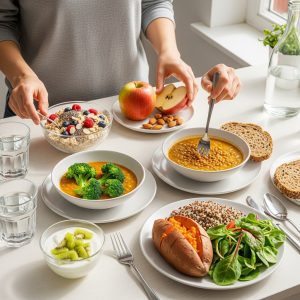
- Breakfast: Oatmeal with chia seeds, berries, and almond slices.
- Snack: An apple with skin or a handful of nuts.
- Lunch: Lentil soup with steamed broccoli and whole-grain bread.
- Dinner: Baked sweet potato with quinoa and a leafy green salad.
- Optional: Yogurt with kiwi for dessert or mid-afternoon snack.
This routine ensures you get both soluble and insoluble fiber throughout the day, keeping digestion smooth and reducing bloating.
Common Mistakes to Avoid
Even with high-fiber foods, some mistakes can reduce benefits:
- Not drinking enough water.
- Adding large amounts of fiber too quickly.
- Overcooking vegetables, which may reduce some fiber content.
- Ignoring probiotics, which are essential for a healthy gut.
Avoiding these errors helps your digestive system get the most benefit from fiber-rich foods.
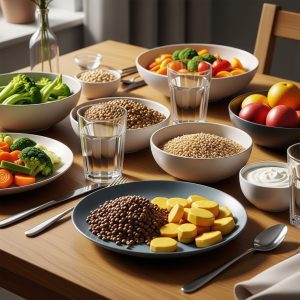
Improving digestion and preventing bloating isn’t just about supplements—it’s about eating the right foods. Legumes, oats, chia seeds, avocado, berries, apples, broccoli, sweet potatoes, nuts, and whole grains are the 10 best high-fiber foods for a healthy, comfortable gut. Combine them with probiotics, enough water, and smart eating habits to feel lighter, more energetic, and healthier every day.
Start your fiber journey today and discover more tips, meal ideas, and healthy habits at Nutrition Travels, your ultimate guide to a happy, healthy gut!