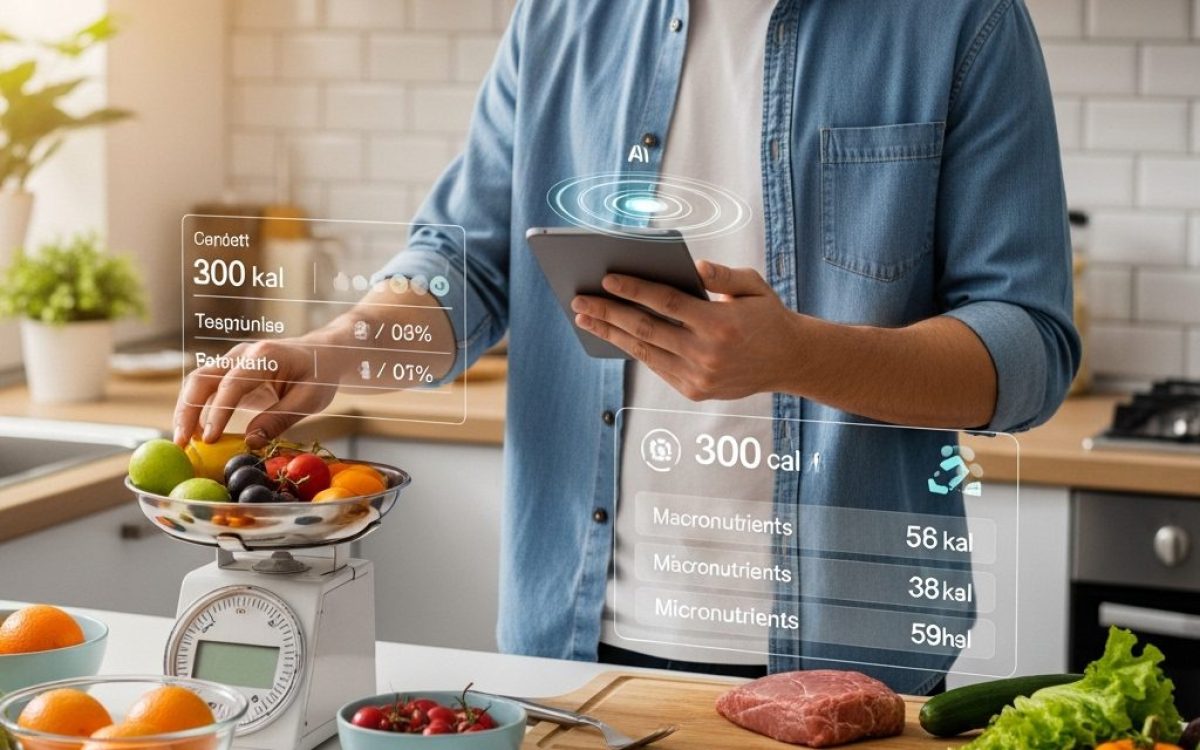
Eating healthy and staying fit is a goal that many of us aspire to achieve. Yet, tracking every calorie, macronutrient, and micronutrient can be overwhelming. According to a recent survey, 70% of people want to be healthier, and for 50% of them, eating right is a top priority. While we often rely on doctors and nutritionists for guidance, traditional methods of dietary tracking can be tedious, time-consuming, and prone to human error. Enter Artificial Intelligence (AI)—a technology that is reshaping the way we approach nutrition, making healthy eating simpler, smarter, and more personalized.
In this article, we explore how AI and computer vision are revolutionizing nutrition tracking, meal planning, and the entire food industry. We’ll also look at the benefits, challenges, and practical applications of AI-driven personalized nutrition, offering insights into how these technologies are changing the way we eat.

Computer Vision: Transforming Nutrition Tracking
Monitoring your dietary intake has never been easier. Many health complications stem from improper eating habits, and over- or under-consuming certain nutrients can increase the risk of heart disease, stroke, and other chronic conditions. Traditionally, tracking what you eat involved writing down every food item, estimating portions, and manually calculating calories and nutrients—a process that is both time-consuming and prone to error.
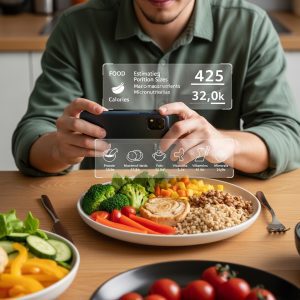
With computer vision powered by AI, this process is simplified. Imagine taking a photo of your plate, and within seconds, AI identifies every food item, estimates portion sizes, and provides a detailed nutritional analysis.
How It Works
AI models use techniques like object detection and image segmentation to recognize ingredients. These are then matched against extensive nutritional databases to calculate calories, macronutrients (protein, fats, carbohydrates), and micronutrients (vitamins and minerals). Advanced algorithms like depth estimation help accurately measure portion sizes, providing precise dietary insights.
Applications in Real Life:
- SnapCalorie: Uses computer vision to estimate calorie and nutrient content from photos. With training on over 5,000 meals, its accuracy outperforms most human estimations. Results can be logged in food journals or synced with fitness platforms like Apple Health.
- LogMeal API: Uses deep learning trained on thousands of food images to detect, identify, and quantify ingredients. It achieves a 93% accuracy rate across 1,300 dishes and can be integrated into apps for restaurants, food tech startups, and healthcare providers.
AI-Powered Recipe Suggestions
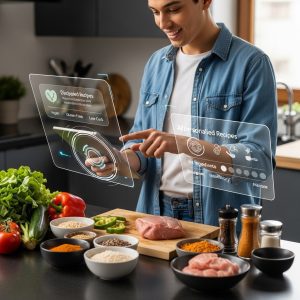
AI can do more than track food—it can help you create meals that match your dietary needs. By analyzing the ingredients you have at home, AI can suggest recipes that align with your health goals. Using models like ChatGPT, AI can consider dietary restrictions such as vegan, gluten-free, low-carb, or specific caloric limits.
Benefits of AI Recipe Systems:
- Reduce food waste by utilizing available ingredients
- Provide diverse and delicious meal options
- Support balanced diets tailored to personal goals
Example Startups Innovating in This Space:
- Journey Foods: Uses AI to analyze millions of ingredients and supply chain data to develop new packaged food products.
- Viome: Offers personalized nutrition recommendations based on your microbiome and mRNA analysis, providing dietary suggestions and supplements tailored to your body’s unique needs.
The Role of AI in the Food Industry
AI is reshaping food manufacturing, distribution, and quality control:
1. Quality Control
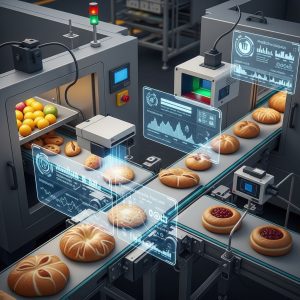
Computer vision systems can examine food products for size, shape, color, and texture, identifying defective items and ensuring consistency. For instance, baked goods can be scanned to check browning levels or surface defects.
2. Food Safety
AI combined with sensors like X-rays or spectral imaging can detect foreign objects, contaminants, or pathogens in food products.
3. Supply Chain Management
AI monitors shipments to ensure food safety, track freshness, and reduce waste. Predictive algorithms help anticipate spoilage, optimizing logistics and costs.
4. Product Development
AI can analyze trends to suggest popular flavor combinations and guide new product launches. This shortens development cycles and reduces risk.
5. Sustainability and Waste Reduction
By predicting spoilage, optimizing packaging, and improving production efficiency, AI reduces food waste throughout the supply chain, addressing global sustainability challenges.
Personalized Nutrition: A Diet Designed Just for You
The future of nutrition lies in personalization. AI can create dietary plans tailored to your unique physiology, lifestyle, and goals.
Factors Considered in Personalized Nutrition:
- Health conditions and medical history
- Caloric needs (age, gender, weight, height)
- Food preferences (vegan, allergies)
- Meal timing and distribution
- Physical activity levels
- Sleep patterns
- Previous diets and goals (weight loss, muscle gain, fertility, diabetes management)
Benefits of Personalized Plans:
- Reduce time, stress, and uncertainty when choosing meals
- Minimize food waste by planning and prepping efficiently
- Support health goals with precision
- Ensure nutritional adequacy and improve digestive health
Nutrients That Matter:
- Protein: Essential for muscle growth, skin, hair, and overall cellular repair.
- Healthy Fats (Omega-3): Support heart and brain health, hormone balance, and vitamin absorption.
- Carbohydrates: Provide energy and mood regulation; fiber supports digestive health.
- Vitamins & Minerals: Support immune function, bone health, and prevent deficiencies.
When Personalized Plans Are Better Than General Guidelines:
- Individuals with IBS or IBD may need a customized fiber intake.
- Athletes or active individuals may require 1–2 grams of protein per kilogram of body weight, not the standard 50g per day.
- Dietary restrictions (e.g., vegan or gluten-free) often need supplementation or nutrient optimization.

Challenges of AI in Nutrition
Despite its promise, AI in nutrition has limitations:
- Data Privacy: Handling sensitive health information must be secure.
- Algorithm Bias: Limited training data may produce inaccurate recommendations for certain groups.
- Over-Reliance: AI should complement, not replace, certified nutritionists or healthcare professionals.
AI and the Future of Health and Nutrition
AI is transforming how we interact with food, offering tools to track meals, optimize diets, and make healthier choices. Wearables, home tests, and continuous glucose monitors allow AI to refine recommendations with incredible precision. Personalized nutrition is no longer a luxury—it is becoming accessible, actionable, and adaptable for everyone.
Industries Benefiting from AI:
- Agriculture: Drones and sensors optimize crop health, water usage, and yield.
- Food Manufacturing: Automates sorting, quality control, and production efficiency.
- Restaurants: AI chatbots enhance customer service, provide personalized meal suggestions, and increase operational efficiency.

By combining AI insights with human expertise, we can make smarter decisions, reduce waste, and achieve health goals faster—all while enjoying our meals.
At Nutrition Travels, we believe that AI is more than a tool—it’s your partner in the journey toward healthier living. From tracking meals and analyzing nutrition to generating personalized meal plans, AI helps you eat smarter, save time, and enjoy a balanced diet.
Explore AI-powered apps, consult trusted experts, and let every meal bring you closer to your health goals. Your personalized nutrition journey starts here. With AI and science on your side, healthy eating has never been easier, smarter, or more enjoyable.