
Many people use the terms food allergy and food intolerance interchangeably, assuming they mean the same thing. In reality, there is a significant difference between them—whether in causes, symptoms, or how each condition should be managed. Understanding this distinction is not just theoretical knowledge; it is an essential step in protecting your health and avoiding potentially serious complications.
In this article, we begin by explaining what food allergy is, then lay the scientific foundation that makes it easier to clearly distinguish it from food intolerance in a simple and practical way.
What Is a Food Allergy?
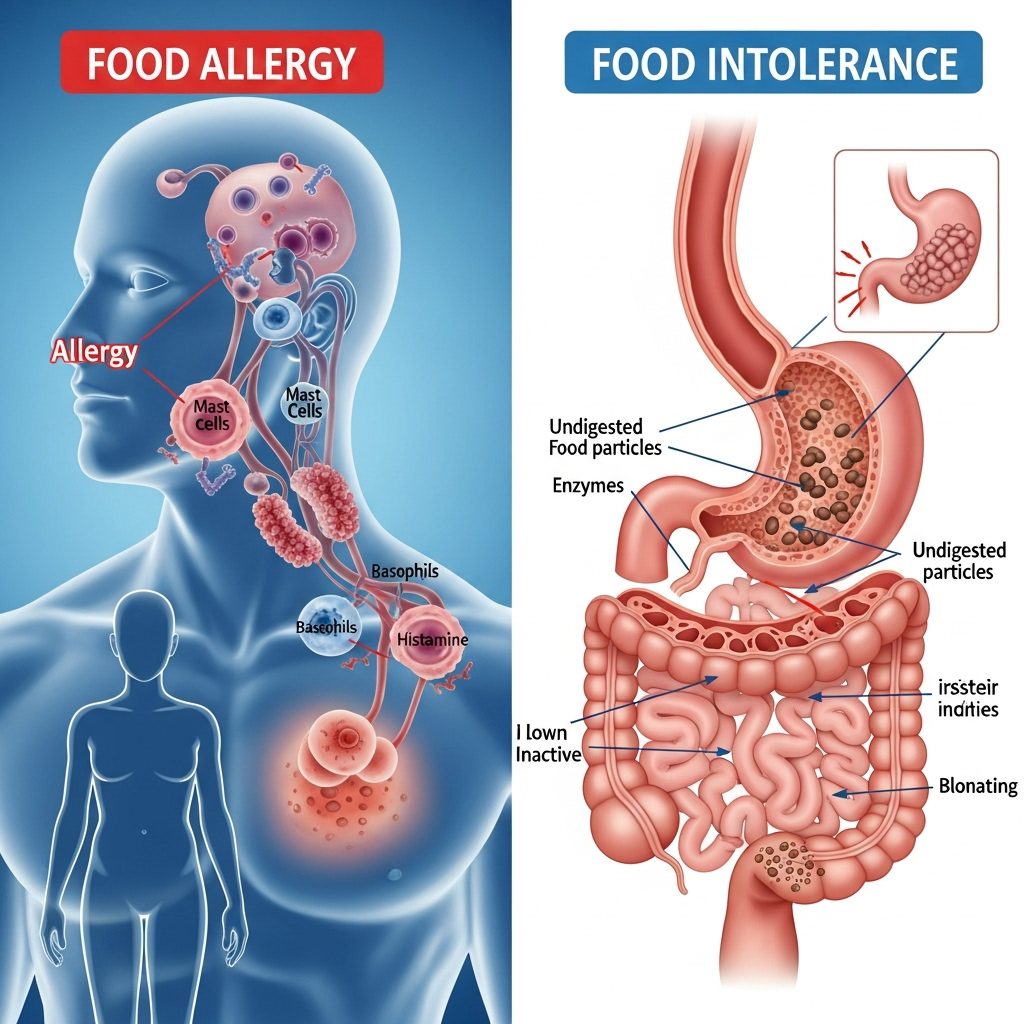
A food allergy is an immune system reaction that occurs when the body mistakenly identifies a specific food as a threat, even though it is harmless.
When this food is consumed, the immune system releases chemical substances such as histamine, which can trigger symptoms ranging from mild to severe.
The key point here is that a food allergy is not merely a digestive issue—it is a full immune response that may affect the skin, respiratory system, digestive tract, and sometimes the entire body.
How Does the Body React in Food Allergy Cases?
When exposed to a food that causes an allergy:
- The immune system identifies it as a “danger”
- Antibodies are produced
- A rapid reaction occurs after eating the food
This response can appear within minutes or a few hours, which clearly distinguishes from other less severe conditions.

Common Foods That Cause Allergies
Although any food can trigger an allergy, a small group of foods is responsible for most cases, including:
- Milk
- Eggs
- Peanuts
- Tree nuts
- Fish and seafood
- Wheat
- Soy
Knowing these common triggers helps reduce risks, especially for children or individuals with a family history of food allergies.
Food Allergy Symptoms: Why Can They Be Dangerous?
Food allergy symptoms vary from person to person but often include:
- Skin rash or itching
- Swelling of the lips or face
- Vomiting or diarrhea
- Difficulty breathing
- Dizziness or sudden drop in blood pressure
In rare cases, symptoms may progress to anaphylaxis—a medical emergency that requires immediate intervention.

Does the Severity of Food Allergy Differ From One Person to Another?
Yes, significantly.
Some individuals experience mild symptoms after consuming small amounts, while others may have severe reactions from even trace exposure. This is why food allergy diagnoses should never be taken lightly.
When Should You Suspect a True Allergy?
Food may be the cause if:
- Symptoms appear quickly after eating
- The reaction occurs repeatedly with the same food
- Symptoms affect more than one body system
- Reducing the amount does not improve symptoms
In such cases, professional medical advice is essential rather than relying on personal trial and error.
Why Do People Confuse Food Allergy With Food Intolerance?
The main reason is that some symptoms overlap, such as bloating or digestive discomfort.
However, the fundamental difference is:
- Food allergy = immune system reaction
- Food intolerance = digestive or enzymatic issue
Food Intolerance: When the Issue Is Digestive, Not an Allergy
After understanding allergy and how it occurs, we move to the more common—and generally less dangerous—condition: food intolerance.
Although symptoms may sometimes resemble those of an allergy, the underlying cause and management approach are completely different.
Food intolerance does not involve the immune system. It occurs when the digestive system cannot properly break down a specific food, often due to enzyme deficiencies or sensitivity to certain components.
How Does Food Intolerance Occur in the Body?
In food intolerance cases:
- The body does not perceive the food as a threat
- No allergic chemicals are released
- The issue is centered on digestion and absorption
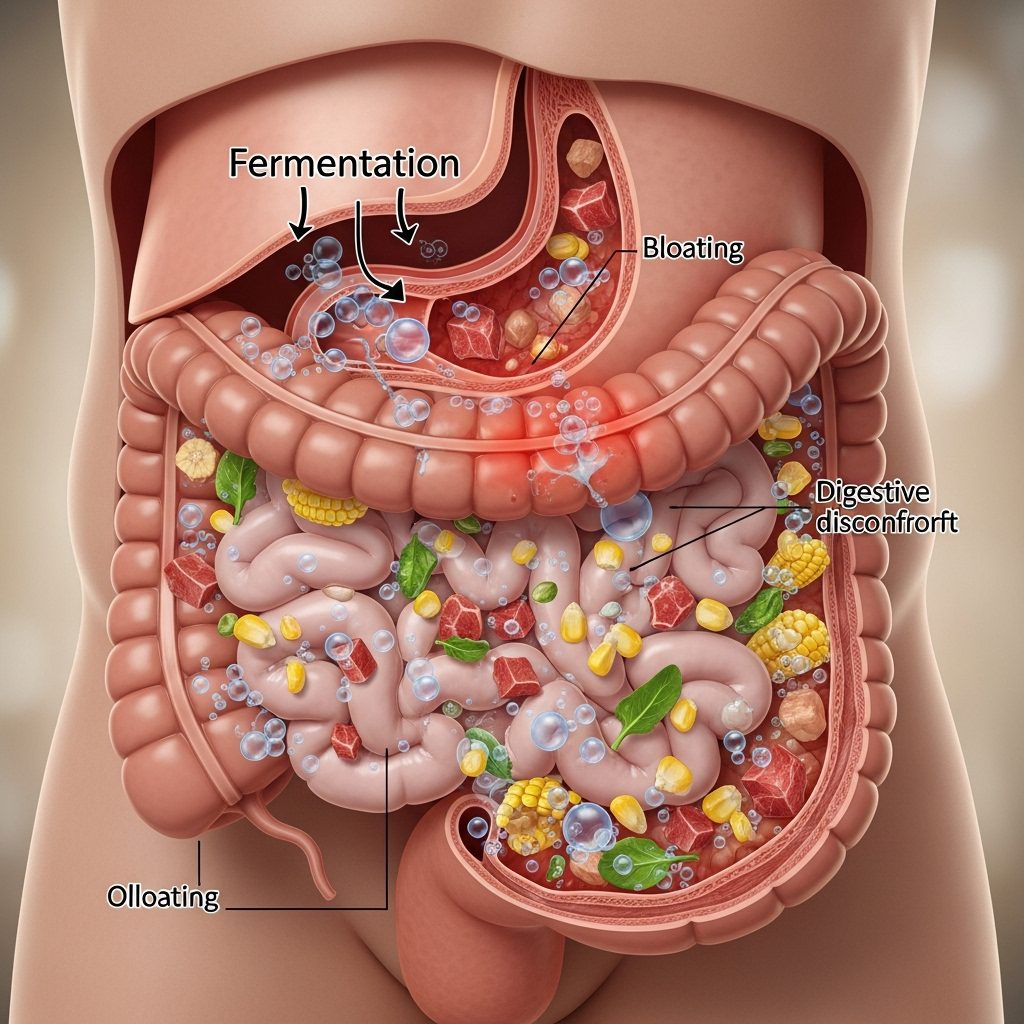
Undigested food components remain in the intestines, leading to:
- Fermentation
- Gas
- Bloating
- Digestive discomfort
These symptoms are uncomfortable but usually not life-threatening.
Common Types of Food Intolerance
Some of the most widespread forms include:
- Lactose intolerance
- Non-celiac gluten sensitivity
- Fructose intolerance
- Sensitivity to certain food additives
Unlike food allergies, these conditions are influenced by the amount and type of food consumed.
Food Intolerance Symptoms : How Are They Different From Food Allergy?
Food intolerance symptoms often develop gradually and mainly affect digestion, while allergy reactions are immune-based and can appear suddenly and more severely.
typically include:
- Bloating
- Gas
- Abdominal cramps
- Diarrhea or constipation
- A heavy feeling after eating
Key differences:
- Symptoms do not always appear immediately
- They may be delayed for several hours
- They depend on the quantity consumed
This contrasts with allergy, where even small amounts can trigger rapid and severe reactions.

Does Quantity Matter in Food Intolerance?
Yes—and this is a crucial distinction.
With food intolerance:
- Small amounts may cause no symptoms
- Larger amounts can trigger discomfort
With food allergy:
- Even minimal exposure may cause a strong reaction
This is why many people can manage food intolerance through moderation rather than complete elimination.
How Is Food Intolerance Diagnosed?
Diagnosis often relies on:
- Tracking symptoms
- Keeping a food diary
- Temporarily eliminating suspected foods
- Breath tests or specific lab tests when needed
This differs from allergy, which requires immune-based testing.
How Can You Manage Food Intolerance Without Deprivation?
Smart management does not mean total restriction. Instead, it includes:
- Reducing problematic quantities
- Spreading intake across meals
- Choosing suitable alternatives
- Supporting digestive health
This approach allows for a balanced diet without unnecessary psychological or social stress.

How Can You Tell the Difference?
Simply put:
- Food allergy: immune reaction, potentially dangerous symptoms, strict avoidance required
- Food intolerance: digestive issue, uncomfortable symptoms, balance and moderation are possible
Understanding the difference prevents unnecessary anxiety while ensuring serious conditions are not ignored.
Understanding Is the First Step Toward Safe Nutrition
Confusing food allergy with food intolerance is common, but it can lead to poor dietary decisions. Clear understanding helps you:
- Choose foods with confidence
- Protect your health
- Avoid unnecessary restriction
- Manage symptoms with awareness

If you’re interested in practical, science-based content that helps you understand your body, make smarter nutrition choices, and connect food with a balanced lifestyle, visit nutritiontravels and explore articles that blend clarity, science, and enjoyment.